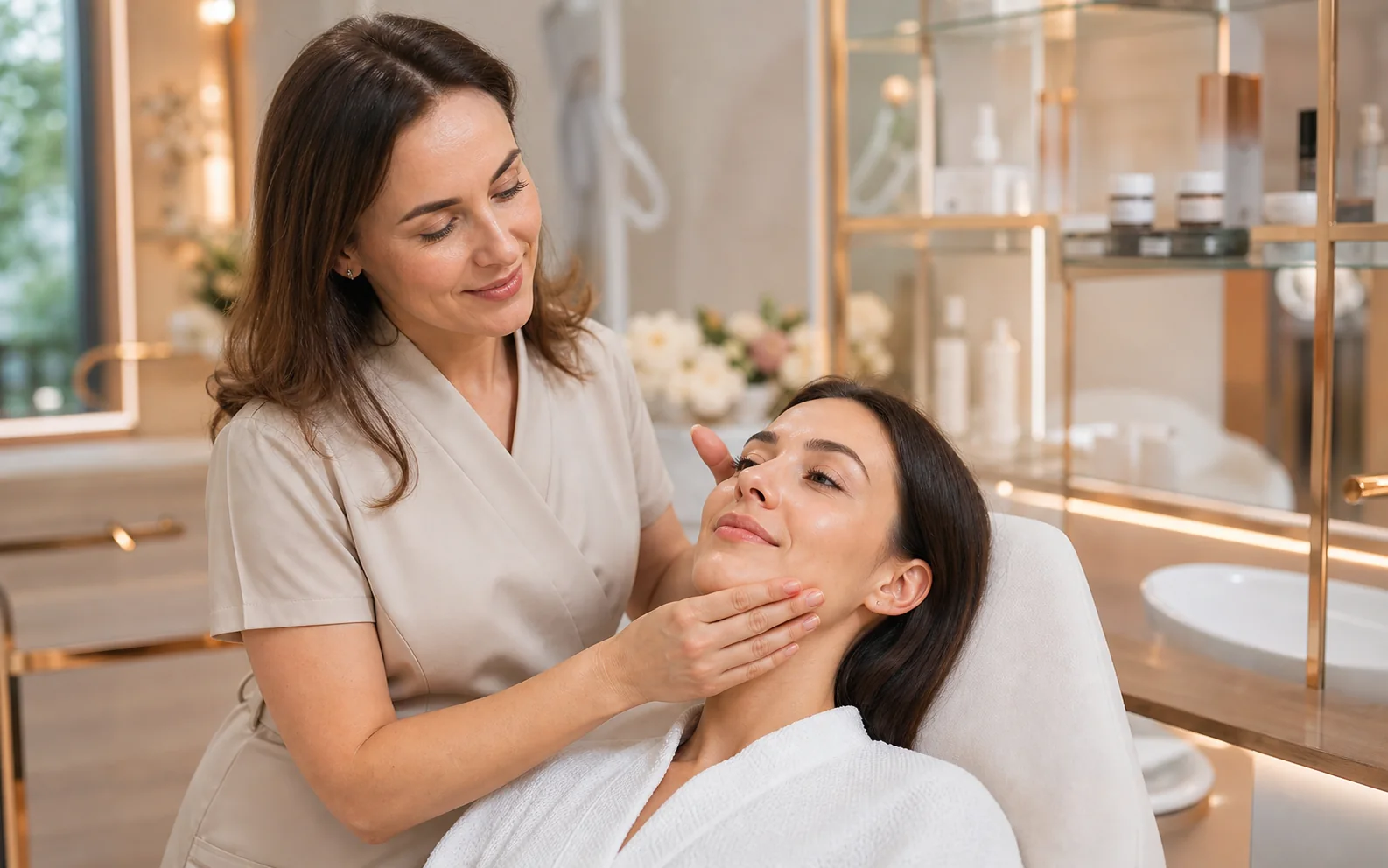
Glow skin is often described as a look, but in a professional facial bar it is treated as a condition of balance. Skin looks luminous when the surface is clean without being stripped, the barrier feels comfortable, hydration is visible, and circulation gives the complexion a rested tone. A good glow facial does not try to shock the skin into brightness. It builds radiance through careful cleansing, measured exfoliation, massage, mask work, and aftercare that the client can actually maintain.
The premium version of a glow skin facial is not a one-size-fits-all ritual. It starts with observation: dryness around the cheeks, oiliness through the T-zone, sensitivity after travel, dullness from poor sleep, or congestion from heavy city exposure. The treatment is then adjusted around the skin in front of the specialist. This is why a facial bar can be both efficient and serious: the format is quick, but the decision-making should remain expert.
At Anywell Facial Bar, the best glow result comes from matching the treatment rhythm to the client's day. Some clients need a fresh, polished complexion before an event. Others need a calmer plan after months of over-exfoliating at home. The same word, glow, can mean hydration, smoothness, reduced visible fatigue, or a more even way that light reflects from the skin.
This guide explains how a professional glow facial works, what to expect, how to prepare, and how to keep the result realistic. It is educational rather than medical advice, and it keeps claims conservative: a facial can support comfort, luminosity, and skin confidence, but it should not replace dermatology care when a client has persistent inflammation, infection, pain, or a medical skin condition.
What glow skin really means in a facial bar
A glowing complexion is usually the result of several small improvements happening together. The surface is free from excess debris, the stratum corneum is not overloaded with dead cells, the skin holds water well, and there is enough facial relaxation for the features to look rested. This is why a glow facial normally combines cleansing, exfoliation, hydration, and massage rather than relying on one dramatic step.
The professional advantage is sequencing. If exfoliation comes before proper cleansing, the treatment can feel uneven. If massage is too strong on sensitized skin, redness may replace radiance. If hydration is applied without removing residue, the finish can look heavy. A trained specialist reads the skin as the treatment unfolds and changes pressure, product amount, mask time, and finishing texture accordingly.
In brand and beauty language, glow can sound like a miracle. In practice, it is better understood as an optical and comfort effect. Skin that is hydrated and calm reflects light more evenly. Skin that is overworked often looks shiny but stressed. Premium facial work aims for the first result: clean luminosity, not artificial gloss.
The ideal sequence: cleanse, refine, hydrate, relax
A strong glow facial begins with gentle cleansing. The American Academy of Dermatology emphasizes mild cleansing and avoiding harsh scrubbing, and that same principle applies inside the treatment room. Cleansing should remove makeup, sunscreen, pollution, and oil without making the client feel tight or squeaky. Tightness is not proof of cleanliness. It is often a sign that the barrier has been pushed too hard.
Refining the surface can involve enzyme work, a mild acid step, careful manual work, or device-assisted care depending on the service menu and the skin condition. The goal is not to remove as much as possible. The goal is to create a more even surface so hydrating and calming steps can sit well. For sensitive skin, less refinement may create a better glow than an aggressive peel.
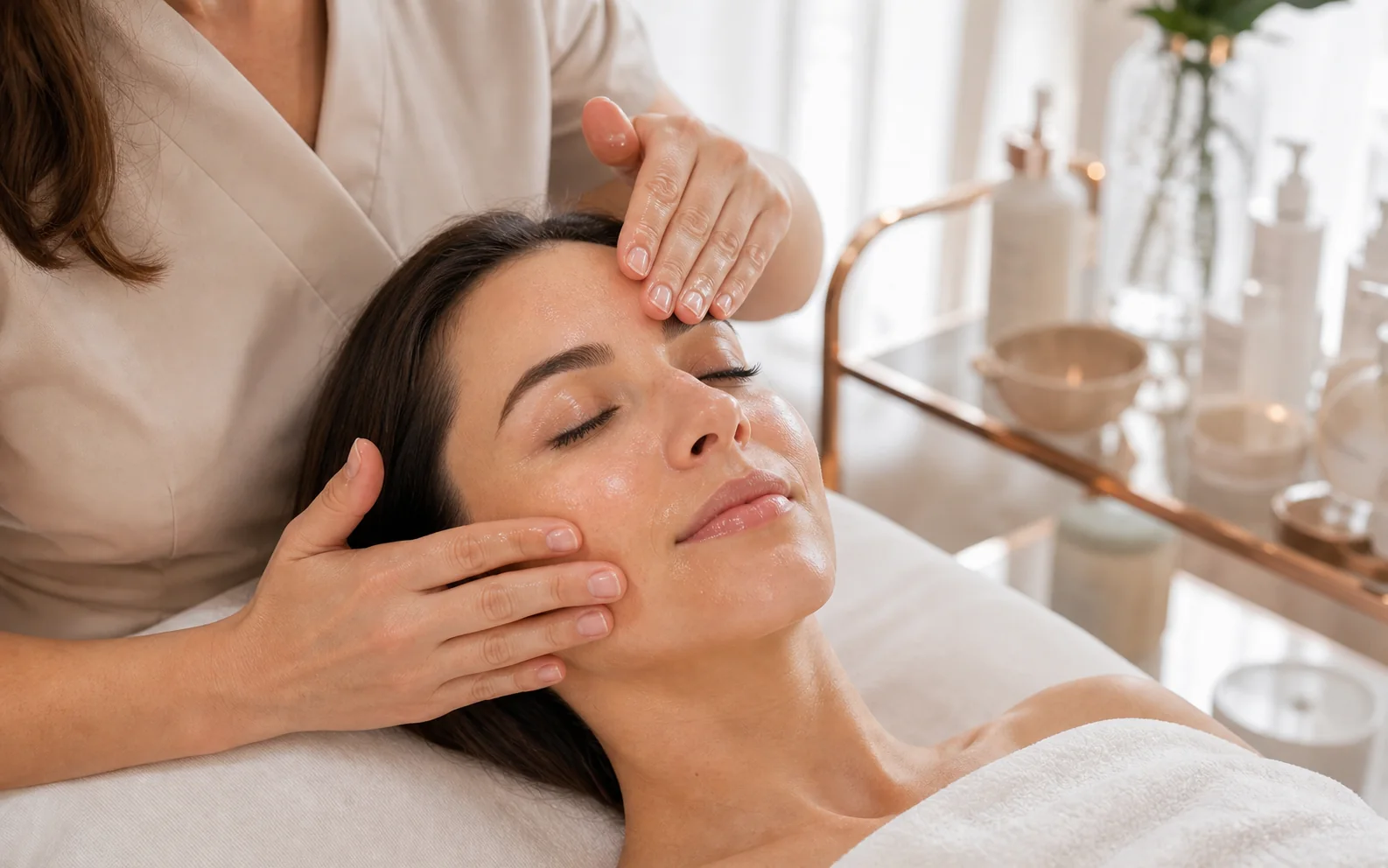
Hydration and relaxation complete the look. A serum or mask can soften the appearance of fine dehydration lines, while facial massage can help the face look less tense and more awake. This is where the facial bar experience becomes more than product application. Touch, pace, warmth, and calm change how the treatment feels, and the feeling matters because stress often shows through the skin.
Case study: a 45-minute glow reset before an evening event
Imagine a client who arrives after a long week: light puffiness around the eyes, foundation sitting unevenly, and a dull cheek area from late nights and winter indoor air. The goal is not to transform the skin type in one appointment. The goal is to make the face look rested, smoother, and comfortable enough for makeup or bare skin that evening.
A realistic plan would start with a gentle double cleanse, then a mild resurfacing step only if the skin is not reactive. The specialist might add a short facial massage focused on drainage pathways and jaw relaxation, followed by a hydrating mask and a light finishing layer. The treatment stays polished, not aggressive, because redness would defeat the purpose of the event.
The result should be described honestly: fresher tone, a smoother surface, better comfort, and a visible glow effect. The client may still have texture, pores, or pigment, because real skin does. What changes is the overall impression. At Anywell, the best rituals are memorable because they feel considered, not because they overpromise.
How to prepare for a glow facial
The simplest preparation is to avoid irritating the skin before the appointment. Strong at-home acids, retinoids used too close to a treatment, rough scrubs, waxing, or sun exposure can all make the face more reactive. If the client wants a facial before an event, it is usually safer to book a known treatment with a specialist who understands the skin rather than experimenting with the strongest option the day before.
Communication is part of preparation. A client should mention recent peels, prescription products, pregnancy, allergies, cosmetic injections, skin infections, or any product that has caused burning. This information helps the specialist choose the right level of exfoliation and massage. A premium facial should feel personal because the skin history matters as much as the skin goal.
Arriving with realistic expectations also improves the experience. A glow facial can make skin look fresher, but it cannot erase chronic pigmentation, deep acne scarring, or medical inflammation in one visit. When the client understands the difference between an instant polish and long-term skin improvement, the treatment becomes more satisfying and more trustworthy.
Aftercare that keeps the glow
After a radiance facial, the home routine should stay simple for at least a short period. Gentle cleansing, moisturizer, and daytime sun protection are usually more important than adding several new active products immediately. The AAD often frames effective routine care around cleansing, moisturizing, and protection, which is also a useful professional aftercare rule.
If the facial included exfoliation, the client should avoid stacking strong acids, retinoids, and scrubs at home the same night unless the specialist specifically recommends it. More activity is not always better. The skin may look brighter because it is calm and hydrated; irritating it too soon can turn glow into sensitivity.
The best aftercare is measurable in behavior, not in a long shelf of products. Does the client cleanse without rubbing? Does moisturizer leave the face comfortable through the day? Is sunscreen used consistently? Does the weekly routine include rest days? These small decisions protect the professional result and make the next facial more effective.
When to choose a glow facial instead of a stronger treatment
Choose a glow facial when the main concern is dullness, dehydration, mild texture, pre-event freshness, or a tired look. Choose a more targeted treatment when the concern is persistent congestion, pronounced pigmentation, deep lines, or ongoing sensitivity. The categories can overlap, but the intention changes the treatment plan.
Clients sometimes ask for the strongest option because they want visible results. A specialist may recommend the glow route because the skin is already stressed. This is not a downgrade. It is a professional decision to restore comfort first. A calm barrier often makes future active treatments easier to tolerate.
The premium standard is restraint. A facial bar should be able to say no to unnecessary intensity and yes to a treatment that suits the day, the skin, and the goal. That is how glow becomes sustainable rather than a short-lived shine.
Professional checklist before booking this treatment
Match the service to the skin today
Before choosing this service, look at your skin as a specialist would: current comfort, recent product use, sensitivity, event timing, and the result you want to see in the mirror. For glow skin facial treatment, the best appointment is not necessarily the strongest appointment. It is the appointment that matches the condition of the skin on the day you arrive.
Tell the specialist about recent retinoids, acids, peels, cosmetic procedures, sun exposure, allergies, pregnancy, medication, or any reaction that made the skin burn or sting. This information changes pressure, exfoliation, device intensity, massage direction, product choice, and aftercare. A premium facial bar experience should feel personal because the skin history is part of the treatment.
After the appointment, protect the result with a simple routine. Avoid stacking strong actives immediately, keep the skin moisturized, use daytime protection, and notice how the face feels the next morning. The most useful beauty advice is rarely dramatic. It is specific, repeatable, and adapted to real life.
Read the result like an expert
It is also helpful to decide what success looks like before the treatment starts. For some clients, success is a fresher complexion before an event. For others, it is less tightness, a softer jaw, calmer redness, cleaner pores, or a routine that finally feels understandable. When the goal is precise, the specialist can choose a precise path and avoid turning every facial into the same generic protocol.
If your skin does not respond as expected, do not immediately add more products or book a stronger service. Review sleep, stress, cleansing habits, sun exposure, climate, and how often active ingredients are being used. A premium skincare plan evolves by observation. The face gives feedback, and a good facial bar uses that feedback to adjust the next appointment.
There are also moments when the best professional choice is to wait. Active infection, unexplained swelling, strong burning, open lesions, recent aggressive procedures, or a reaction that has not settled should change the plan. A beauty treatment should never compete with medical judgment. When in doubt, the safest luxury is restraint.
Build a long-term facial plan
For long-term authority, think of each visit as one chapter in a skin journal. The specialist notes what worked, what felt too strong, what created glow, and what should be repeated or avoided. This is how facial care becomes more intelligent over time: not through constant novelty, but through careful memory of the skin.
The final filter is lifestyle. A treatment that looks perfect on paper may be wrong before a flight, after poor sleep, during a stressful week, or just before heavy makeup. Premium skincare respects context. It asks not only what the skin needs, but what the client needs the skin to do during the next few days.
That is why the best recommendation is often a sequence rather than a single appointment. Start with the service that calms and clarifies, then build toward more active or sculpting work when the skin is ready. This patient order creates better visible results and a better relationship with the face.
For reader clarity, document the same logic in the article itself: what the treatment is for, who should be cautious, what result is realistic, and how the home routine protects the work. Readers trust a beauty brand more when it explains limits as clearly as benefits.
The same structure also supports the Anywell editorial standard. A strong journal article should answer the client's practical questions before they are asked: how the treatment feels, how long the visible result may last, what to avoid afterward, and when another service would be wiser. That level of usefulness is what separates premium editorial content from a simple service description.
For a facial bar, this clarity also improves the booking experience. The client arrives with better vocabulary, the specialist can refine the plan faster, and the treatment feels more intentional from the first consultation to the final aftercare recommendation. It turns education into confidence, and confidence into a calmer, more premium client journey.
Conclusion: the Anywell way
A glow skin facial works best when it respects the skin barrier, uses professional sequencing, and leaves the client with a routine that supports the result. For Anywell clients, the right starting point is a consultation and a treatment plan built around the skin condition today, not a trend. If your skin feels tired, dull, or uneven before an event or a new season, book a facial treatment and let the specialist choose the cleanest path to a fresh, luminous finish.
FAQ
How often should I book a glow skin facial?
Many clients book every four to six weeks, but the right rhythm depends on sensitivity, lifestyle, season, and the type of facial used.
Can a glow facial help dehydrated skin?
It can support temporary comfort and luminosity through hydration and barrier-friendly care, but persistent dryness should be assessed carefully.
Is a glow facial suitable before an event?
Yes, if the treatment is familiar or gentle. Avoid experimenting with aggressive exfoliation immediately before an important event.
Will a glow facial remove pigmentation?
No single glow facial should be expected to remove pigmentation. It may improve surface brightness, while pigment concerns need a longer plan.
What should I avoid after the treatment?
Avoid harsh scrubs, strong actives, excessive heat, and sun exposure immediately after a facial unless your specialist advises otherwise.