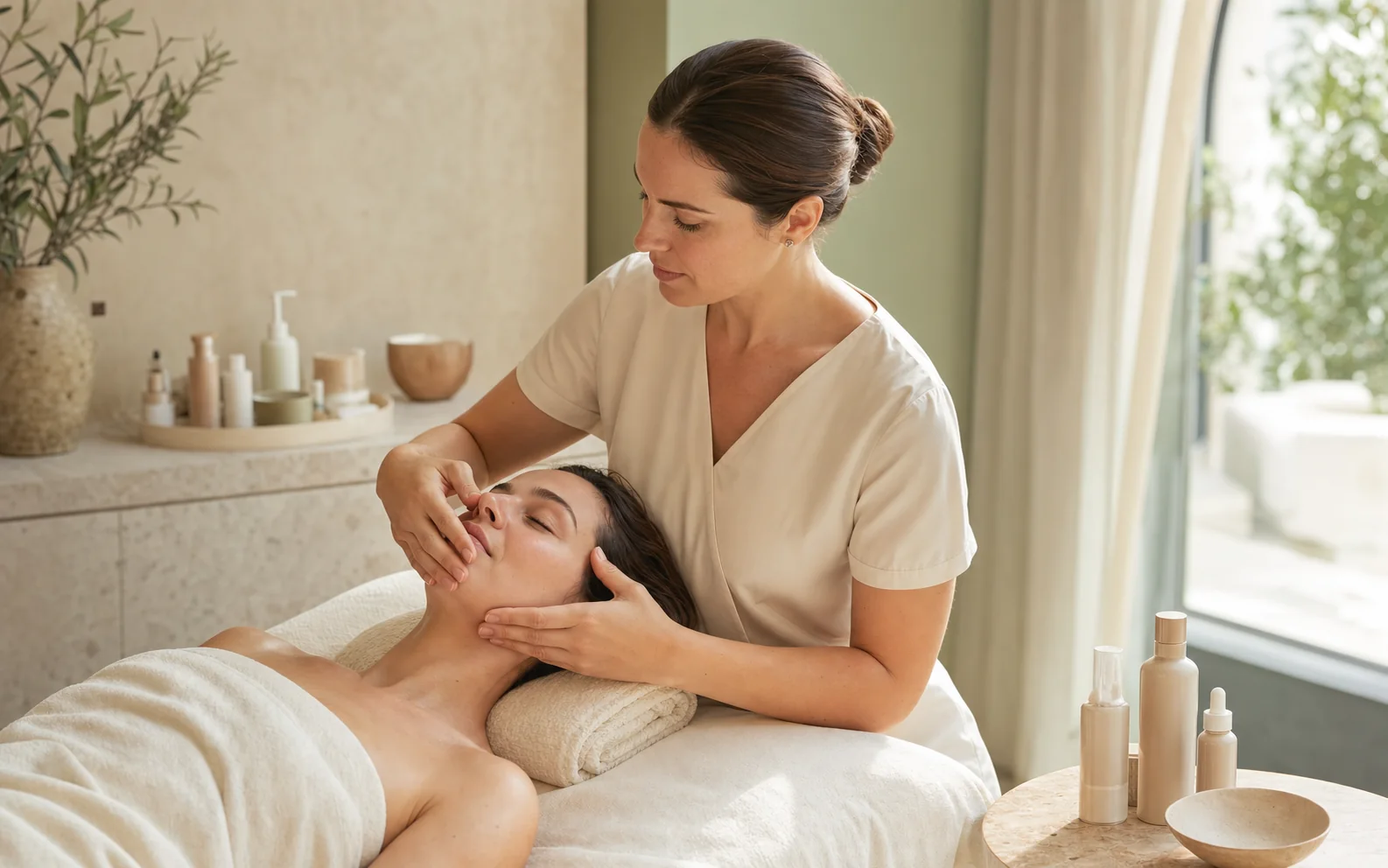
Massage du visage sounds elegant because it is. The phrase simply means facial massage, but in a premium facial bar it can describe a full professional language of touch: slow relaxation work, lymphatic-style drainage, sculpting support, product application, pressure checks and careful aftercare. The best version does not chase drama. It reads the face, respects the skin barrier and uses touch to support a fresher, calmer and more composed appearance.
The modern client often arrives with a mix of goals. One person wants glow before an event. Another wants the jaw and temples to feel less held after screen-heavy work. A third wants a refined facial massage experience that feels luxurious without being aggressive. A fourth has seen gua sha, Kobido, face gym and lifting content online and wants to understand what is realistic. A well-trained specialist translates those requests into a safe treatment plan.
This is where language matters. Massage du visage can support relaxation, temporary de-puffing for some clients, better product glide, a smoother-looking finish under makeup and a more rested-looking expression. It should not promise permanent lifting, fat loss, bone-structure change, detox miracles, medical lymphatic therapy, treatment of skin disease or a substitute for dermatology, dentistry or medical care.
Authoritative skincare guidance supports that cautious frame. The American Academy of Dermatology emphasizes gentle cleansing rather than harsh scrubbing. DermNet describes the skin barrier as a protective system involved in water loss and outside irritants. Cleveland Clinic describes lymphatic drainage massage as gentle massage that encourages lymph fluid movement, while FDA cosmetic-claim guidance helps keep beauty language truthful and not misleading. This Anywell guide uses those boundaries to explain massage du visage as premium skincare education, not medical advice.
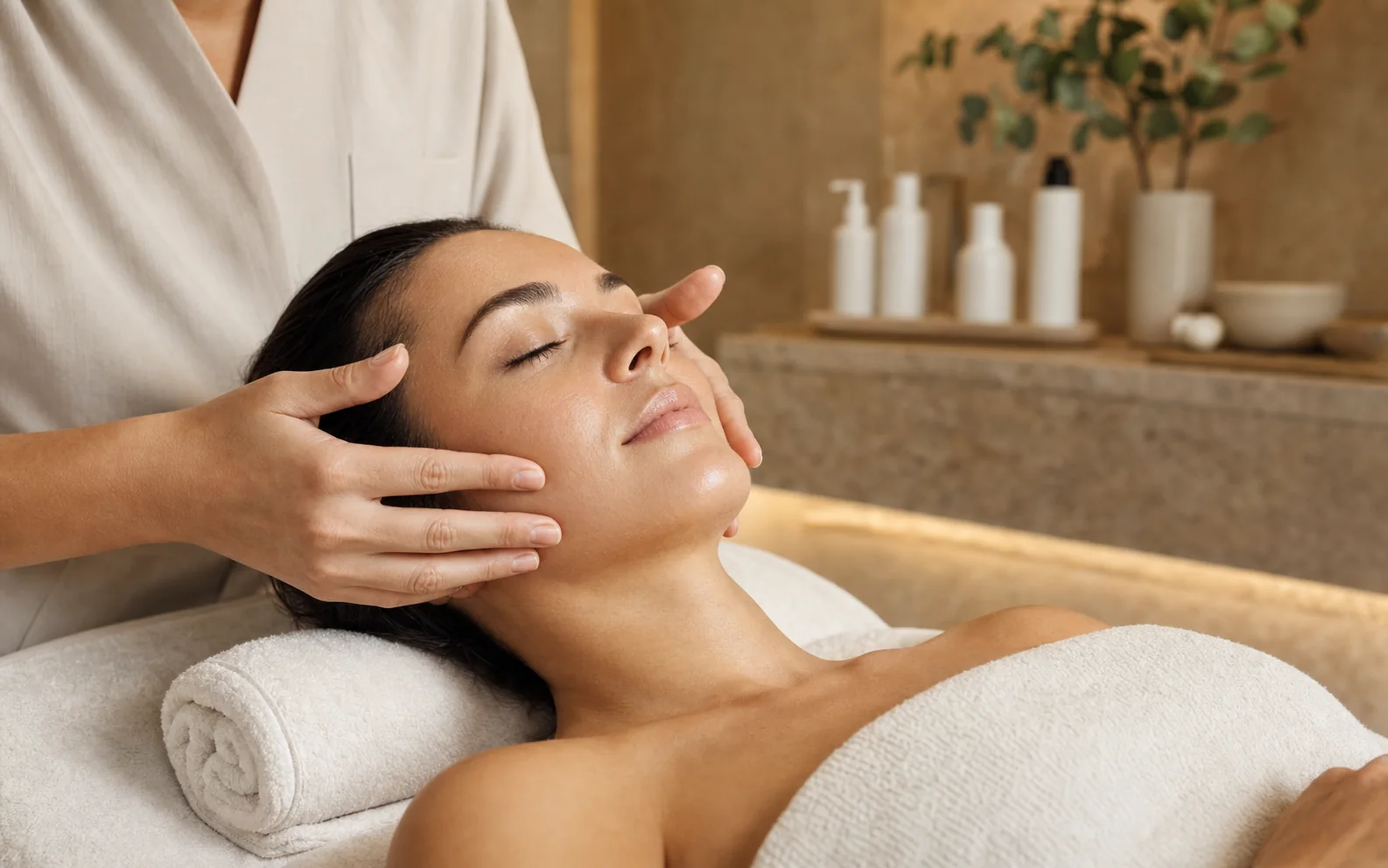
What massage du visage means in a facial bar
In a facial bar, massage du visage is not one single technique. It is a professional decision tree. The specialist may use calming strokes to reduce visible tension, light drainage-style movements for temporary puffiness, more structured sculpting touch around the cheekbones and jawline, or very simple product application when the skin is too reactive for longer massage.
The phrase also carries a cultural expectation. Clients often imagine a slower, more refined European treatment rhythm: clean hands, calm pace, precise pressure, a beautiful room and a face that looks rested rather than overworked. That expectation is useful when it leads to skill. It becomes risky when it leads to claims that touch can replace medical treatment or change the structure of the face.
A premium facial bar should define the term clearly at the start of the appointment. Is the client asking for relaxation, glow, de-puffing, sculpting appearance, jaw comfort, pre-event polish or a better home ritual? Once the goal is precise, the massage can become precise.
The consultation: skin first, technique second
A beautiful massage du visage begins before the hands touch the face. The specialist should ask about skin sensitivity, active acne lesions, rosacea-prone flushing, eczema flares, sunburn, recent peels, retinoids, exfoliating acids, injectables, surgery, allergies, pregnancy considerations, dental pain, jaw locking, swelling, infection, medications and any product that recently made the skin burn or sting.
This is not formality. It determines pressure, product texture, massage length and even whether the facial should proceed. Skin that feels hot, scraped or over-exfoliated may need a calming facial rather than sculpting work. A client with unexplained swelling or persistent pain may need qualified healthcare advice rather than a stronger massage.
The best consultation feels quiet and specific. The client is not interrogated; they are invited to give the information that makes touch safer. That is part of luxury. A premium experience is not only softer towels or better lighting. It is a better read of the person in the room.
Relaxation massage: when the face looks held
Relaxation-focused facial massage is often the best entry point for massage du visage. It uses slow, steady contact around the temples, cheeks, brow, jawline and sometimes the neck, depending on the client. The goal is a softer-looking expression and a more grounded treatment experience, not a medical release.
This style suits clients whose face looks tired from screens, stress, travel, air conditioning or poor sleep. The skin may not need a strong active treatment. It may need gentle cleansing, hydration, hand skill and a plan that avoids adding more stimulation to an already busy week.
Pressure should never be performative. If the specialist has to prove strength, the treatment is already moving away from facial-bar elegance. The client should be able to breathe normally, speak up comfortably and feel that the massage can be adjusted at any moment.
Lymphatic-style drainage: useful, but often overclaimed
Lymphatic-style drainage belongs in the massage du visage conversation because many clients ask about puffiness. The responsible version uses light, slow movements. Cleveland Clinic describes lymphatic drainage massage as gentle massage used to encourage lymph fluid movement. In a facial bar, the wording should stay narrower: light drainage-style movements may help some clients look temporarily less puffy or feel more relaxed, depending on their skin condition and health history.
This technique can be helpful after travel, poor sleep, salty meals or long sitting, when the face feels heavy but the skin is otherwise calm. It should be adapted or avoided when there is unexplained swelling, fever, infection, active inflammation, recent surgery, fresh injectables, pain, open lesions or medical conditions that require professional evaluation.
More pressure does not make drainage more refined. Aggressive rubbing can irritate the skin barrier and leave the face red, tender or reactive. The elegant version is light, intentional and honest about what it can and cannot do.
Sculpting touch: contour without unrealistic promises
Sculpting facial massage is the part of massage du visage that attracts the most attention. It can make the cheekbones, jawline and midface look more defined for a short period because the face appears less tense, more hydrated or temporarily less puffy. It can also feel satisfying when pressure is well controlled.
The limitation is important. Sculpting touch does not remove fat, change bone, replace injectables, tighten loose skin permanently or create surgical lifting. FDA cosmetic-claim guidance is a useful reminder that beauty claims should not drift into treating disease or changing body structure. The safer promise is more credible: a refined facial massage may support a fresher, more rested and more polished appearance.
A good specialist also reads skin type. Thin, dry or mature skin may prefer cushion and slower movements. Oily or congestion-prone skin may need a lighter product texture. Sensitive skin may need shorter massage and fewer passes. The face is not a practice surface; it is living skin with a tolerance level.
Gua sha, tools and hands: how to choose
Gua sha is often discussed alongside massage du visage because both use directional touch. Cleveland Clinic's gua sha overview explains that the practice has roots in traditional Chinese medicine and should be approached thoughtfully. In a facial bar context, a smooth tool may be used gently for glide and ritual, but it should not be treated as magic.
Hands give feedback that tools cannot always read. A specialist can feel when the client braces, when the skin warms, where pressure should soften and when the product is no longer providing enough glide. Tools can be beautiful, but they should follow the consultation rather than lead it.
The safest approach is to choose the least irritating path that can still meet the goal. If the client wants calm, hands may be enough. If the client wants a structured ritual and tolerates touch well, a tool may be added carefully. If the skin is inflamed or compromised, both tool work and long massage may be skipped.
Skin barrier rules for massage du visage
Massage du visage is still skincare. It touches the same barrier that has to tolerate cleanser, moisturizer, sunscreen, makeup, climate and active ingredients. DermNet's overview of skin barrier function is a useful reminder that the outer layer helps protect against water loss and external irritants. When the barrier is stressed, friction becomes part of the problem.
That is why AAD face-washing guidance about gentle technique matters beyond cleansing. A facial massage should avoid harsh scrubbing, repeated pulling and unnecessary heat. Glide matters. Towel softness matters. Product choice matters. The specialist should not use a fragranced or heavy texture just because it looks luxurious if the client's skin may react.
A barrier-aware facial can still feel indulgent. It may use a shorter massage, more cushioning product, calmer hydration and fewer active steps. Luxury is not intensity. Luxury is knowing when restraint will create a better result.
A premium Anywell treatment flow
A massage du visage appointment can begin with consultation, gentle cleanse, skin comfort check and a decision about the main technique family. Relaxation work may lead the sequence if the face looks held. Lymphatic-style drainage may be added if temporary puffiness is the concern. Sculpting touch may be used around the cheekbones or jawline if the skin tolerates it.
Hydration should not be an afterthought. Massage without enough glide can create friction, and massage without a calm finish can leave the skin feeling unfinished. A good flow often includes cleansing, touch, hydration, moisturizer, daytime protection when appropriate and aftercare instructions that match the service.
This is also where internal consistency matters. A client who books for sculpting but arrives with stinging, over-exfoliated skin may need a barrier-first plan. A client who wants drainage but has unexplained swelling should be treated cautiously. A client preparing for an event may need predictable glow rather than novelty.
Case study: the pre-event client
A client books three days before a dinner and asks for massage du visage because she wants to look fresh but not pink. Her skin is not inflamed, but she has slept poorly and feels puffy around the lower face. She has not introduced new actives recently.
A thoughtful plan would avoid aggressive exfoliation. The specialist might choose gentle cleanse, light lymphatic-style movements, soft cheek and jaw touch, hydrating mask, moisturizer and clear instructions for the evening routine. The goal is a smoother, more rested look under makeup, not a dramatic transformation.
The client leaves with a practical plan: no harsh scrubs, no new retinoid experiment before the event, use moisturizer, protect the skin during the day, and keep makeup removal gentle. The treatment works because it respects the calendar.
Case study: the sculpting-curious client
Another client arrives after watching face-sculpting videos. She wants a sharper jawline and asks for strong pressure. During consultation, the specialist learns that her cheeks flush easily and that she uses acids several nights per week.
The premium answer is not to reject the goal, but to refine it. The specialist can explain that sculpting touch may support a temporarily more defined appearance, especially when puffiness and tension are present, but it cannot change facial structure. Because the skin is reactive, pressure should be moderate and the aftercare routine should pause extra exfoliation.
The client still receives an elegant treatment. It simply uses skill instead of force: careful cleanse, controlled cheek and jaw work, less repetition over flushing zones, hydration and a realistic next-step plan.
Aftercare after facial massage
After massage du visage, the best home routine is usually simple. Cleanse gently if needed, moisturize, avoid harsh scrubs, avoid stacking strong acids or retinoids the same evening unless advised, and protect the skin during the day. The AAD sunscreen guidance is especially relevant for clients who are maintaining long-term visible skin quality.
Mild warmth or a relaxed feeling can be normal for some clients. Pain, strong burning, persistent swelling, rash, unusual tenderness or symptoms that do not settle should not be ignored. Contact the facial bar and seek qualified advice when symptoms feel outside normal post-treatment response.
The home plan should also match the technique. After drainage-style work, avoid immediately creating more inflammation through heat or friction. After sculpting touch, do not chase the result with aggressive tool use at home. After relaxation massage, protect the calm finish with sleep, water and a routine the skin already knows.
How often to book massage du visage
Frequency depends on the goal and the skin. Some clients use massage du visage before events or after travel. Others choose a monthly rhythm because the ritual helps them notice tension, puffiness and product tolerance. Very reactive skin may need more space between massage-led treatments.
A premium facial bar should not sell frequency by fear. The better approach is observation: how the skin looked immediately after treatment, how it felt the next morning, whether makeup applied better, whether sensitivity appeared and whether the client found the aftercare easy to follow.
If the result was good but short-lived, the next appointment may adjust technique, not simply add pressure. If the skin felt irritated, the next appointment should reduce friction. If the client loved the relaxation but wants more definition, the plan can slowly add sculpting touch when the skin is ready.
When to pause or choose another service
Massage du visage is not ideal for every face on every day. Pause or adapt the service for sunburn, active infection, open lesions, severe acne inflammation, strong rash, unexplained swelling, fresh cosmetic procedures, recent surgery, significant bruising, fever, numbness, persistent jaw pain or any symptom that feels medical rather than cosmetic.
Choose a barrier recovery facial when the skin feels tight, hot or over-exfoliated. Choose a glow facial when the skin is stable and the goal is radiance. Choose a skin diagnosis appointment when the client is unsure what they need. Choose medical or dental advice when pain, locking, swelling or persistent symptoms are present.
This does not make massage du visage less valuable. It makes it more professional. The right technique at the wrong time is still the wrong service.
What to ask before booking
Before booking, ask what the facial should accomplish in plain language: softer expression, temporary de-puffing, pre-event freshness, relaxed jaw, glow, product absorption feel or a more sculpted appearance. Also ask what you should avoid before and after the service.
A useful facial bar will answer without exaggeration. It should explain pressure, expected visible changes, limits, aftercare and contraindications. It should also connect the service to the broader Anywell menu rather than pretending one massage protocol suits every client.
That clarity turns massage du visage from a trend phrase into a professional treatment choice. It gives the client vocabulary, protects the skin and makes the booking feel intentional.
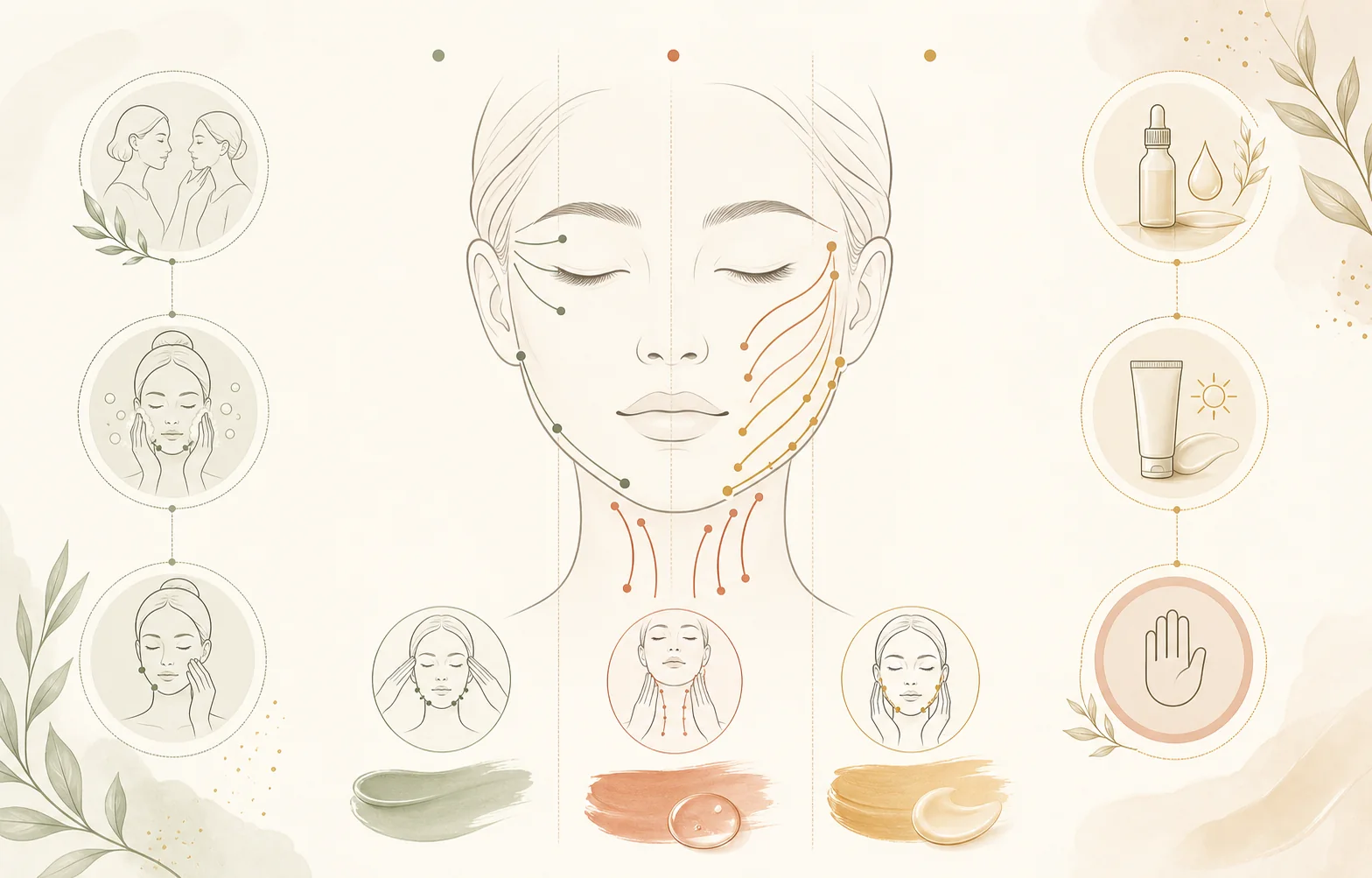
Professional checklist before booking this treatment
Match the service to the skin today
Before choosing this service, look at your skin as a specialist would: current comfort, recent product use, sensitivity, event timing, and the result you want to see in the mirror. For massage du visage, the best appointment is not necessarily the strongest appointment. It is the appointment that matches the condition of the skin on the day you arrive.
Tell the specialist about recent retinoids, acids, peels, cosmetic procedures, sun exposure, allergies, pregnancy, medication, or any reaction that made the skin burn or sting. This information changes pressure, exfoliation, device intensity, massage direction, product choice, and aftercare. A premium facial bar experience should feel personal because the skin history is part of the treatment.
After the appointment, protect the result with a simple routine. Avoid stacking strong actives immediately, keep the skin moisturized, use daytime protection, and notice how the face feels the next morning. The most useful beauty advice is rarely dramatic. It is specific, repeatable, and adapted to real life.
Read the result like an expert
It is also helpful to decide what success looks like before the treatment starts. For some clients, success is a fresher complexion before an event. For others, it is less tightness, a softer jaw, calmer redness, cleaner pores, or a routine that finally feels understandable. When the goal is precise, the specialist can choose a precise path and avoid turning every facial into the same generic protocol.
If your skin does not respond as expected, do not immediately add more products or book a stronger service. Review sleep, stress, cleansing habits, sun exposure, climate, and how often active ingredients are being used. A premium skincare plan evolves by observation. The face gives feedback, and a good facial bar uses that feedback to adjust the next appointment.
There are also moments when the best professional choice is to wait. Active infection, unexplained swelling, strong burning, open lesions, recent aggressive procedures, or a reaction that has not settled should change the plan. A beauty treatment should never compete with medical judgment. When in doubt, the safest luxury is restraint.
Build a long-term facial plan
For long-term authority, think of each visit as one chapter in a skin journal. The specialist notes what worked, what felt too strong, what created glow, and what should be repeated or avoided. This is how facial care becomes more intelligent over time: not through constant novelty, but through careful memory of the skin.
The final filter is lifestyle. A treatment that looks perfect on paper may be wrong before a flight, after poor sleep, during a stressful week, or just before heavy makeup. Premium skincare respects context. It asks not only what the skin needs, but what the client needs the skin to do during the next few days.
That is why the best recommendation is often a sequence rather than a single appointment. Start with the service that calms and clarifies, then build toward more active or sculpting work when the skin is ready. This patient order creates better visible results and a better relationship with the face.
For reader clarity, document the same logic in the article itself: what the treatment is for, who should be cautious, what result is realistic, and how the home routine protects the work. Readers trust a beauty brand more when it explains limits as clearly as benefits.
The same structure also supports the Anywell editorial standard. A strong journal article should answer the client's practical questions before they are asked: how the treatment feels, how long the visible result may last, what to avoid afterward, and when another service would be wiser. That level of usefulness is what separates premium editorial content from a simple service description.
For a facial bar, this clarity also improves the booking experience. The client arrives with better vocabulary, the specialist can refine the plan faster, and the treatment feels more intentional from the first consultation to the final aftercare recommendation. It turns education into confidence, and confidence into a calmer, more premium client journey.
Conclusion: the Anywell way
Massage du visage is at its best when it is precise, gentle and honest. It can support relaxation, a fresher-looking face, temporary de-puffing for some clients, a smoother finish and a more luxurious relationship with skincare. It should not promise medical outcomes, permanent lifting or structural change. The Anywell approach is to begin with consultation, read the skin barrier, choose the technique family carefully and finish with aftercare that clients can actually follow. Explore the Anywell service menu or book a consultation when you want facial massage that feels refined, safe and adapted to the face you bring in that day.
FAQ
What is massage du visage?
Massage du visage means facial massage. In a premium facial bar, it can include relaxation massage, lymphatic-style drainage, sculpting touch, hydration and aftercare.
Can massage du visage lift the face permanently?
No. It may temporarily support a more rested or defined appearance, but it cannot change bone structure, remove fat or promise permanent lifting.
Is lymphatic facial massage safe for everyone?
No. Unexplained swelling, infection, fever, recent surgery, fresh injectables, pain, open lesions or medical conditions should change or stop the plan.
Should I choose hands or gua sha?
Hands are often best when the specialist needs real-time feedback. A smooth tool can be added for ritual and glide when the skin tolerates it, but it is not required.
What should I avoid after facial massage?
Avoid harsh scrubs, strong active ingredients, extra heat and aggressive home tool use immediately after treatment unless your specialist advises otherwise.