Facial massage for jaw tension is one of the most requested forms of touch in a modern facial bar, especially for clients who work on screens, hold stress in the jaw, speak on video calls, grind or clench, or feel that the face looks tired even when the skin itself is not inflamed. The appeal is easy to understand: the lower face can feel heavy, the temples can feel tight, and the expression can look guarded after a long work cycle.
A premium facial bar should treat this request with nuance. Gentle facial massage can support relaxation, a softer-looking expression, temporary de-puffing for some clients, and a more composed skin finish when combined with cleansing and hydration. It should not claim to cure temporomandibular joint disorders, stop bruxism, change bone structure, permanently lift facial tissue, or replace dental, medical or physical-therapy care.
Cleveland Clinic describes temporomandibular joint disorders as conditions affecting the jaw joints and surrounding muscles, with possible symptoms such as jaw or face pain, headaches, jaw stiffness, clicking and neck or shoulder pain. Mayo Clinic notes that bruxism means teeth grinding, gnashing or clenching. Those references matter because a beauty treatment must know its boundary: massage may feel supportive, but ongoing pain, locking, dental damage or unexplained swelling belongs with a qualified healthcare professional.
This Anywell guide explains how a facial bar can approach jaw tension and screen fatigue responsibly: what the consultation should ask, how gentle massage differs from medical treatment, when lymphatic-style movements make sense, how to protect sensitive skin, what to do after the appointment, and when to pause. It is general skincare and wellness education, not medical advice.
Why the jaw looks tense after screen-heavy weeks
Screen fatigue does not only show around the eyes. Long workdays often create a held expression: the jaw stays slightly clenched, the temples feel tight, the shoulders rise, and the lower face looks less relaxed. The skin may be normal, but the face still appears tired because the expression is carrying the week.
A facial bar sees this pattern often. The client asks for glow, but the specialist notices a guarded jaw, shallow breathing, tight cheeks, puffiness under the lower face, or sensitivity from over-cleansing after long-wear makeup. The right treatment may include cleansing and hydration, but touch becomes the part of the service that helps the face feel less held.
This does not mean a facial is treating a disorder. It means the treatment reads the face as a whole experience: skin, expression, routine, stress, sleep, recent products and event timing. Premium care starts by separating cosmetic support from medical claims.
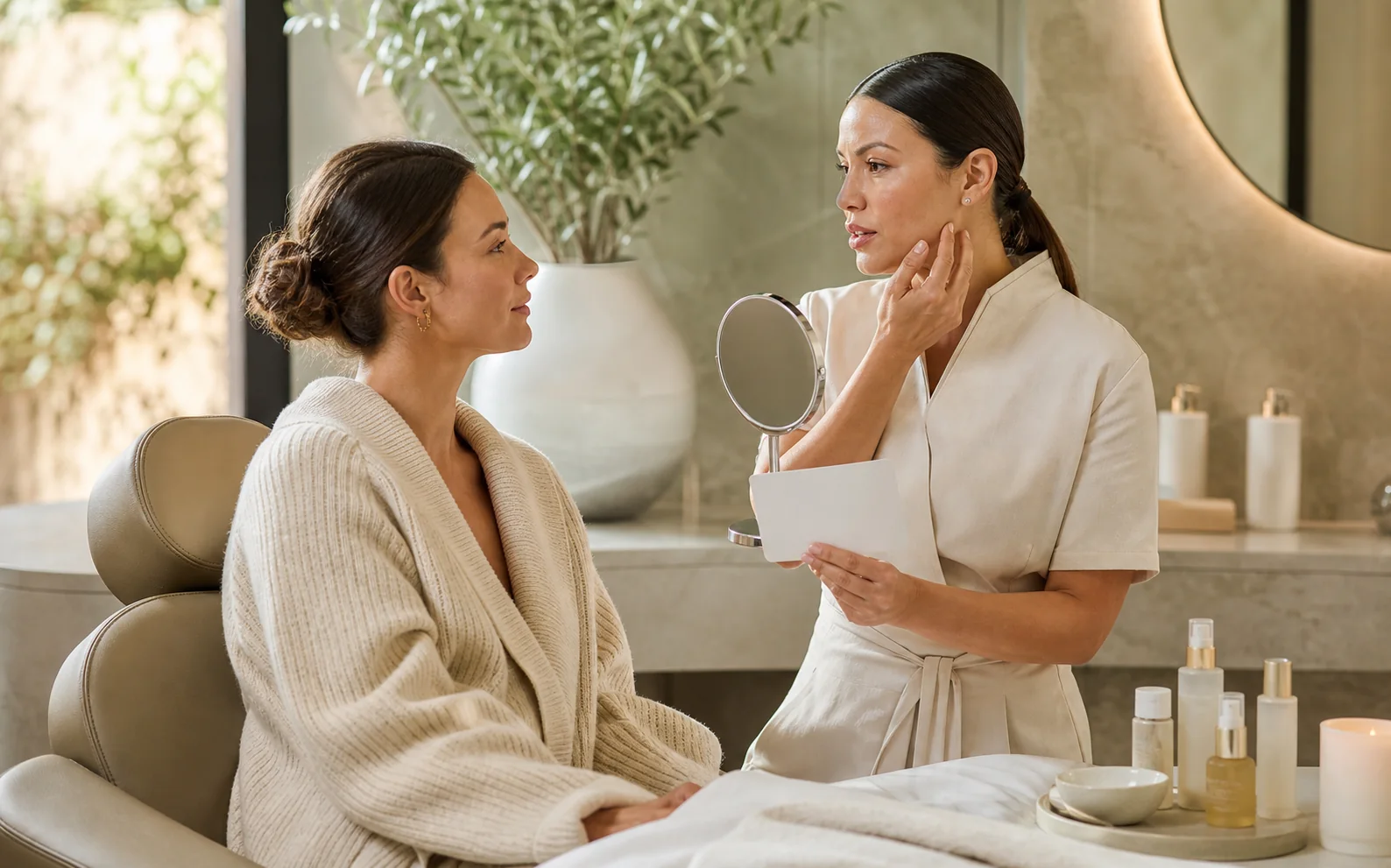
What a consultation should ask before jawline massage
A good consultation asks about more than skincare products. The specialist should ask whether the client has jaw pain, clicking, locking, headaches, dental work, recent injections, recent surgery, bruising, swelling, active infection, inflamed skin, pregnancy considerations, allergies, prescription topicals, or any condition that changes touch tolerance.
The NHS guidance on temporomandibular disorder includes jaw pain, clicking, headaches and difficulty opening the mouth among signs that may need attention. If a client describes persistent symptoms, the facial should become conservative and referral-minded. The role of the facial bar is to support comfort and appearance, not to diagnose the jaw joint.
This is also where a premium experience feels safer. The client does not have to guess whether to mention clenching, night guards or dental pain. The specialist invites the information and uses it to choose pressure, zones, pace and aftercare.
Gentle facial massage versus medical treatment
The difference is not subtle. Medical care evaluates a condition, makes a diagnosis and may recommend dental devices, physical therapy, medication or other treatment. A facial massage appointment supports a beauty and wellness outcome: relaxation, a smoother skin finish, temporary softness in expression, and a more rested-looking face.
That boundary makes the service more credible. If a client has jaw locking, intense pain, tooth damage, severe headaches, sudden swelling or symptoms that do not improve, a facial massage is not the answer. It may be postponed, adapted or limited to very gentle non-irritating skincare while the client seeks qualified advice.
For clients with ordinary screen-related tightness and no red flags, massage can still be valuable. The benefit is experiential and visible: the face may feel less guarded, the skin may look fresher after hydration, and the client leaves with a clearer plan for home care. The claim should stay modest because modest claims are usually the most trustworthy.
How pressure should feel on the jaw, cheeks and temples
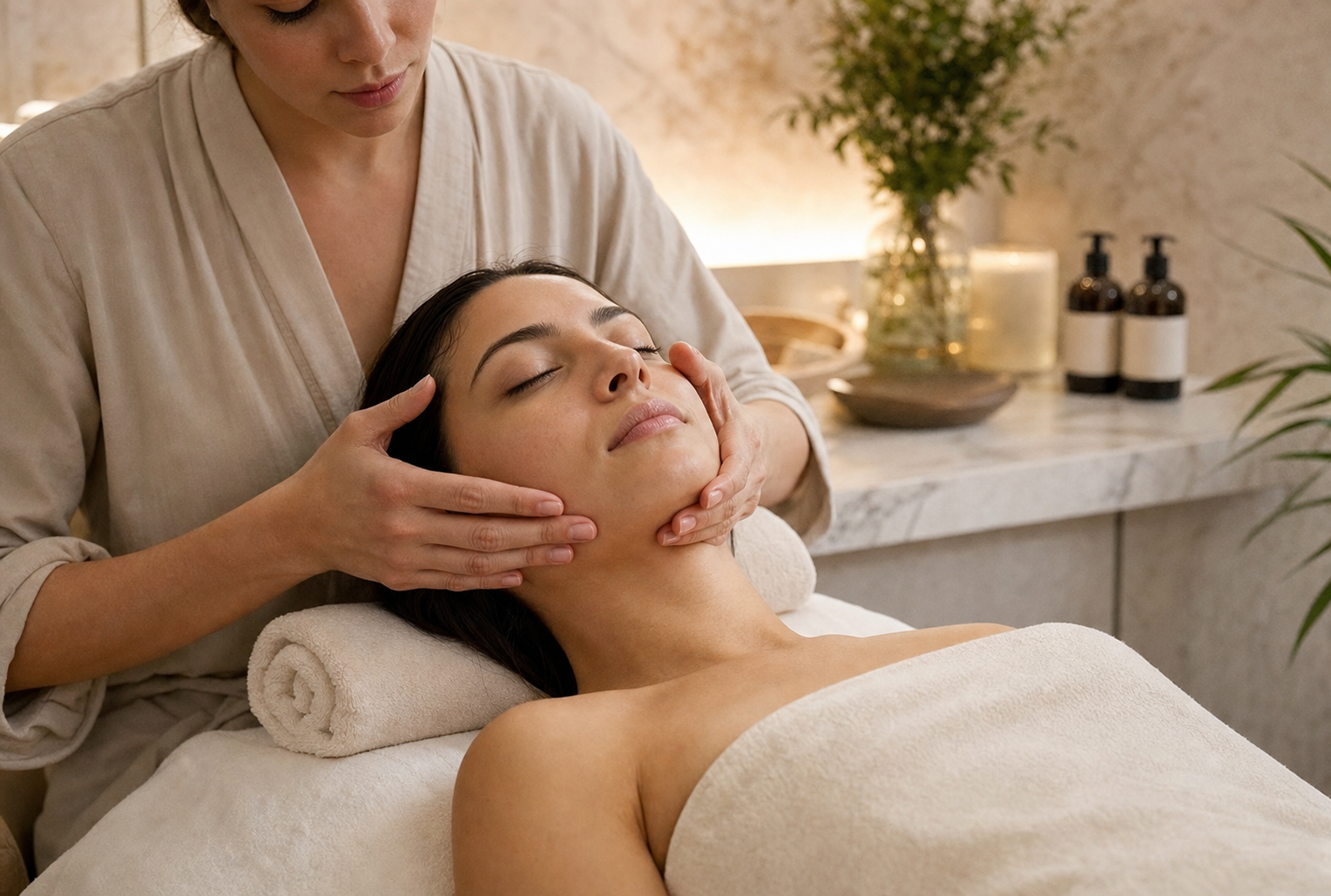
Jawline massage should not feel like a battle. The face contains delicate tissues, reactive skin, nerves, vessels and areas where strong pressure can create discomfort. A premium facial massage uses slow contact, precise pressure, and frequent check-ins rather than proving strength.
The jaw may tolerate slightly firmer work than the cheeks, but the pressure still needs to be adjusted. The temples often prefer slower circular movements. Cheeks that flush easily may need lighter touch. The neck should be handled with special care, particularly around the front of the neck, and some clients are better served by skipping neck work entirely.
The client should be able to breathe normally. If pressure causes pain, sharp sensation, nausea, dizziness, burning skin or anxiety, the plan should change immediately. A beautiful service is not the one the client endures. It is the one the client can receive comfortably.
Where lymphatic-style movements fit
Lymphatic drainage language is popular in beauty content, and it is often overpromised. Cleveland Clinic describes lymphatic drainage massage as gentle massage intended to encourage lymph fluid movement. In a facial bar, the responsible phrasing is narrower: slow, light movements may help some clients look temporarily less puffy or feel more relaxed, depending on skin condition and health history.
For jaw tension and screen fatigue, lymphatic-style movements may be used after gentle cleansing and before hydration, especially when the lower face feels heavy or the client has been sitting, traveling or sleeping poorly. The pressure should be light. More force does not mean more drainage, and aggressive rubbing can irritate skin.
Contraindications matter. Unexplained swelling, infection, fever, active inflammation, recent surgery, fresh injectables, certain medical conditions, pain or open lesions should change or stop massage. A beauty service should be proud of those limits because they protect the client.
Skin safety: massage is still skincare
Facial massage is sometimes discussed as if skin were only a surface to move over. In reality, the skin condition determines how much touch is appropriate. Over-exfoliated skin, sunburn, active acne lesions, rash, eczema flare, recent peel, retinoid irritation or fragrance reaction can make massage feel worse instead of better.
The American Academy of Dermatology's face-washing guidance emphasizes gentle cleansing and avoiding harsh scrubbing. That same principle belongs inside massage. Glide matters, product choice matters, towel texture matters, and the specialist should avoid pulling the skin in a way that creates friction.
For sensitive clients, the safest massage may be shorter, slower and paired with very simple hydration. For oily clients, the product should not feel heavy. For mature or dry skin, cushioning may be more important. This is why consultation and face diagnostics are part of the massage itself.
A realistic Anywell treatment flow
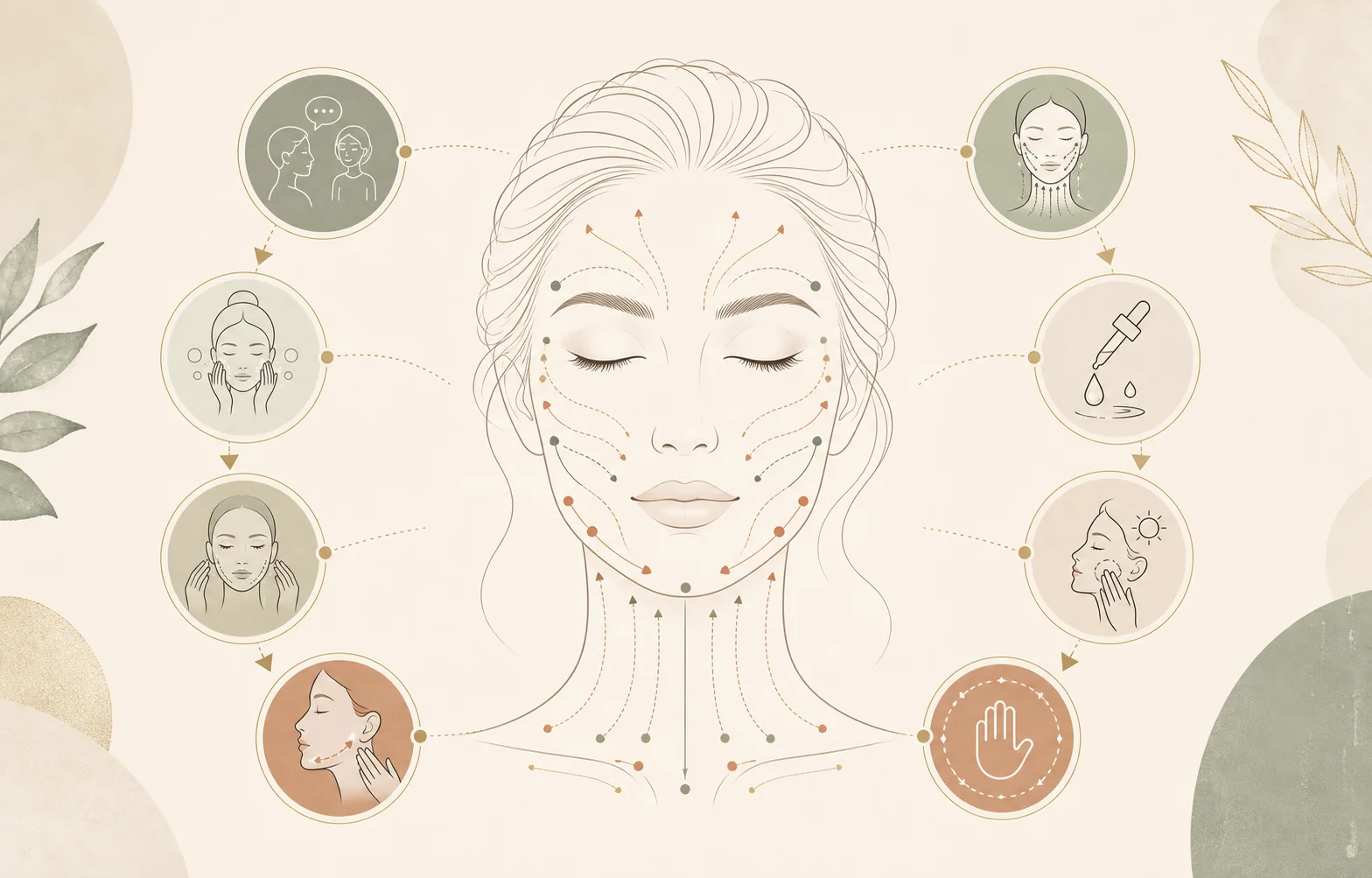
A jaw tension facial massage can begin with consultation, a gentle cleanse, a comfort check and a short assessment of skin sensitivity. The specialist then chooses the sequence: temples, cheeks, jawline, lower face and possibly neck work, depending on tolerance. Hydration and a calm finish complete the appointment.
The best flow is not identical for everyone. A client with heavy sunscreen and makeup residue may need more cleansing before touch. A client with reactive cheeks may need minimal friction. A client preparing for an event may need predictable hydration rather than anything that risks pinkness or tenderness.
The visible result should be described carefully. The face may look more rested, less tense, smoother under makeup or temporarily less puffy. It should not be sold as a structural jaw correction, a permanent lift or a medical release for TMJ pain.
Case study: the video-call client
Imagine a client who has spent two weeks in meetings and notices that her face looks tired on camera. She feels tight through the jaw and temples, but has no jaw locking, dental pain or swelling. Her skin is slightly dehydrated from air conditioning and late nights.
A thoughtful facial plan would avoid aggressive exfoliation and focus on nervous-system calm: gentle cleanse, slow temple and jawline work, soft cheek massage, hydrating mask, light moisturizer and aftercare that does not stack strong actives. The goal is not to erase fatigue. It is to help the face look more composed and to give the client a practical reset.
She leaves with clear advice: keep evening cleansing gentle, use moisturizer, avoid clenching while working when she notices it, take screen breaks, and seek dental or medical advice if pain, locking or persistent symptoms develop. The treatment is useful because it does not pretend to be more than it is.
Case study: the client with real jaw symptoms
Another client asks for strong jaw massage because she wakes with jaw pain and sometimes cannot open her mouth comfortably. She has clicking and headaches. This is a different situation. The specialist should not promise that massage will fix it.
The safest approach is to ask whether she has seen a dentist or healthcare professional, avoid deep pressure, and consider postponing focused jaw work. If a facial proceeds, it should stay in gentle skincare territory: cleansing, hydration, calming touch away from painful zones, and a clear recommendation to seek qualified evaluation.
This boundary protects both client and brand. Premium service is not only about what a specialist can do. It is also about knowing what should not be done in a beauty room.
Aftercare after a facial massage for jaw tension
After facial massage, keep the routine simple for the first evening. Cleanse gently if needed, moisturize, avoid harsh scrubs, and do not immediately layer strong acids or retinoids unless the specialist advised otherwise. The skin has already received touch and product, so extra stimulation may not be useful.
If the face feels tender, hot, swollen or irritated after the appointment, contact the facial bar and simplify the routine. Mild relaxed warmth can be normal for some clients, but pain, ongoing swelling, rash, strong burning or unusual symptoms should not be ignored.
Lifestyle aftercare can be practical rather than dramatic: drink water, sleep when possible, take screen breaks, avoid chewing very hard foods if the jaw is sensitive, notice clenching during work, and use daytime protection. These steps do not replace medical care, but they support the calm result of the appointment.
How often to book massage-led facial care
There is no universal schedule. Some clients like a massage-led facial before events, after travel or during stressful work cycles. Others prefer monthly maintenance because the ritual helps them notice tension before it becomes part of their expression. The frequency should depend on skin tolerance, budget, stress level and whether the client has any medical or dental symptoms.
For clients who also use active skincare, timing matters. Avoid placing a long massage appointment directly after a strong peel, sunburn, waxing or a week of retinoid irritation. A skin barrier that is already uncomfortable may need recovery before touch becomes pleasant.
The most elegant rhythm is one that the client can repeat calmly. A premium facial bar should not create pressure to overbook. It should create a sequence: diagnosis, treatment, aftercare, observation and a next appointment only when it has a clear purpose.
When to stop and seek professional advice
Stop treating jaw tension as a beauty issue if there is persistent pain, locking, difficulty chewing, tooth pain, headaches that interfere with life, swelling, fever, injury, numbness, sudden asymmetry, or symptoms after dental work or trauma. These signs need qualified evaluation.
Cleveland Clinic notes that if jaw pain, clicking or stiffness does not improve, a healthcare provider can help identify the cause. That is the responsible frame for a facial-bar article: the facial can support appearance and comfort, but it should not diagnose or treat TMD.
The FDA cosmetics information also keeps beauty language honest. Cosmetics and beauty services can cleanse, beautify, moisturize and support appearance. They should not be positioned as treating disease. Anywell's editorial standard is to explain what a service can support and where its limits begin.
Professional checklist before booking this treatment
Match the service to the skin today
Before choosing this service, look at your skin as a specialist would: current comfort, recent product use, sensitivity, event timing, and the result you want to see in the mirror. For facial massage for jaw tension, the best appointment is not necessarily the strongest appointment. It is the appointment that matches the condition of the skin on the day you arrive.
Tell the specialist about recent retinoids, acids, peels, cosmetic procedures, sun exposure, allergies, pregnancy, medication, or any reaction that made the skin burn or sting. This information changes pressure, exfoliation, device intensity, massage direction, product choice, and aftercare. A premium facial bar experience should feel personal because the skin history is part of the treatment.
After the appointment, protect the result with a simple routine. Avoid stacking strong actives immediately, keep the skin moisturized, use daytime protection, and notice how the face feels the next morning. The most useful beauty advice is rarely dramatic. It is specific, repeatable, and adapted to real life.
Read the result like an expert
It is also helpful to decide what success looks like before the treatment starts. For some clients, success is a fresher complexion before an event. For others, it is less tightness, a softer jaw, calmer redness, cleaner pores, or a routine that finally feels understandable. When the goal is precise, the specialist can choose a precise path and avoid turning every facial into the same generic protocol.
If your skin does not respond as expected, do not immediately add more products or book a stronger service. Review sleep, stress, cleansing habits, sun exposure, climate, and how often active ingredients are being used. A premium skincare plan evolves by observation. The face gives feedback, and a good facial bar uses that feedback to adjust the next appointment.
There are also moments when the best professional choice is to wait. Active infection, unexplained swelling, strong burning, open lesions, recent aggressive procedures, or a reaction that has not settled should change the plan. A beauty treatment should never compete with medical judgment. When in doubt, the safest luxury is restraint.
Build a long-term facial plan
For long-term authority, think of each visit as one chapter in a skin journal. The specialist notes what worked, what felt too strong, what created glow, and what should be repeated or avoided. This is how facial care becomes more intelligent over time: not through constant novelty, but through careful memory of the skin.
The final filter is lifestyle. A treatment that looks perfect on paper may be wrong before a flight, after poor sleep, during a stressful week, or just before heavy makeup. Premium skincare respects context. It asks not only what the skin needs, but what the client needs the skin to do during the next few days.
That is why the best recommendation is often a sequence rather than a single appointment. Start with the service that calms and clarifies, then build toward more active or sculpting work when the skin is ready. This patient order creates better visible results and a better relationship with the face.
For reader clarity, document the same logic in the article itself: what the treatment is for, who should be cautious, what result is realistic, and how the home routine protects the work. Readers trust a beauty brand more when it explains limits as clearly as benefits.
The same structure also supports the Anywell editorial standard. A strong journal article should answer the client's practical questions before they are asked: how the treatment feels, how long the visible result may last, what to avoid afterward, and when another service would be wiser. That level of usefulness is what separates premium editorial content from a simple service description.
For a facial bar, this clarity also improves the booking experience. The client arrives with better vocabulary, the specialist can refine the plan faster, and the treatment feels more intentional from the first consultation to the final aftercare recommendation. It turns education into confidence, and confidence into a calmer, more premium client journey.
Conclusion: the Anywell way
Facial massage for jaw tension can be a refined, useful part of a premium facial bar experience when it is practiced with restraint. The best version starts with consultation, respects skin sensitivity, uses gentle pressure, avoids medical promises and connects the treatment to realistic aftercare. For screen-heavy clients, the result may be a softer-looking expression, a calmer skin finish and a more grounded feeling after the appointment. Explore the Anywell service menu or book a consultation when you want facial massage that feels thoughtful, beauty-focused and clear about its limits.
FAQ
Can facial massage help jaw tension?
Gentle facial massage may support relaxation and a softer-looking expression for some clients, but it should not be described as treatment for TMD, bruxism or ongoing jaw pain.
Is jawline facial massage safe for everyone?
No. Pain, locking, swelling, infection, recent surgery, fresh injectables, inflamed skin or unexplained symptoms should change the plan and may require qualified medical or dental advice.
Will facial massage slim or permanently lift my jawline?
A facial may temporarily reduce puffiness or make the face look more relaxed, but it cannot change bone structure or promise permanent lifting.
What should I avoid after a facial massage?
Avoid harsh scrubs, strong acids, retinoids, extra heat and unnecessary friction immediately afterward unless your specialist gives different guidance.
When should I see a healthcare professional instead?
Seek qualified advice if jaw pain, clicking, locking, headaches, tooth pain, swelling or difficulty chewing persists or affects daily life.