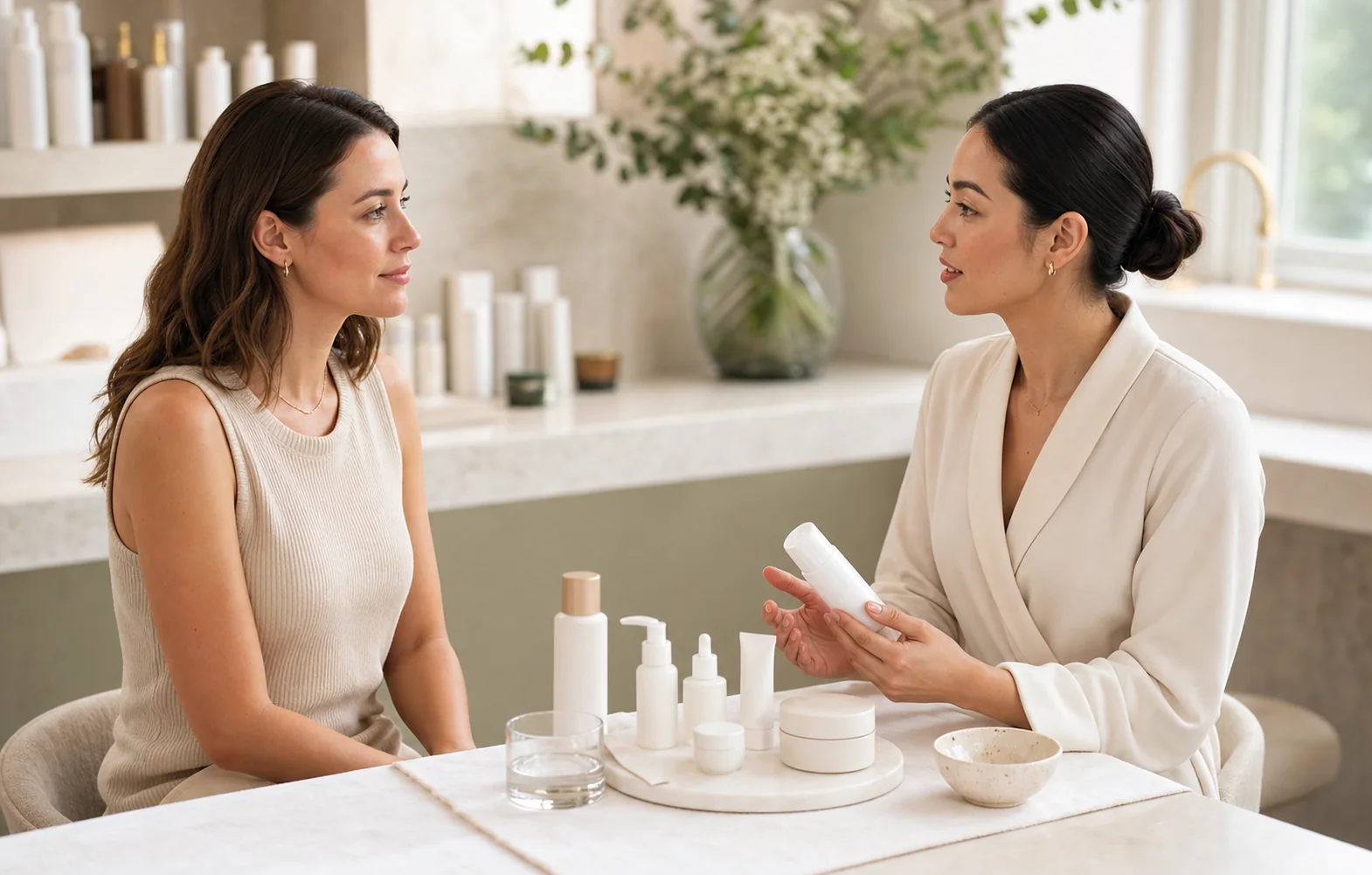
Dehydrated skin is one of the most common reasons clients book a facial, but it is also one of the easiest concerns to misunderstand. The face may feel tight after cleansing, look dull under makeup, show fine creasing around the eyes or mouth, or become shiny and uncomfortable at the same time. A client may call it dry skin, tired skin, sensitive skin or simply a loss of glow. In a premium facial bar, the important question is not which label sounds better. The question is what the skin is telling us today.
A dehydrated skin facial treatment should be calm, precise and barrier-aware. It can support a plumper-looking, fresher and more comfortable appearance by improving surface hydration, reducing unnecessary friction and helping the client rebuild a routine that holds moisture more predictably. It should not promise to cure a skin disease, permanently erase lines, remove pores, reverse aging or replace dermatology care. The result is often visible as a softer finish and better comfort, but it depends on the skin condition, home routine, climate and recent product history.
Authoritative guidance supports this conservative approach. The American Academy of Dermatology recommends gentle cleansing, warm or lukewarm water, fragrance-free products and moisturizers for dry or irritated skin. DermNet describes the skin barrier as an inside-outside system that regulates water loss and an outside-inside system that protects against irritants. Cleveland Clinic and NHS patient guidance reinforce the same practical direction: moisturize, avoid irritants and keep care gentle when skin is dry or uncomfortable. Anywell translates those boundaries into a service philosophy: hydrate intelligently, protect the barrier and avoid turning glow into irritation.
What dehydrated skin feels like in real life
Dehydrated skin is often described as a feeling before it is described as a look. Clients talk about tightness after washing, makeup that sits on the surface, a flat complexion by afternoon, sudden sensitivity to products that used to feel fine, or an uncomfortable shine that does not feel like healthy radiance. The cheeks may look dull while the T-zone still produces oil. Fine lines can appear more noticeable because the surface lacks cushion, not because the face has suddenly aged overnight.
This is why a premium facial consultation should separate oil, water, barrier comfort and true medical symptoms. Oily skin can still feel dehydrated. Mature skin can be dehydrated without being fragile. Sensitive skin may look dehydrated because the barrier is stressed. A facial bar does not need to diagnose disease to make a better plan. It needs to read the skin condition, ask the right questions and avoid treating every dull face with exfoliation.
Dry skin, dehydrated skin and barrier stress
In beauty language, dry skin often refers to a lack of oil or lipids, while dehydrated skin refers to lack of water in the surface layers. In real life, the two can overlap. A client may need both water-binding ingredients and richer comfort. Another client may need a lightweight hydration plan because heavier creams feel congesting. The service should be chosen from the skin in front of the specialist, not from a label on a booking form.
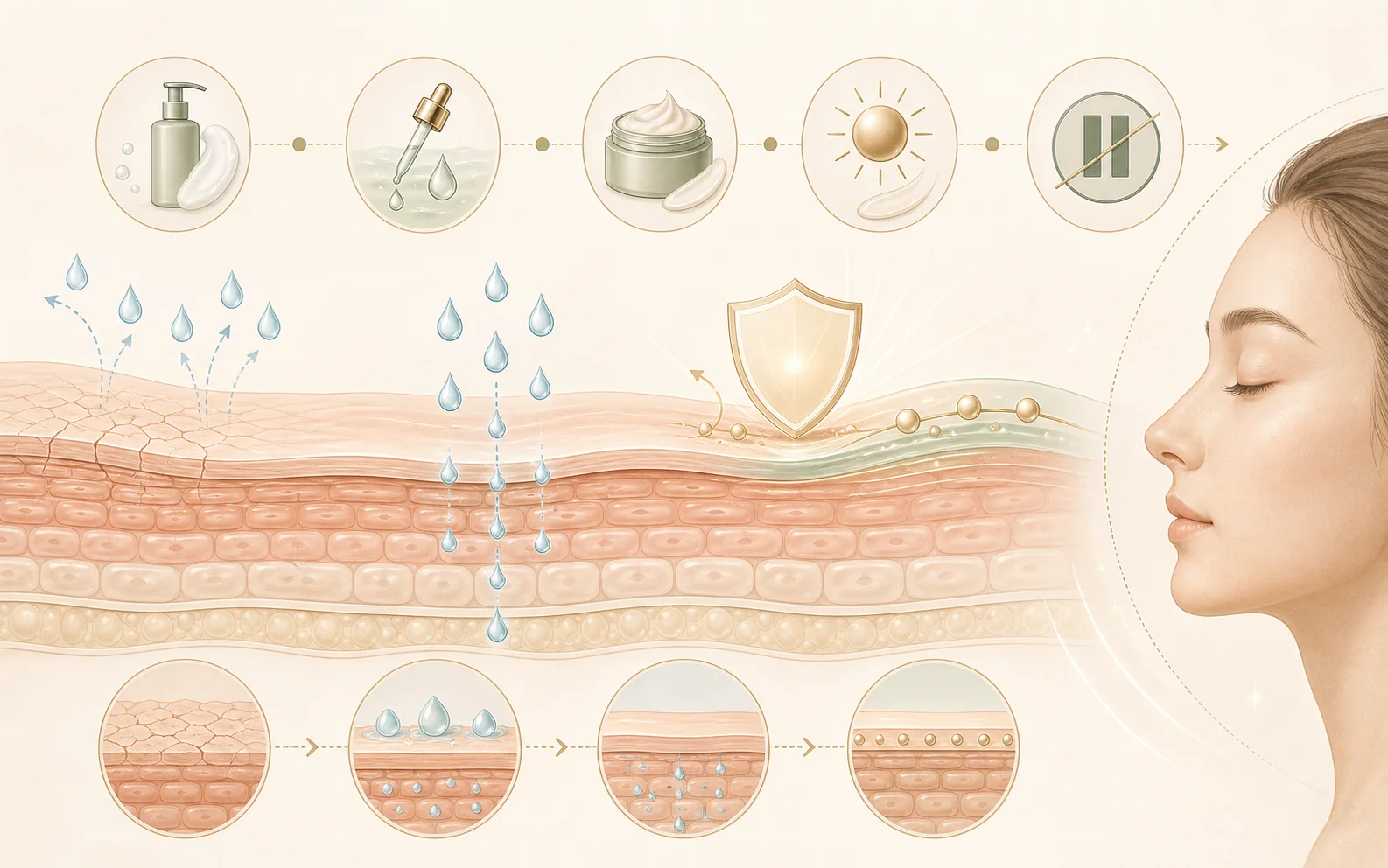
DermNet's skin barrier overview is useful here because it explains that the outer skin helps control transepidermal water loss while protecting against mechanical, chemical and microbial stress. When that barrier is disrupted, water can escape more easily and ordinary skincare may sting. This is the reason a dehydrated skin facial should not be built around friction, heat or aggressive active stacking. Hydration works better when the barrier is respected.
Why over-exfoliation is the wrong shortcut to glow
Many clients book a glow facial when the face looks dull. Sometimes gentle exfoliation is useful, but dullness caused by dehydration does not always need more polishing. If the skin is tight, shiny, flaky, red, recently sun-exposed or reactive, another scrub, acid or peel can make the face look brighter for an hour and more irritated by the next morning. Premium care means knowing when to stop.
The AAD advises gentle habits for dry skin and notes that people often make the mistake of exfoliating dry, peeling skin when moisturizing would be the better direction. That principle matters in the treatment room. A dehydrated skin facial can still feel refined and effective without chasing intensity. A softer cleanse, cushiony hydration, barrier-supportive moisturizer, gentle massage and simple aftercare can create a more elegant visible result than a strong polish.
The consultation questions that change the treatment
Before touching the face, the specialist should ask what has happened recently. Has the client increased retinoids or exfoliating acids? Was there a flight, long air-conditioned week, sauna, sun exposure, new cleanser, acne medication, waxing, shaving, injectables, laser, peel, allergy, pregnancy-related sensitivity or a product that caused burning? Has moisturizer started to sting? Does sunscreen feel tight? These details decide whether the facial should be active, hydrating, calming or postponed.
A good consultation also asks about the goal. Some clients want makeup to sit better for an event. Others want less tightness, a softer texture, fewer visible dry patches or guidance on routine. A client who wants event glow tomorrow needs predictability. A client who has months of tightness and irritation may need a slower barrier plan and possibly dermatology advice if symptoms persist. The same keyword can lead to different services.
What a hydration-focused facial can include
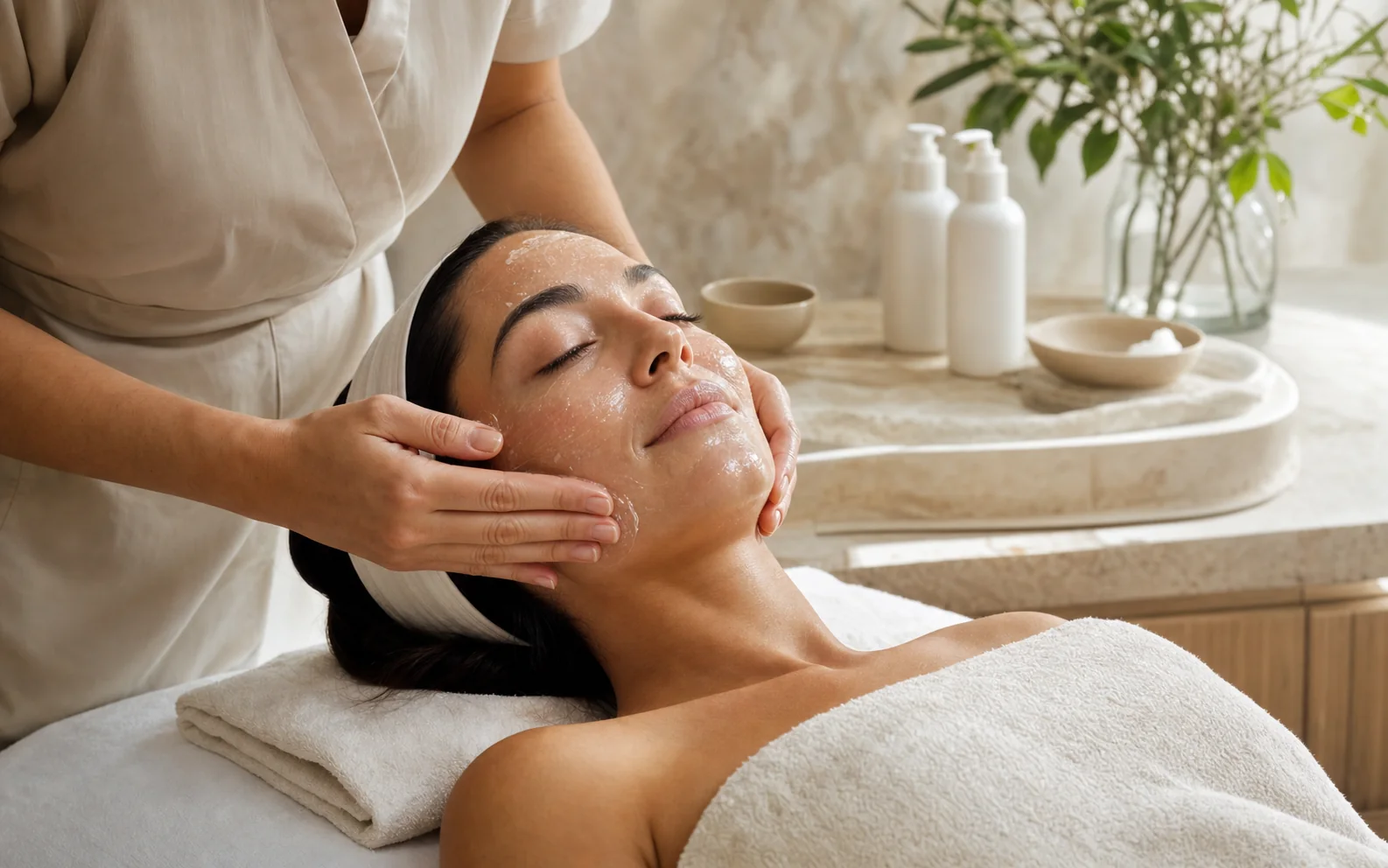
A dehydrated skin facial treatment usually starts with a gentle cleanse that removes surface residue without leaving the face squeaky. The specialist may use a hydrating serum step, a cushioning massage medium, a calm mask, barrier-supportive moisturizer and daytime protection when appropriate. Steam, extraction, strong exfoliation and active boosters should be used selectively, not automatically. The skin should feel more comfortable as the treatment progresses.
The most important detail is sequencing. Hydration is not one serum dropped onto irritated skin. It is a series of decisions that reduce water loss and friction: lukewarm cleansing, soft towels, enough slip during massage, products chosen for tolerance, no unnecessary stripping, and a finish that helps the surface feel cushioned. This is why the facial bar environment matters. The client should not feel rushed through a protocol; they should feel observed.
Humectants, emollients and occlusive comfort
Clients often ask for hyaluronic acid because it is associated with hydration. It can be useful, but the broader concept matters more than the ingredient trend. Humectants help attract or bind water in the surface layers. Emollients improve softness and slip. Occlusive or richer textures can reduce moisture loss for some skin types. A lightweight gel may be perfect for one client and insufficient for another.
AAD moisturizer guidance mentions ingredients such as ceramides and hyaluronic acid and recommends avoiding fragrance when skin is dry or easily irritated. NHS emollient guidance also explains the role of moisturizing treatments for dry, itchy or scaly skin. In a facial, the premium decision is texture matching: enough comfort to support the barrier, not so much heaviness that the client feels coated or congested.
Dehydrated oily skin needs balance, not punishment
One of the most common facial-bar mistakes is treating shiny dehydrated skin as if it needs to be stripped. A client may arrive with oil on the nose, tight cheeks, foundation separation and small dry flakes. If the treatment removes every trace of oil, the skin can feel clean for a moment and uncomfortable later. Shine control should not mean barrier damage.
For dehydrated oily skin, a smarter plan often uses a careful cleanse, limited extraction only where appropriate, lightweight hydration, non-comedogenic texture choices and aftercare that avoids harsh foaming cleansers. The client learns that water comfort and oil management can exist together. The goal is a calmer-looking finish, not a face that feels polished to the point of tension.
Dehydration after travel, air conditioning and city stress
Air travel, hotel air, long office days, dry indoor environments and seasonal shifts can all make the face look tired. Even in humid climates, constant air conditioning can change how the skin feels. Clients may drink water and still feel tight because the surface barrier and routine are not holding moisture well. This is why a facial can be helpful, but only if it treats the condition gently.
A travel-stressed client often benefits from a predictable hydration facial: no surprise peel, no aggressive extraction before a meeting, no strong new active ingredient the night before an event. The specialist can focus on cleansing, hydration, facial massage that does not overheat the skin, a mask chosen for comfort and a short home plan for the next forty-eight hours. The best result is often a rested, fresher look rather than a dramatic transformation.
Sensitive or redness-prone clients need extra caution
Dehydrated skin can feel sensitive, but not every sensitivity is simply dehydration. Persistent redness, burning, rash, eczema-like patches, infection, swelling, hives, rosacea flares, open lesions or pain should change the plan. A facial bar can provide general beauty care, but it should not pretend to diagnose or treat medical conditions. When symptoms are persistent, severe or unusual, qualified medical advice is the safer route.
If the skin is only mildly reactive and the client is otherwise comfortable, the facial can be shortened and simplified. Avoid strong fragrance, heat, harsh exfoliation, rough towels and long massage over flushing zones. Use fewer product layers, watch for stinging and give aftercare that the client can actually follow. Premium service is often quieter for sensitive clients, not more elaborate.
A realistic case: the pre-event dehydrated face
A client books two days before a dinner. Her skin is not inflamed, but makeup has been catching around the mouth and the cheeks look flat. She used an exfoliating toner twice this week and slept poorly. She wants glow, but she also wants to avoid redness. A strong peel would be a risky answer because the event is close and the skin already sounds depleted.
A better Anywell plan would be a gentle cleanse, no aggressive exfoliation, hydrating serum, soft massage with enough slip, a cushiony mask, moisturizer and clear instructions: keep routine simple, avoid new actives, cleanse gently, use daytime protection and remove makeup without scrubbing. The result may be smoother-looking makeup and a calmer glow, not a promise of perfect skin.
A realistic case: dehydrated skin from too many actives
Another client has been using retinol, an acid toner and a clay mask because social media promised glass skin. Now moisturizer stings and the face looks shiny but tight. In this scenario, the facial is not a chance to add more active treatment. It is a chance to pause, calm and rebuild confidence in a simpler routine.
The specialist might choose barrier-first care: gentle cleansing, hydrating and comforting layers, no peel, no scrub, minimal extraction and a written aftercare plan. The client may need to pause exfoliating products for a short period and reintroduce actives slowly, depending on tolerance and professional advice. If burning, rash or pain persists, dermatology care is more appropriate than another beauty appointment.
Aftercare: the forty-eight hour hydration plan
After a dehydrated skin facial, the home routine should be simple. Cleanse gently, use lukewarm water, pat dry, apply moisturizer while the skin is comfortable, and protect the face during the day. Avoid harsh scrubs, strong acids, retinoid escalation, new fragrance-heavy products and excessive heat immediately after treatment unless the specialist gives a reason. The goal is to keep the new comfort from being disturbed.
AAD face-washing guidance recommends using fingertips rather than abrasive tools, avoiding scrubbing, rinsing with lukewarm water and patting dry. Those small habits matter. The client does not need a shelf of new products after every facial. Often the best aftercare is using fewer products more consistently and choosing textures the skin actually tolerates.
When a hydrating facial is not enough
A hydrating facial can support comfort and appearance, but it is not the answer for everything. If skin is cracked, bleeding, persistently itchy, painful, infected, swollen, severely inflamed or reacting repeatedly, the client should seek dermatology advice. AAD guidance notes that excessive dryness can be associated with underlying skin conditions and that burning or stinging from products should be discussed with a dermatologist.
This does not reduce the value of a facial. It clarifies its role. A facial bar is excellent for cosmetic support, routine education, professional touch, hydration planning and visible polish. Medical symptoms need medical judgment. A premium brand earns trust by saying this plainly.
How often to book a dehydrated skin facial
Frequency depends on why the skin is dehydrated. A client recovering from travel or event stress may need one careful appointment and a better home routine. A client with chronic tightness may benefit from a short series of barrier-supportive visits spaced far enough apart to observe the skin response. A client using strong actives may need a planning appointment before the next active facial.
The useful question is not how often can the skin be treated. It is how often the treatment adds value without creating dependence or irritation. Watch the next morning and the next week: does the skin feel calmer, does moisturizer sting less, does makeup sit better, does tightness return quickly, did any redness linger? Those observations should shape the next booking.
Choosing the right Anywell service
If your main concern is tightness, dullness and surface discomfort, choose a hydration-led or barrier-comfort consultation rather than an intense resurfacing appointment. If your concern is congestion plus dehydration, ask for a balanced plan that does not strip the face. If your concern is event glow, be honest about the date so the specialist can avoid unpredictable steps. If your concern is persistent burning or rash, pause and seek medical advice first.
The Anywell service menu is strongest when it is used as a conversation, not a fixed script. A dehydrated skin facial treatment may include glow work, gentle massage, skin diagnostics, aftercare coaching and product-texture guidance. It may also intentionally exclude the steps that would make the skin look worse later. That restraint is part of premium care.
Professional checklist before booking this treatment
Match the service to the skin today
Before choosing this service, look at your skin as a specialist would: current comfort, recent product use, sensitivity, event timing, and the result you want to see in the mirror. For dehydrated skin facial treatment, the best appointment is not necessarily the strongest appointment. It is the appointment that matches the condition of the skin on the day you arrive.
Tell the specialist about recent retinoids, acids, peels, cosmetic procedures, sun exposure, allergies, pregnancy, medication, or any reaction that made the skin burn or sting. This information changes pressure, exfoliation, device intensity, massage direction, product choice, and aftercare. A premium facial bar experience should feel personal because the skin history is part of the treatment.
After the appointment, protect the result with a simple routine. Avoid stacking strong actives immediately, keep the skin moisturized, use daytime protection, and notice how the face feels the next morning. The most useful beauty advice is rarely dramatic. It is specific, repeatable, and adapted to real life.
Read the result like an expert
It is also helpful to decide what success looks like before the treatment starts. For some clients, success is a fresher complexion before an event. For others, it is less tightness, a softer jaw, calmer redness, cleaner pores, or a routine that finally feels understandable. When the goal is precise, the specialist can choose a precise path and avoid turning every facial into the same generic protocol.
If your skin does not respond as expected, do not immediately add more products or book a stronger service. Review sleep, stress, cleansing habits, sun exposure, climate, and how often active ingredients are being used. A premium skincare plan evolves by observation. The face gives feedback, and a good facial bar uses that feedback to adjust the next appointment.
There are also moments when the best professional choice is to wait. Active infection, unexplained swelling, strong burning, open lesions, recent aggressive procedures, or a reaction that has not settled should change the plan. A beauty treatment should never compete with medical judgment. When in doubt, the safest luxury is restraint.
Build a long-term facial plan
For long-term authority, think of each visit as one chapter in a skin journal. The specialist notes what worked, what felt too strong, what created glow, and what should be repeated or avoided. This is how facial care becomes more intelligent over time: not through constant novelty, but through careful memory of the skin.
The final filter is lifestyle. A treatment that looks perfect on paper may be wrong before a flight, after poor sleep, during a stressful week, or just before heavy makeup. Premium skincare respects context. It asks not only what the skin needs, but what the client needs the skin to do during the next few days.
That is why the best recommendation is often a sequence rather than a single appointment. Start with the service that calms and clarifies, then build toward more active or sculpting work when the skin is ready. This patient order creates better visible results and a better relationship with the face.
For reader clarity, document the same logic in the article itself: what the treatment is for, who should be cautious, what result is realistic, and how the home routine protects the work. Readers trust a beauty brand more when it explains limits as clearly as benefits.
The same structure also supports the Anywell editorial standard. A strong journal article should answer the client's practical questions before they are asked: how the treatment feels, how long the visible result may last, what to avoid afterward, and when another service would be wiser. That level of usefulness is what separates premium editorial content from a simple service description.
For a facial bar, this clarity also improves the booking experience. The client arrives with better vocabulary, the specialist can refine the plan faster, and the treatment feels more intentional from the first consultation to the final aftercare recommendation. It turns education into confidence, and confidence into a calmer, more premium client journey.
Conclusion: the Anywell way
Dehydrated skin facial treatment is not about flooding the face with products or polishing dullness until the skin looks shiny. It is about reading water loss, barrier comfort, climate, routine and timing, then choosing a service that supports a fresher-looking, calmer and more comfortable complexion. Explore Anywell services or book a consultation if you want a hydration plan that feels premium because it is specific to the skin you bring in that day.
FAQ
What is a dehydrated skin facial treatment?
It is a professional facial planned around surface hydration, barrier comfort, gentle cleansing, suitable moisturizer textures, realistic glow and simple aftercare.
Can oily skin be dehydrated?
Yes. Skin can produce oil and still feel tight or lack surface water comfort, so the facial should balance cleansing with lightweight hydration.
Should dehydrated skin be exfoliated?
Sometimes very gently, but not automatically. If the skin is tight, peeling, stinging or recently over-exfoliated, hydration and barrier comfort are usually safer priorities.
How soon before an event should I book this facial?
For predictable glow, many clients prefer a few days before an event, but timing depends on sensitivity, recent actives and the exact service chosen.
When should I see a dermatologist instead of booking a facial?
Seek qualified care for persistent burning, rash, bleeding, infection, unexplained swelling, severe inflammation, pain or symptoms that do not settle with gentle care.