
A facial skincare routine should not be a shelf full of products trying to compete with a professional treatment. It should be the quiet bridge between appointments: the morning steps that protect the result, the evening steps that keep the skin comfortable, and the small adjustments that help the specialist understand what your face needs next time. When that bridge is missing, even a beautiful facial can feel temporary or confusing.
Many clients book a premium facial because the skin looks dull, tight, shiny, puffy, textured or tired. The appointment can cleanse, hydrate, soften the visible surface, support a more rested appearance and create a clear reset. But the skin still lives at home: in sunscreen, makeup, air conditioning, travel, stress, shaving, retinoids, acids, workouts, late nights and climate changes. A professional facial and a home routine should therefore speak the same language.
The most useful language is conservative and practical. The American Academy of Dermatology emphasizes a simple daily routine, gentle cleansing, moisturizing and sun protection. DermNet explains why the skin barrier matters for water loss and external irritation. FDA cosmetics guidance is a useful boundary too: beauty products and services can cleanse, beautify, moisturize and support appearance, but they should not be presented as medical treatment.
This Anywell guide explains how to build a facial skincare routine around professional treatments: what to do before a visit, what to pause, how to simplify aftercare, when to restart active ingredients, how to plan morning and evening steps, and how to read the skin's feedback without overreacting. It is general skincare education, not medical advice. Persistent rash, infection, severe irritation, unexplained swelling, changing lesions, allergic reactions or ongoing skin disease should be assessed by a qualified healthcare professional.
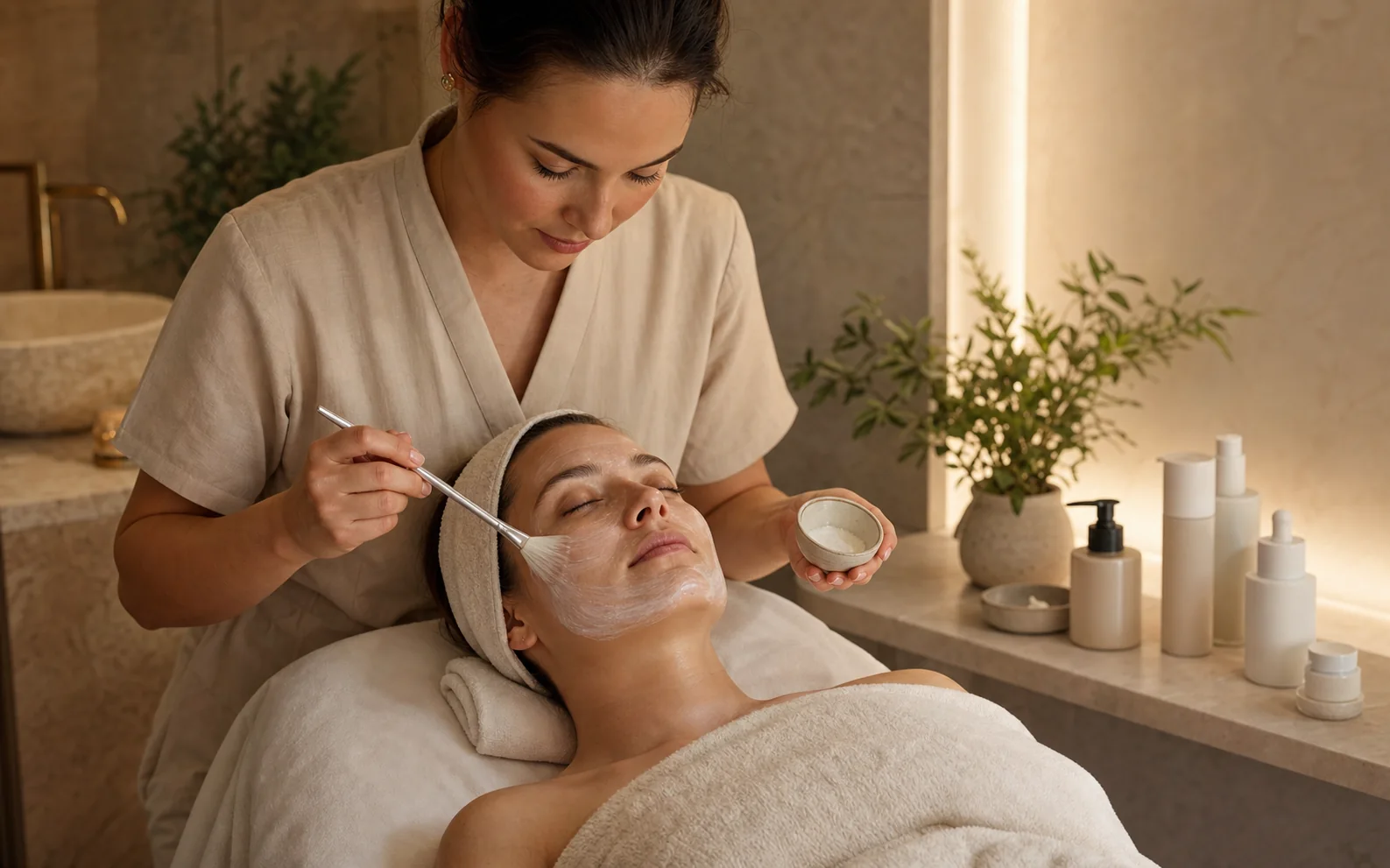
The routine starts before the facial, not after
A facial is easier to personalize when the specialist knows what your skin has been doing for the last two weeks. Recent retinoids, exfoliating acids, benzoyl peroxide, shaving irritation, sun exposure, fragrance reactions, waxing, peels, injectables, pregnancy, medications and allergy history can all change the plan. This is why a premium consultation asks about routine before it touches the skin.
The goal is not to judge whether your routine is perfect. The goal is to understand tolerance. Skin that has used strong actives all week may need a calmer facial. Skin that has been under-cleansed because sunscreen feels hard to remove may need a more thorough but still gentle cleansing step. Skin that stings with moisturizer may need barrier support before glow work.
A useful pre-appointment habit is to keep the routine stable for several days before a new service. Avoid adding a new exfoliant, retinoid, peel pad, scrub, mask or fragrance-heavy product right before the appointment unless your specialist specifically advised it. A stable baseline makes the treatment decision more accurate.
Build the morning routine around protection
Morning care should prepare the skin for the day, not recreate the entire facial. For many clients, that means a gentle cleanse or rinse depending on skin type and specialist guidance, a moisturizer that feels comfortable, and broad daytime protection. AAD sunscreen guidance is clear that sun protection is central to reducing visible sun damage and supporting long-term skin health.
The exact texture matters. Oily skin may prefer a lighter moisturizer and sunscreen finish. Dry or mature skin may need a more cushioning layer. Sensitive skin may need fewer fragranced products and less friction. A good facial bar routine does not force every client into the same sequence; it adapts the same principles to different skin behavior.
After a facial, morning care is usually about restraint. Do not chase extra glow with every active product you own. If the skin feels comfortable, keep the routine familiar. If it feels warm, tight or unusually sensitive, simplify and ask for professional guidance before restarting stronger steps.
Make evening care the recovery anchor
Evening care is where many routines become too ambitious. Clients remove makeup, double-cleanse, use acids, retinoids, scrubs, masks, brightening serums and rich creams in the same week, then wonder why the skin feels unpredictable. A routine that supports professional facials needs recovery nights as much as active nights.
A simple evening anchor is gentle cleansing, moisturizer and enough patience to notice how the skin feels. If sunscreen or long-wear makeup is present, cleansing should be thorough without scrubbing. AAD face-washing guidance emphasizes using gentle technique rather than harsh friction, which is especially important after professional treatment.
On nights after a facial, a recovery mindset is often best. Let the skin tell you whether it wants more or less. Tightness, heat, stinging or unusual redness are signals to simplify. Comfortable, balanced skin can gradually return to the normal plan.
Active ingredients need timing, not drama
Retinoids, exfoliating acids, vitamin C, benzoyl peroxide and other active products can be useful in the right context, but they can also collide with professional treatment if timing is ignored. A facial skincare routine should separate ambition from irritation. More steps do not automatically create more elegance.
Before a stronger facial, many specialists ask clients to pause certain actives for a short window, especially if the skin is peeling, sensitive or dry. After a facial, the restart should depend on how the skin feels and what was done during the appointment. A hydrating facial may require a shorter pause than an exfoliation-heavy service, but the client should not guess aggressively.
This is where a consultation note becomes valuable. The specialist can recommend when to restart retinoids or acids, whether to reduce frequency for a week, and which products to avoid combining. The advice should be specific enough to follow in real life.
Barrier comfort is the routine's quality control
The skin barrier is not a trend word; it is the quality control system for the whole routine. DermNet describes barrier function as central to limiting water loss and protecting against external irritants. In practical facial-bar language, barrier comfort means the skin can tolerate cleansing, moisturization, sunscreen, massage and occasional active ingredients without constantly feeling hot or tight.
A barrier-friendly skincare routine does not mean avoiding all active care forever. It means observing the skin's capacity. If the face stings after simple moisturizer, looks shiny and dry at the same time, flushes easily, or burns after sunscreen, the routine may need fewer steps and more recovery before another ambitious treatment.
Professional facials can help identify this pattern. The specialist can see which zones react quickly, where dehydration is visible, and whether the client's home products are supporting or disturbing the result. That observation turns the routine into a plan rather than a product list.
Do not let the routine fight the treatment
A common mistake is booking a calming facial and then using a strong exfoliating mask the same night. Another is investing in a hydrating treatment but continuing a cleanser that leaves the face tight every morning. The professional service and the home routine should not cancel each other out.
Before leaving the facial bar, ask what should be paused for the next few days. Ask whether makeup is fine that evening, whether sauna, intense exercise or sun exposure should be avoided, and when active products can return. These questions are practical, not fussy.
The same logic applies before the next appointment. If you want the specialist to assess your real skin condition, arrive with honest information. Tell them if you changed sunscreen, started a retinoid, skipped moisturizer, traveled, shaved more often, or reacted to fragrance. The routine is part of the diagnosis.
A weekly rhythm that feels realistic
A premium routine does not need to be complicated. A simple weekly rhythm may include consistent morning protection, gentle evening cleansing, moisturizing, one or two planned active nights if the skin tolerates them, and recovery nights after stronger products or professional services. The point is rhythm, not punishment.
For dry or mature skin, the rhythm may lean toward hydration and comfort. For oily or congestion-prone skin, it may include careful cleansing and light layers without stripping. For sensitive skin, it may prioritize fewer products and longer observation windows. For pre-event skin, it may avoid new experiments close to the date.
This is also where professional facials become more strategic. Instead of booking only when the face feels chaotic, the client can plan maintenance around seasons, events, travel, active-ingredient cycles and stress. The appointment becomes a checkpoint rather than an emergency repair.
Client scenario: the over-corrected routine
Imagine a client who feels dull and congested, so she adds an acid toner, a retinoid, a clay mask and a scrub in the same month. The skin becomes shiny, tight and more reactive. She books a facial asking for a strong glow treatment, but the diagnosis suggests that the routine has outpaced the barrier.
A better plan begins with a calmer professional service: gentle cleansing, hydration, a soothing mask, minimal friction and an aftercare plan. At home, she pauses the most irritating combinations, keeps moisturizer consistent, uses daytime protection and restarts active steps gradually only when the skin is comfortable.
This is not a less advanced routine. It is a more intelligent routine. It recognizes that glow is not always created by removing more. Sometimes it is created by letting the skin recover enough to reflect light well.
Client scenario: the minimal routine that needs one upgrade
Another client uses only cleanser and moisturizer. Her skin is comfortable but uneven, and she wants a more polished result before work events. The specialist may not need to overhaul everything. The routine may simply need better daytime protection, a more compatible cleanser, and a measured plan for one active product if the skin tolerates it.
This is where a facial bar can be more helpful than a product shelf. The specialist sees how the skin responds in treatment, then recommends a small change rather than a dramatic purchase. The client leaves understanding why the step matters and how to use it.
Premium guidance is often subtractive. It removes confusion, reduces unnecessary layering and keeps the client focused on the few habits that protect the facial result.
How often should professional facials shape the routine?
There is no universal schedule. Some clients benefit from monthly maintenance, others prefer seasonal check-ins, pre-event appointments or recovery visits after travel. The right frequency depends on skin condition, budget, lifestyle, sensitivity, goals and how much active care happens at home.
If the routine is stable and the skin is comfortable, facials can refine: hydration, massage, cleansing, glow support and professional observation. If the routine is chaotic, the facial may need to simplify first. If the client is preparing for an event, timing becomes more important than intensity.
The best schedule is one the client can actually maintain. A luxury facial should not create pressure to overbook. It should create confidence that the next step has a reason.
When to stop and ask for medical advice
Facial bars support appearance, comfort and skincare education. They do not replace dermatology or medical care. If a client has persistent rash, infection, painful cystic acne, unexplained swelling, bleeding lesions, changing moles, severe burning, eye-area symptoms or an allergic reaction that does not settle, the responsible recommendation is qualified medical evaluation.
FDA cosmetics information is useful because it keeps the boundary clear. Cosmetics can cleanse, beautify, moisturize and support appearance. They should not be positioned as curing disease or changing the body's structure. A premium skincare routine is more credible when it respects that boundary.
This does not reduce the value of professional facial care. It protects it. A facial skincare routine works best when beauty care, home habits and medical judgment each have their proper place.


Professional checklist before booking this treatment
Match the service to the skin today
Before choosing this service, look at your skin as a specialist would: current comfort, recent product use, sensitivity, event timing, and the result you want to see in the mirror. For facial skincare routine, the best appointment is not necessarily the strongest appointment. It is the appointment that matches the condition of the skin on the day you arrive.
Tell the specialist about recent retinoids, acids, peels, cosmetic procedures, sun exposure, allergies, pregnancy, medication, or any reaction that made the skin burn or sting. This information changes pressure, exfoliation, device intensity, massage direction, product choice, and aftercare. A premium facial bar experience should feel personal because the skin history is part of the treatment.
After the appointment, protect the result with a simple routine. Avoid stacking strong actives immediately, keep the skin moisturized, use daytime protection, and notice how the face feels the next morning. The most useful beauty advice is rarely dramatic. It is specific, repeatable, and adapted to real life.
Read the result like an expert
It is also helpful to decide what success looks like before the treatment starts. For some clients, success is a fresher complexion before an event. For others, it is less tightness, a softer jaw, calmer redness, cleaner pores, or a routine that finally feels understandable. When the goal is precise, the specialist can choose a precise path and avoid turning every facial into the same generic protocol.
If your skin does not respond as expected, do not immediately add more products or book a stronger service. Review sleep, stress, cleansing habits, sun exposure, climate, and how often active ingredients are being used. A premium skincare plan evolves by observation. The face gives feedback, and a good facial bar uses that feedback to adjust the next appointment.
There are also moments when the best professional choice is to wait. Active infection, unexplained swelling, strong burning, open lesions, recent aggressive procedures, or a reaction that has not settled should change the plan. A beauty treatment should never compete with medical judgment. When in doubt, the safest luxury is restraint.
Build a long-term facial plan
For long-term authority, think of each visit as one chapter in a skin journal. The specialist notes what worked, what felt too strong, what created glow, and what should be repeated or avoided. This is how facial care becomes more intelligent over time: not through constant novelty, but through careful memory of the skin.
The final filter is lifestyle. A treatment that looks perfect on paper may be wrong before a flight, after poor sleep, during a stressful week, or just before heavy makeup. Premium skincare respects context. It asks not only what the skin needs, but what the client needs the skin to do during the next few days.
That is why the best recommendation is often a sequence rather than a single appointment. Start with the service that calms and clarifies, then build toward more active or sculpting work when the skin is ready. This patient order creates better visible results and a better relationship with the face.
For reader clarity, document the same logic in the article itself: what the treatment is for, who should be cautious, what result is realistic, and how the home routine protects the work. Readers trust a beauty brand more when it explains limits as clearly as benefits.
The same structure also supports the Anywell editorial standard. A strong journal article should answer the client's practical questions before they are asked: how the treatment feels, how long the visible result may last, what to avoid afterward, and when another service would be wiser. That level of usefulness is what separates premium editorial content from a simple service description.
For a facial bar, this clarity also improves the booking experience. The client arrives with better vocabulary, the specialist can refine the plan faster, and the treatment feels more intentional from the first consultation to the final aftercare recommendation. It turns education into confidence, and confidence into a calmer, more premium client journey.
Conclusion: the Anywell way
A facial skincare routine is the relationship between what happens in the treatment room and what happens every morning and evening afterward. When the routine is gentle, timed, protective and honest, professional treatments can feel more coherent and easier to maintain. At Anywell Facial Bar, that means starting with consultation, choosing the right service for the skin today, keeping aftercare simple, and adjusting the plan as the face gives feedback. Explore the Anywell service menu or book a consultation when you want a routine that supports your facial results without overwhelming your skin.
FAQ
What is a facial skincare routine?
It is a home-care plan designed to support professional facial treatments through gentle cleansing, moisturizing, sun protection, active-ingredient timing and realistic aftercare.
What should I avoid after a facial?
Many clients should avoid scrubs, strong exfoliants, new active products, intense heat and unnecessary friction immediately after a facial unless the specialist gives different guidance.
When can I restart retinol or acids after a facial?
Timing depends on the treatment and your skin's comfort. Ask the specialist for a specific restart plan, especially if your skin is sensitive, peeling or warm.
Do I need many products to maintain facial results?
No. A consistent gentle cleanser, moisturizer, daytime protection and carefully timed active products often support results better than a complicated routine.
Can a facial routine treat medical skin conditions?
No. A facial routine can support appearance and comfort, but persistent symptoms, infection, severe irritation or changing lesions should be reviewed by a qualified healthcare professional.