
Sensitive skin is one of the most common reasons people hesitate before booking a facial. They want glow, clean skin, massage and expert attention, but they also remember the product that stung, the mask that left heat in the cheeks, or the exfoliation that made makeup look worse the next morning. A premium sensitive skin facial treatment should begin by taking that hesitation seriously.
The best calming facial is not a weak facial. It is a precise facial. It uses fewer assumptions, gentler transitions and more observation. The specialist reads the skin before deciding how much cleansing, exfoliation, massage, heat, hydration or finishing product the face can tolerate that day.
At Anywell Facial Bar, sensitive skin care sits between skincare education and spa experience. Some clients arrive with naturally reactive skin. Others created sensitivity through too many acids, retinoids, scrubs, cleansing devices or quick product changes. The same phrase can describe several different situations, so the treatment needs nuance.
This guide explains how a professional facial can support barrier recovery, how to prepare, what to avoid, where facial massage fits, and how to keep expectations grounded. It is educational, not medical advice.
What makes skin feel sensitive?
Sensitivity is not always a fixed skin type. Some people have long-term reactive skin, but many clients move in and out of sensitivity depending on weather, stress, hormonal shifts, travel, shaving, over-cleansing, active ingredients, sun exposure or recent procedures.
Common signs include tightness after cleansing, stinging when moisturizer is applied, flushing after heat, rough patches, visible redness, dryness around the mouth or cheeks, makeup clinging to texture, or a shiny surface that still feels dehydrated.
The skin barrier is the outer system that helps hold moisture and buffer everyday exposure. In spa language, that means a facial should replenish and calm before it stimulates.
Consultation is the treatment foundation
A sensitive skin appointment should begin before the first product touches the face. The specialist should ask what has changed recently: new retinoids, acids, vitamin C, prescription creams, peels, laser, injections, waxing, shaving irritation, pregnancy, allergies or product reactions.
Consultation is also where expectations become realistic. A calming facial can often support a softer, fresher and more comfortable look. It should not promise to cure sensitivity, erase redness permanently, treat rosacea, eliminate acne or replace dermatology care.
Good consultation includes touch preference. Some clients with sensitive skin love massage but need very slow pressure and fragrance-free slip. Others become red from manipulation and need minimal touch.
The ideal sequence for a calming facial
The American Academy of Dermatology recommends a gentle, non-abrasive cleanser, lukewarm water and avoiding scrubbing. That advice translates directly into a facial bar environment. Sensitive skin does not need a squeaky-clean feeling.
Exfoliation should be an option, not a rule. A mild enzyme, a low-intensity acid, a short-contact polish or no exfoliation can all be professional choices depending on tolerance. Skipping exfoliation can be the exact decision that keeps the skin calm.
Hydration and barrier-supportive textures are central. The finish should be chosen for the client: a light gel-cream for oilier sensitive skin, a richer cream for dry mature skin, or a minimalist texture for clients who react easily.
Where massage fits when skin is reactive
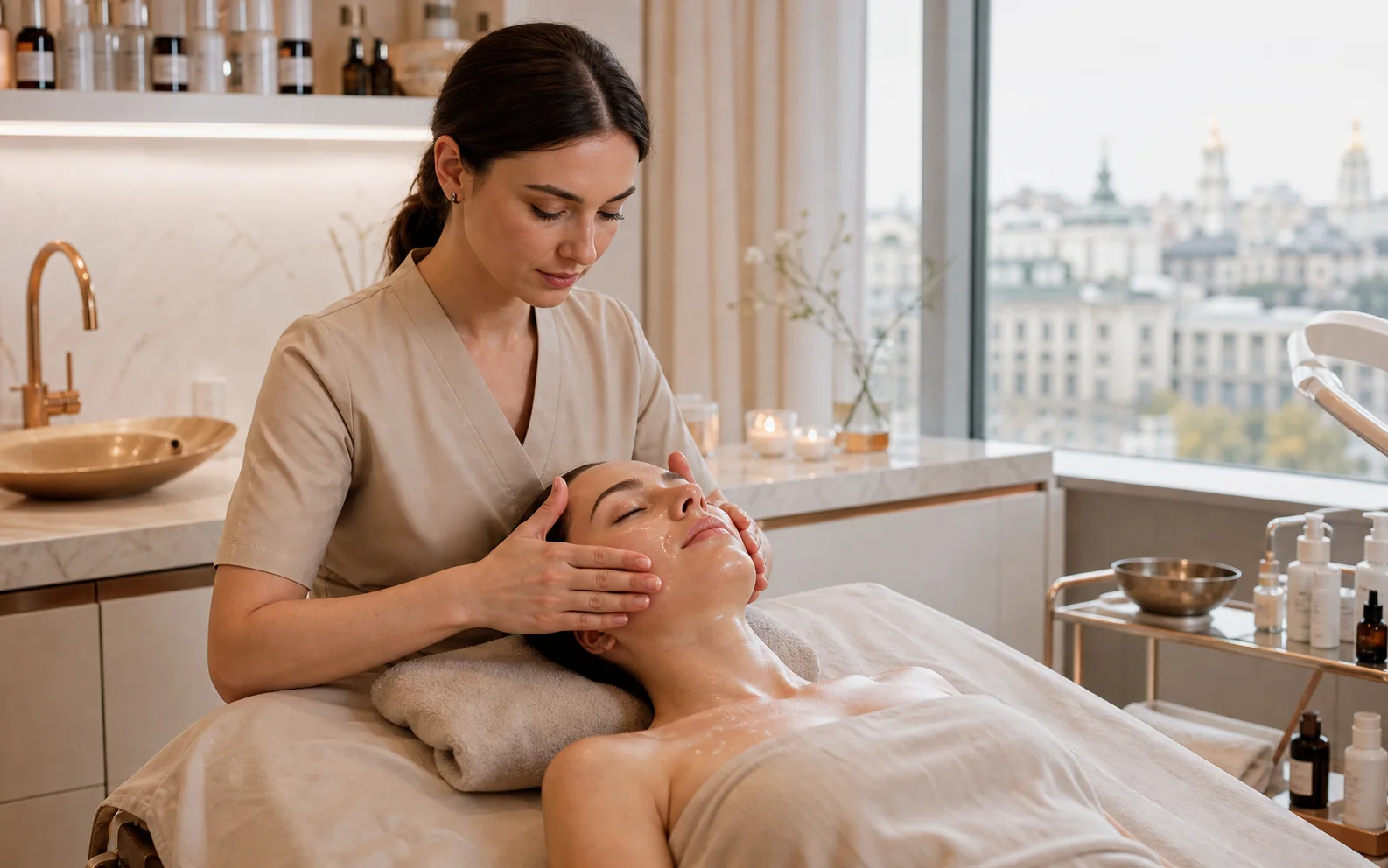
Facial massage can be beautiful for sensitive skin when it is treated as a calming technique rather than a forceful sculpting performance. Light, slow massage may help soften the look of tension and make the service feel restorative.
For redness-prone clients, the specialist may avoid heat and use cooler, steadier hands. For dry mature skin, pressure may be supportive but never pulling. For shaving irritation, the beard line may need less friction.
If the skin is actively inflamed, painful or broken, massage may not be appropriate. The premium choice is sometimes to reduce the service to cleansing, hydration and protection, or to recommend medical assessment before treatment.
Case study: the over-active routine reset
Imagine a client who books Anywell because her skin feels dull and oily, but every product now stings. She uses a foaming cleanser twice daily, acid toner, retinoid, vitamin C and a clay mask before events. Her skin may not need more cleansing. It may need recovery.
A sensitive skin facial treatment would likely avoid aggressive steam, extraction-heavy work and strong exfoliation. The treatment could begin with a gentle cleanse, then a calming hydrating mask, light massage only where tolerated, and a barrier-supportive finish.
The more important result is the home reset. The client pauses extra exfoliation, chooses a gentler cleanser, applies moisturizer before the skin feels tight and uses daytime protection. The skin may look more luminous because it is less irritated, not because a stronger facial forced an instant transformation.
Aftercare for the first 48 hours
After a calming facial, the first 48 hours should protect the result. Use a gentle cleanser or rinse according to the specialist's advice. Apply moisturizer while the skin is slightly damp if that suits your routine. Use daytime protection.
Avoid scrubs, exfoliating acids, retinoids, strong vitamin C, hot water, sauna, steam, aggressive facial tools and new products that have not been tested before. The AAD's dry skin advice around gentle, fragrance-free products is useful after a facial too.
Do not judge the facial only by the mirror in the first hour. Sensitive skin often shows its real opinion the next morning. Does the skin feel calmer? Did tightness reduce? Does moisturizer sting less? These practical signs are more useful than expecting one appointment to erase every concern.

Professional checklist before booking this treatment
Match the service to the skin today
Before choosing this service, look at your skin as a specialist would: current comfort, recent product use, sensitivity, event timing, and the result you want to see in the mirror. For sensitive skin facial treatment, the best appointment is not necessarily the strongest appointment. It is the appointment that matches the condition of the skin on the day you arrive.
Tell the specialist about recent retinoids, acids, peels, cosmetic procedures, sun exposure, allergies, pregnancy, medication, or any reaction that made the skin burn or sting. This information changes pressure, exfoliation, device intensity, massage direction, product choice, and aftercare. A premium facial bar experience should feel personal because the skin history is part of the treatment.
After the appointment, protect the result with a simple routine. Avoid stacking strong actives immediately, keep the skin moisturized, use daytime protection, and notice how the face feels the next morning. The most useful beauty advice is rarely dramatic. It is specific, repeatable, and adapted to real life.
Read the result like an expert
It is also helpful to decide what success looks like before the treatment starts. For some clients, success is a fresher complexion before an event. For others, it is less tightness, a softer jaw, calmer redness, cleaner pores, or a routine that finally feels understandable. When the goal is precise, the specialist can choose a precise path and avoid turning every facial into the same generic protocol.
If your skin does not respond as expected, do not immediately add more products or book a stronger service. Review sleep, stress, cleansing habits, sun exposure, climate, and how often active ingredients are being used. A premium skincare plan evolves by observation. The face gives feedback, and a good facial bar uses that feedback to adjust the next appointment.
There are also moments when the best professional choice is to wait. Active infection, unexplained swelling, strong burning, open lesions, recent aggressive procedures, or a reaction that has not settled should change the plan. A beauty treatment should never compete with medical judgment. When in doubt, the safest luxury is restraint.
Build a long-term facial plan
For long-term authority, think of each visit as one chapter in a skin journal. The specialist notes what worked, what felt too strong, what created glow, and what should be repeated or avoided. This is how facial care becomes more intelligent over time: not through constant novelty, but through careful memory of the skin.
The final filter is lifestyle. A treatment that looks perfect on paper may be wrong before a flight, after poor sleep, during a stressful week, or just before heavy makeup. Premium skincare respects context. It asks not only what the skin needs, but what the client needs the skin to do during the next few days.
That is why the best recommendation is often a sequence rather than a single appointment. Start with the service that calms and clarifies, then build toward more active or sculpting work when the skin is ready. This patient order creates better visible results and a better relationship with the face.
For reader clarity, document the same logic in the article itself: what the treatment is for, who should be cautious, what result is realistic, and how the home routine protects the work. Readers trust a beauty brand more when it explains limits as clearly as benefits.
The same structure also supports the Anywell editorial standard. A strong journal article should answer the client's practical questions before they are asked: how the treatment feels, how long the visible result may last, what to avoid afterward, and when another service would be wiser. That level of usefulness is what separates premium editorial content from a simple service description.
For a facial bar, this clarity also improves the booking experience. The client arrives with better vocabulary, the specialist can refine the plan faster, and the treatment feels more intentional from the first consultation to the final aftercare recommendation. It turns education into confidence, and confidence into a calmer, more premium client journey.
Conclusion: the Anywell way
A sensitive skin facial treatment should not be judged by how much it does to the skin. It should be judged by how intelligently it protects the skin while still creating a fresh, cared-for result. Explore Anywell Facial Bar treatments or book a consultation when you want a calming, premium facial plan that respects sensitivity and keeps results realistic.
FAQ
Is a sensitive skin facial treatment safe for redness-prone skin?
It can be appropriate when the treatment is adapted to the skin on the day, but active rash, infection, unexplained swelling or severe burning should be assessed by a qualified medical professional.
Should a sensitive skin facial include exfoliation?
Not always. Some sensitive skin can tolerate mild short-contact exfoliation, while reactive skin may need hydration and barrier support instead.
How soon before an event should I book a calming facial?
If your skin is sensitive, book a familiar calming facial several days before an event when possible.
What should I avoid after a barrier recovery facial?
Avoid scrubs, strong acids, retinoids, hot water, sauna, aggressive massage tools and new active products until the skin is ready.
Can a facial cure sensitive skin?
No. A well-planned facial can support comfort and a calmer-looking surface, while persistent symptoms deserve medical guidance.