
Retinoids, retinol, AHAs, BHAs and exfoliating acids can be useful parts of a modern skincare routine, but they also change how a professional facial should be planned. A client who uses active ingredients several nights a week may arrive with smoother texture, more glow and better tolerance, or with dryness, peeling, stinging and a barrier that needs rest. The difference is not always visible from across the treatment room.
This is why retinoid facial treatment planning is a premium skill. The question is not simply whether a facial is allowed. It is what kind of facial makes sense, how soon after active use, how much exfoliation is appropriate, whether massage should be shortened, which products should be avoided that day and what the client should do afterward. A strong facial bar experience turns those details into a calm, personalized plan.
The safe language matters. A facial can support hydration, comfort, surface smoothness, glow and a more polished appearance. It should not promise to cure acne, erase wrinkles, replace prescription care, reverse aging, rebuild the skin overnight or override a dermatologist's instructions. When the skin is painful, persistently inflamed, infected, sunburned, recently treated medically or reacting in a way that feels unusual, the right answer may be to pause and seek qualified care.
This guide uses authoritative skincare boundaries. The American Academy of Dermatology explains that retinoids and retinol are not ideal for every skin condition and that exfoliation should be gentle, not done over sunburned or wounded skin. Cleveland Clinic describes retinol as a vitamin A form used in skincare and notes that dryness, peeling and redness can occur. DermNet describes the skin barrier as a protective outer system, while FDA cosmetic-claim guidance helps keep anti-aging and treatment language truthful. The Anywell approach is simple: active ingredients can be powerful, so the facial should be more intelligent, not more aggressive.
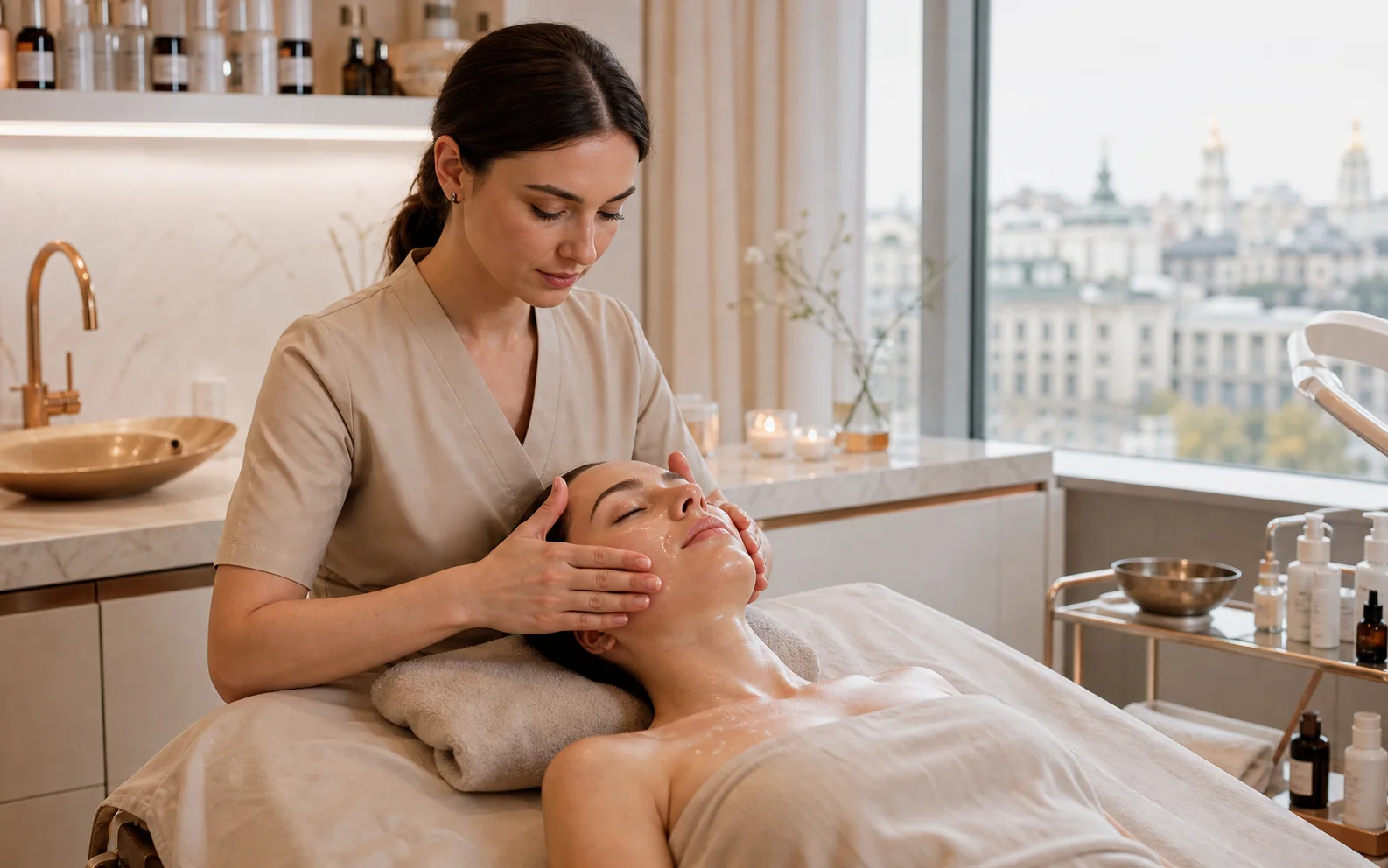
Why active ingredients change the facial plan
Retinoids and exfoliating acids influence the outer layers of the skin. That can be useful when a routine is well matched to the client, but it also means the face may be more sensitive to friction, heat, steam, strong peels, extractions, massage pressure and fragranced or highly active products. A facial that feels beautiful on one week may feel too much on another week if the home routine has changed.
A premium consultation starts by asking what the client has used in the past seven to fourteen days. Retinol, prescription retinoids, adapalene, tretinoin, glycolic acid, lactic acid, mandelic acid, salicylic acid, enzyme exfoliants, scrubs, peel pads and acne products all matter. So do sun exposure, travel, climate, new makeup, shaving, waxing, injectables, lasers, pregnancy, medication and any reaction that made the skin burn or sting.
This information does not make the appointment complicated. It makes it precise. If the skin is calm and resilient, the facial may include gentle polishing and hydration. If the skin is tight or reactive, the better plan may be barrier comfort, no exfoliation, less massage and clear aftercare.
Retinoids and retinol: useful, but not casual
Retinoids are vitamin A-related ingredients used in both prescription and non-prescription skincare. Retinol is a commonly discussed over-the-counter form. Cleveland Clinic notes that retinol can be used in skincare routines, while AAD guidance explains that people with significant dryness, redness, inflammation or skin allergies may not be good candidates without professional advice.
For a facial bar, the practical point is tolerance. Some clients use retinoids for years and can maintain a stable routine. Others are just beginning, increasing strength, using too much, applying on damp skin, layering with acids or not moisturizing enough. The facial plan should respond to the current condition rather than the ingredient name alone.
A client who used retinoid last night and feels tight today may not need extraction, scrub or intense massage. They may need cleansing, hydration, barrier-supportive moisturizer and a simple plan for the next few evenings. A client who has paused retinoids and feels comfortable may tolerate more service options, but the specialist should still avoid stacking unnecessary irritation.
AHAs, BHAs and exfoliating acids
AHAs such as glycolic, lactic and mandelic acid are often used for surface texture and radiance. BHAs such as salicylic acid are often discussed with oily or congestion-prone skin. At-home exfoliating toners, masks and pads can be helpful when used correctly, but they can also create cumulative irritation when combined with professional exfoliation.
The AAD's exfoliation guidance emphasizes gentle use, lukewarm water, moisturizer afterward and avoiding exfoliation over sunburn, wounds or cuts. Those principles translate directly into the treatment room. If a client exfoliated heavily the previous evening, a facial bar should not automatically add another exfoliating step just because the service menu includes one.
The more premium decision may be to hold the acid, shorten steam, use a non-abrasive cleanse, avoid aggressive extractions and focus on hydration. The skin often looks better when the barrier is respected. Over-polished skin can look shiny at first and uncomfortable later.
The barrier comfort check
Before choosing a facial, assess barrier comfort in ordinary language. Does cleansing sting? Does moisturizer burn? Is the skin unusually shiny but tight? Is there peeling around the mouth or nose? Does sunscreen feel uncomfortable? Is makeup catching on dry patches? Did the client recently increase retinoid frequency or add an acid?
DermNet's skin barrier overview is helpful because it frames the outer layer as a protective system involved in water balance and defense against irritants. In a facial context, barrier stress means that normal touch can become too much. The skin may need quiet support rather than a stronger protocol.
A barrier comfort check should be repeated during the treatment. A client may feel fine at the start but become warm or tender after cleansing. A skilled specialist notices that change and adapts. That responsiveness is one of the clearest differences between a premium facial and a fixed routine.
How many days should you pause active ingredients?
There is no universal pause rule that fits every retinoid, every acid and every client. A cautious facial bar often recommends pausing strong retinoids or exfoliating acids for several days before a treatment that may include exfoliation, extraction or longer massage, and then resuming only when the skin feels calm. Prescription plans, acne treatment plans and dermatologist instructions should come first.
For gentle hydration facials, the pause may be shorter for a resilient client. For strong peels, resurfacing, aggressive extraction or a client with visible irritation, the pause may need to be longer or the service may need to change entirely. The point is to avoid stacking multiple sources of irritation in the same small window.
The client should also know what to do after the facial. If the skin feels calm, active ingredients may be reintroduced gradually according to the client's usual tolerance or professional advice. If the skin feels warm, tight, tender or reactive, keep the routine simple until comfort returns.
What a barrier-safe Anywell facial can include
A barrier-safe facial is not a lesser facial. It can include detailed consultation, gentle cleanse, comfort-focused massage, hydrating serum, calming mask, moisturizer, daytime protection when appropriate and an aftercare plan that prevents the client from overdoing the routine at home. It simply avoids treating irritation as a challenge to overcome.
For a client using retinol or acids, the specialist may choose lower-friction massage, avoid granular scrub, avoid extra heat, reduce extraction time, skip strong exfoliation and select bland, cushioning textures. The goal is skin that feels better after the appointment and still feels comfortable the next morning.
This kind of facial is especially useful before travel, after a stressful period, when the client is increasing active ingredients or when the face looks dull but feels sensitive. It supports glow through calmness rather than intensity.
When exfoliation still makes sense
Not every active-ingredient user needs to avoid exfoliation forever. Some clients have stable routines, good hydration habits and no irritation. For them, a carefully chosen professional exfoliating step may be appropriate when the timing is right and the skin is prepared.
The specialist should still ask about recent use, strength, frequency and reaction history. It is also wise to avoid combining too many exfoliating pathways at once. If the client used an acid mask yesterday, today may not be the day for another peel. If the client paused actives and the skin is comfortable, a mild professional approach may be possible.
The best exfoliation decisions are boring in the best way: conservative, explained, documented and followed by moisturizer and sun protection. They do not depend on chasing a dramatic tingle.
Extractions, congestion and acne-prone skin
Clients using retinoids or BHAs may also be managing congestion or acne-prone skin. That does not mean every facial should become extraction-heavy. If the skin is fragile, peeling or inflamed, forceful extraction can create more irritation and post-treatment marks.
A more refined plan might combine gentle cleansing, limited extraction only where the skin allows, hydration, non-comedogenic aftercare guidance and a realistic schedule. Persistent acne, painful cysts, infection-like symptoms or scarring concerns should be handled with dermatology support rather than spa pressure.
For the client, this can feel counterintuitive. They came for clear skin and expected stronger action. The specialist's job is to explain that calm skin clears and recovers better than irritated skin. Professional restraint can be the most results-oriented choice.
Pre-event timing with retinoids and acids
Before a wedding, photoshoot, dinner or business event, do not use the facial appointment as a place to experiment. If a client is already on retinol or acids, the safest pre-event goal is predictable polish: hydration, comfort, glow and makeup-friendly texture.
Avoid introducing a new acid, new retinoid strength, strong peel or aggressive extraction in the final days before an event. The skin may look excellent, but it may also become dry, flushed or flaky at the wrong moment. A premium facial bar should protect the calendar as much as the complexion.
A practical plan is to book earlier for any active treatment and reserve the final appointment for gentle support. That gives the skin time to settle and gives the client confidence rather than suspense.
Case study: the enthusiastic retinol beginner
A client begins retinol three weeks ago and loves the idea of faster glow. She increases from two nights to five nights, adds an acid toner and books a facial because the skin now looks dull and tight. During consultation, she mentions mild peeling around the mouth and stinging when moisturizer is applied.
This is not the moment for a stronger resurfacing facial. A barrier-safe plan would pause extra exfoliation, avoid heat, keep massage gentle, focus on hydration and moisturizer, and encourage a simpler routine until comfort returns. The specialist can also recommend checking with a dermatologist if symptoms persist or if prescription products are involved.
The client still receives value. She leaves understanding that active ingredients work best when the skin can tolerate them. The facial becomes a reset, not another layer of stress.
Case study: the experienced active user
Another client has used a low-strength retinoid for years, moisturizes well, uses sunscreen and has no peeling or stinging. She wants a facial before travel and asks whether she should stop everything. Her skin is calm at consultation.
A specialist might suggest a short pause around the appointment, choose gentle cleansing, hydrating massage, perhaps very mild polishing if appropriate and clear instructions for the next few nights. The plan is not fear-based. It is proportionate to a client whose skin has good tolerance.
This case shows why rules must be personalized. The same ingredient can require different facial decisions in different people. The facial bar's role is to read the skin in front of it.
Pregnancy, prescriptions and medical boundaries
Pregnancy, nursing, prescription acne care, isotretinoin history, topical medications, recent procedures and diagnosed skin conditions should all be discussed before a facial. AAD pregnancy skincare guidance specifically flags retinoids among ingredients to avoid during pregnancy, which is a reminder that some skincare decisions belong with qualified medical advice.
A facial bar should never ask a client to ignore a dermatologist, pharmacist or physician. If a prescription routine says to pause or avoid certain treatments, the service should adapt. If the client is unsure what a medication does, the safest response is to choose a gentle non-active facial or wait until the client can confirm.
This boundary does not reduce the brand experience. It increases trust. Clients remember when a specialist protects them from an unsuitable service.
Aftercare: what to do the night of the facial
The night of the facial should usually be simple: gentle cleanse if needed, moisturizer and no extra experimentation. Avoid scrubs, acid masks, retinoid escalation, hot saunas, aggressive home tools and any new product that could make it hard to understand what caused a reaction.
If the skin feels calm the next day, the routine can return gradually based on the client's normal tolerance and professional advice. If the skin feels tender, warm, tight or unusually dry, continue a basic routine and delay active ingredients until comfort returns.
Daytime protection matters. Many active-ingredient routines are built around improving visible tone and texture, and sun exposure can work against that goal. AAD sunscreen guidance is a useful everyday anchor, especially when exfoliation or retinoid routines are part of the broader plan.
How to talk to your specialist
Bring the names of the products you use, or photos of the labels if that is easier. Mention how often you use them, when you last applied them and whether they caused dryness, burning, peeling or breakouts. Do not minimize irritation because you want a stronger facial. The specialist needs accurate information to protect the result.
Ask direct questions: should I pause retinol before this facial, should I avoid acids afterward, is extraction appropriate today, and what should I do if my skin feels tight tomorrow? A premium consultation should answer those questions clearly without making the client feel difficult.
The best facial plan is collaborative. The client knows the home routine; the specialist reads the skin in the room. Together, they can choose a treatment that supports glow without pushing the barrier past its limit.

Professional checklist before booking this treatment
Match the service to the skin today
Before choosing this service, look at your skin as a specialist would: current comfort, recent product use, sensitivity, event timing, and the result you want to see in the mirror. For retinoid facial treatment, the best appointment is not necessarily the strongest appointment. It is the appointment that matches the condition of the skin on the day you arrive.
Tell the specialist about recent retinoids, acids, peels, cosmetic procedures, sun exposure, allergies, pregnancy, medication, or any reaction that made the skin burn or sting. This information changes pressure, exfoliation, device intensity, massage direction, product choice, and aftercare. A premium facial bar experience should feel personal because the skin history is part of the treatment.
After the appointment, protect the result with a simple routine. Avoid stacking strong actives immediately, keep the skin moisturized, use daytime protection, and notice how the face feels the next morning. The most useful beauty advice is rarely dramatic. It is specific, repeatable, and adapted to real life.
Read the result like an expert
It is also helpful to decide what success looks like before the treatment starts. For some clients, success is a fresher complexion before an event. For others, it is less tightness, a softer jaw, calmer redness, cleaner pores, or a routine that finally feels understandable. When the goal is precise, the specialist can choose a precise path and avoid turning every facial into the same generic protocol.
If your skin does not respond as expected, do not immediately add more products or book a stronger service. Review sleep, stress, cleansing habits, sun exposure, climate, and how often active ingredients are being used. A premium skincare plan evolves by observation. The face gives feedback, and a good facial bar uses that feedback to adjust the next appointment.
There are also moments when the best professional choice is to wait. Active infection, unexplained swelling, strong burning, open lesions, recent aggressive procedures, or a reaction that has not settled should change the plan. A beauty treatment should never compete with medical judgment. When in doubt, the safest luxury is restraint.
Build a long-term facial plan
For long-term authority, think of each visit as one chapter in a skin journal. The specialist notes what worked, what felt too strong, what created glow, and what should be repeated or avoided. This is how facial care becomes more intelligent over time: not through constant novelty, but through careful memory of the skin.
The final filter is lifestyle. A treatment that looks perfect on paper may be wrong before a flight, after poor sleep, during a stressful week, or just before heavy makeup. Premium skincare respects context. It asks not only what the skin needs, but what the client needs the skin to do during the next few days.
That is why the best recommendation is often a sequence rather than a single appointment. Start with the service that calms and clarifies, then build toward more active or sculpting work when the skin is ready. This patient order creates better visible results and a better relationship with the face.
For reader clarity, document the same logic in the article itself: what the treatment is for, who should be cautious, what result is realistic, and how the home routine protects the work. Readers trust a beauty brand more when it explains limits as clearly as benefits.
The same structure also supports the Anywell editorial standard. A strong journal article should answer the client's practical questions before they are asked: how the treatment feels, how long the visible result may last, what to avoid afterward, and when another service would be wiser. That level of usefulness is what separates premium editorial content from a simple service description.
For a facial bar, this clarity also improves the booking experience. The client arrives with better vocabulary, the specialist can refine the plan faster, and the treatment feels more intentional from the first consultation to the final aftercare recommendation. It turns education into confidence, and confidence into a calmer, more premium client journey.
Conclusion: the Anywell way
Retinoids, retinol and exfoliating acids can belong in a thoughtful skincare life, but they make professional facial timing more important. The Anywell standard is to begin with a precise consultation, read barrier comfort, avoid stacking irritation, choose the least aggressive service that still meets the goal and send the client home with clear aftercare. If your routine includes active ingredients and you are unsure which facial fits, explore the Anywell service menu or book a consultation so the plan can be adjusted to your skin, your calendar and your current tolerance.
FAQ
Can I get a facial while using retinol?
Often yes, but the facial should be adjusted to your skin condition, retinol strength, recent use and sensitivity. Tell your specialist when you last applied it.
How long should I stop retinoids before a facial?
There is no universal rule. Many clients pause for several days around more active treatments, but prescription instructions and personal tolerance should guide the plan.
Can I exfoliate before a professional facial?
Avoid heavy exfoliation right before a facial unless your specialist specifically advises it. Stacking acids, scrubs and professional exfoliation can irritate the barrier.
What facial is best if my skin burns from products?
Choose a gentle barrier-comfort facial or postpone active treatment. Burning, persistent redness, swelling or rash may need qualified medical advice.
When can I restart acids or retinol after a facial?
Restart gradually only when the skin feels calm. If it feels tight, hot, tender or unusually dry, keep the routine simple and delay active ingredients.