
Skin cycling became popular because it gave structure to a confusing skincare shelf. Instead of using acids, retinoids, masks, scrubs and barrier creams whenever anxiety strikes, the routine creates a rhythm: an active night, a recovery night, and enough space for the skin to show whether it is comfortable. For facial-bar clients, that rhythm is useful, but it needs a professional translation.
A skin cycling facial is not a single miracle treatment. It is a way to coordinate professional care with the active ingredients a client already uses at home. The specialist looks at exfoliation history, retinoid tolerance, sensitivity, shaving or waxing, recent sun exposure, event timing and whether the face feels tight, oily, hot or calm. The service is then selected around the skin condition on that day.
The premium version is conservative, not timid. Active ingredients can be excellent when the barrier is ready. Recovery nights can be strategic rather than lazy. A facial can support glow, hydration and smoother texture, but it should not compete with a home routine that is already intense. The goal is an intelligent schedule: when to refine, when to hydrate, when to pause and when to let the specialist adjust the plan.
This guide explains how skin cycling works inside a facial bar, when to book professional treatments, what to avoid before and after active ingredients, and how to read the signs that the skin barrier needs more recovery. It is general skincare education, not medical advice. Persistent rash, severe acne, infection, painful irritation, unexplained swelling or reactions that do not settle should be discussed with a qualified healthcare professional.
What skin cycling really means
At its simplest, skin cycling means not using every active ingredient every night. Many routines alternate exfoliation, retinoid use and recovery. The exact rhythm varies. Some clients tolerate an exfoliation night, a retinoid night and two recovery nights. Others need one active night followed by several calm nights. A premium facial bar should treat the structure as a framework, not a law.
The American Academy of Dermatology's basic skincare guidance consistently returns to gentle cleansing, moisturizing and sun protection. Those fundamentals sound simple, but they are what make active routines more tolerable. Without a comfortable barrier, acids and retinoids can feel like performance rather than skincare.
The value of skin cycling is not trend language. It helps a client notice cause and effect. If the face stings every time a retinoid follows an acid night, the routine is speaking. If glow improves after recovery nights, the skin may need more repair than stimulation. The cycle gives the specialist a clearer story to work with.
Why facial treatments must fit the cycle
A professional facial can include cleansing, exfoliation, device-assisted work, massage, masks, hydration and finishing products. Those steps can support glow, but they also add stimulus. If a client used strong acids yesterday and plans retinoid tonight, a very active facial in between may be too much.
The better approach is to place the facial inside the cycle. A glow facial may belong after several recovery nights. A hydrating barrier facial may be ideal when the client has overused actives. A cleansing treatment may be scheduled when the skin is calm enough for deeper work. Timing turns a good service into a safer and more elegant service.
This is especially important before events. A client may want maximum radiance before a wedding, presentation or photoshoot, but the last few days are not the time to experiment with a strong peel, new retinoid, new acid, strong scrub or unfamiliar device. Skin cycling teaches restraint when the visible result matters.
Active nights: acids, retinoids and professional caution
Active nights usually involve ingredients that change how the skin surface behaves. Exfoliating acids can help loosen dull buildup and make the surface look smoother. Retinoids can support long-term skin quality for many people, but they can also cause dryness, peeling or irritation, especially when introduced too quickly. The AAD advises careful retinoid use and sun protection because irritation is common when people rush.
A facial specialist does not need to reject active ingredients. The specialist needs to know what was used and when. If a client used a strong exfoliating product two nights in a row, the facial may need to avoid additional exfoliation. If retinoid dryness is visible around the mouth, nose or eyes, hydration and barrier comfort may be the smarter route.
The premium rule is simple: active ingredients should serve the skin, not prove discipline. More is not more when the face is tight, shiny, hot or flaking. A facial bar can help clients keep the benefits of actives while reducing the pattern of overcorrection.
Recovery nights are treatment nights too
Recovery nights are sometimes misunderstood as doing nothing. In reality, they are the nights that make active care sustainable. A recovery routine may include gentle cleansing, a hydrating serum, moisturizer and enough simplicity for the barrier to feel quiet. The skin does not need to be pushed every night to improve.
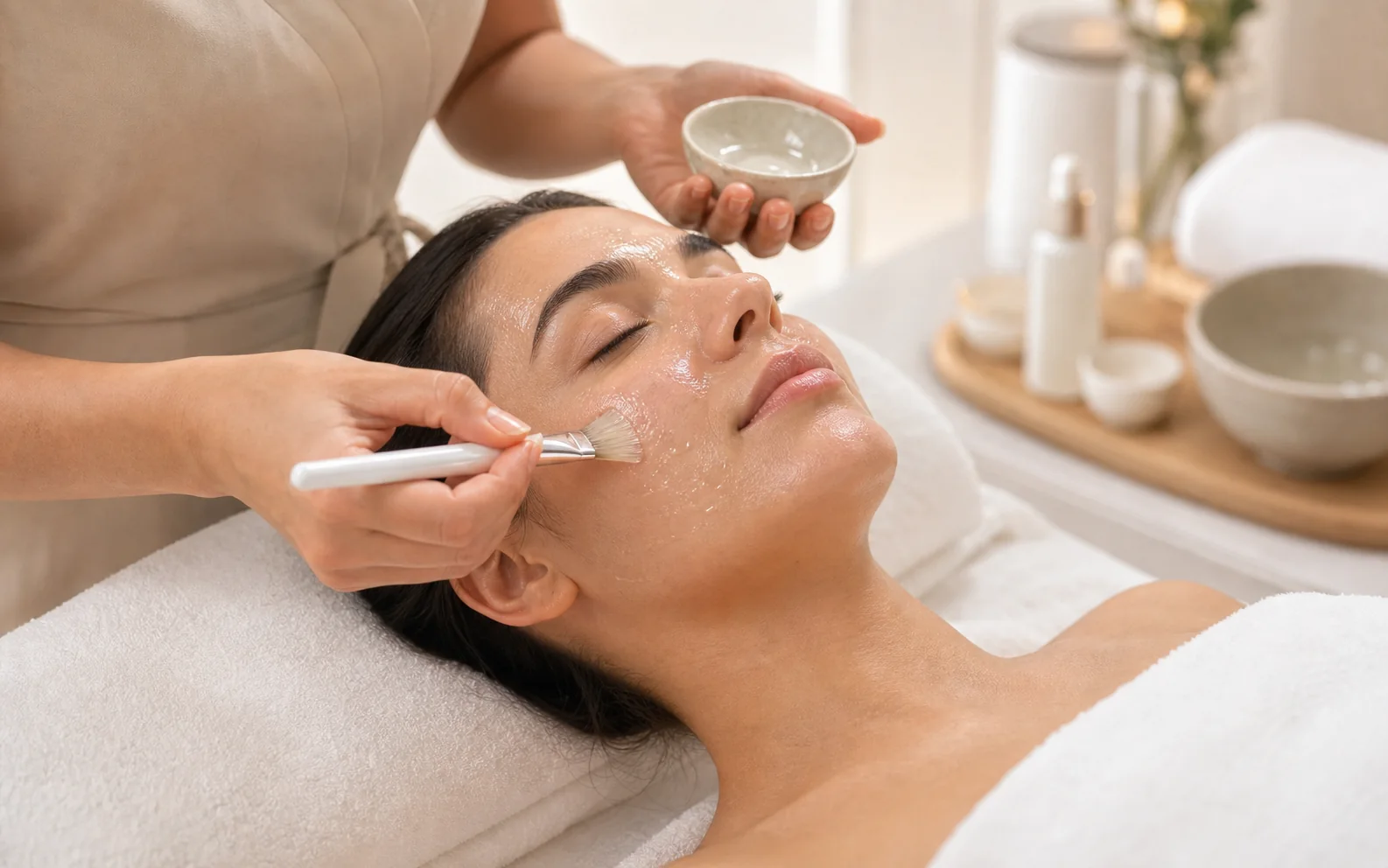
This is where a barrier-focused facial can be powerful. Professional hydration, calming massage, a soothing mask and a measured finish can help the client reset after a period of too much activity. The result may be less tightness, a calmer look and a better surface for future actives, depending on the skin condition.
DermNet's overview of skin barrier function is a useful reminder that the outer layer of the skin is not cosmetic decoration. It helps protect against water loss and external irritants. When clients understand that, recovery becomes a premium strategy rather than a compromise.
Case study: the glow seeker who overused actives
A client books Anywell because her skin looks dull before a public week. She has used acid toner, retinoid, vitamin C and a clay mask within five days because she wants fast glow. In the mirror, the face looks shiny but not healthy. The cheeks feel tight, and moisturizer stings slightly.
A less careful treatment plan might add another exfoliation step because the client asks for radiance. A better skin cycling facial starts with diagnosis. The specialist recognizes that the skin needs comfort first. The appointment becomes a recovery facial: gentle cleanse, no aggressive scrub, minimal friction, hydrating mask, calming finish and a short aftercare plan.
The client leaves with a more rested look and a clearer schedule: pause acids and retinoid for a few nights, use moisturizer, protect during the day and return to active ingredients gradually. The point is not to shame the client. It is to give her a rhythm that produces glow without turning the barrier into collateral damage.
How to plan a facial around exfoliation
If your facial will include exfoliation, arrive with skin that has not already been heavily exfoliated at home. Avoid rough scrubs, strong acids, at-home peels and cleansing brushes for several days if your skin is easily reactive. The specialist can then choose the right professional intensity instead of trying to work around irritation.
For oily or congested skin, exfoliation can be useful, but it still needs zoning. The T-zone may tolerate more refinement than the cheeks. The chin may need a different approach from the neck. A skin cycling facial should not treat the whole face as one uniform surface.
After the appointment, do not immediately stack more exfoliation at home. Let the skin show how it responds. If the surface feels smooth and comfortable, protect that comfort. If the face feels hot or tight, treat that as feedback and simplify.
How to plan a facial around retinoids
Retinoids are one of the most discussed active categories in skincare, but timing matters. Many clients experience dryness, peeling or sensitivity when they introduce retinoids too quickly. A facial bar consultation should ask about frequency, product strength, irritation history and whether the client applies retinoids around delicate areas.
Before a more active facial, many clients benefit from pausing retinoids for a short period, especially if they are sensitive. The exact timing should be individualized. If the skin is already peeling, a hydrating or calming facial may be better than a resurfacing-style appointment.
After a facial, return to retinoids gradually and only when the skin feels settled. There is no prize for restarting too quickly. The best long-term routine is the one the skin can tolerate consistently.
Sensitive skin, fragrance and product overload
Skin cycling can fail when the client focuses only on famous actives and ignores the rest of the formula. Fragrance, harsh cleansers, drying alcohol-heavy products, repeated masks and too many new products at once can all make the skin harder to read. The FDA notes that fragrance ingredients can be associated with sensitivity for some consumers, which is one reason reactive clients should introduce products carefully.
A facial-bar specialist can simplify the map. Which products are essential? Which are optional? Which might be causing stinging? Which active is doing the main work? When the routine becomes less crowded, the skin's signals become clearer.
This is not about making every routine minimal forever. It is about building a stable base. Once the base is comfortable, actives can be reintroduced with more confidence.
A practical skin cycling facial schedule
For a client with normal tolerance, a professional plan might look like this: recovery nights before the appointment, a targeted facial chosen by diagnosis, then a calm aftercare window. If the facial was hydrating and non-aggressive, active ingredients may return sooner. If the facial included exfoliation or extraction, recovery should last longer.
For sensitive or barrier-stressed skin, the plan is slower. The first appointment may focus only on comfort, hydration and education. The second appointment can reassess whether more refinement is appropriate. This sequence feels less dramatic, but it often creates a better visible result.
For event preparation, choose predictability. Book new active services well before the event, not the day before. In the final days, prioritize hydration, calm massage, barrier support and a finish that works under makeup.
When to pause and seek professional advice
Stop pushing actives if the skin burns, cracks, swells, flakes heavily, develops a rash or feels painful. A beauty facial is not the place to treat an unresolved medical reaction. The correct step may be to pause products and seek appropriate healthcare guidance.
Recent procedures also matter. Injectables, lasers, surgery, deep peels, waxing, strong prescription treatments and certain dermatologic conditions can change what is appropriate. Tell the specialist the full story. Premium care depends on truthful context.
The most elegant facial-bar answer is sometimes no: no acid today, no strong massage over irritated skin, no new active before an event, no dramatic promise. Restraint protects the client and keeps the brand credible.

Professional checklist before booking this treatment
Match the service to the skin today
Before choosing this service, look at your skin as a specialist would: current comfort, recent product use, sensitivity, event timing, and the result you want to see in the mirror. For skin cycling facial, the best appointment is not necessarily the strongest appointment. It is the appointment that matches the condition of the skin on the day you arrive.
Tell the specialist about recent retinoids, acids, peels, cosmetic procedures, sun exposure, allergies, pregnancy, medication, or any reaction that made the skin burn or sting. This information changes pressure, exfoliation, device intensity, massage direction, product choice, and aftercare. A premium facial bar experience should feel personal because the skin history is part of the treatment.
After the appointment, protect the result with a simple routine. Avoid stacking strong actives immediately, keep the skin moisturized, use daytime protection, and notice how the face feels the next morning. The most useful beauty advice is rarely dramatic. It is specific, repeatable, and adapted to real life.
Read the result like an expert
It is also helpful to decide what success looks like before the treatment starts. For some clients, success is a fresher complexion before an event. For others, it is less tightness, a softer jaw, calmer redness, cleaner pores, or a routine that finally feels understandable. When the goal is precise, the specialist can choose a precise path and avoid turning every facial into the same generic protocol.
If your skin does not respond as expected, do not immediately add more products or book a stronger service. Review sleep, stress, cleansing habits, sun exposure, climate, and how often active ingredients are being used. A premium skincare plan evolves by observation. The face gives feedback, and a good facial bar uses that feedback to adjust the next appointment.
There are also moments when the best professional choice is to wait. Active infection, unexplained swelling, strong burning, open lesions, recent aggressive procedures, or a reaction that has not settled should change the plan. A beauty treatment should never compete with medical judgment. When in doubt, the safest luxury is restraint.
Build a long-term facial plan
For long-term authority, think of each visit as one chapter in a skin journal. The specialist notes what worked, what felt too strong, what created glow, and what should be repeated or avoided. This is how facial care becomes more intelligent over time: not through constant novelty, but through careful memory of the skin.
The final filter is lifestyle. A treatment that looks perfect on paper may be wrong before a flight, after poor sleep, during a stressful week, or just before heavy makeup. Premium skincare respects context. It asks not only what the skin needs, but what the client needs the skin to do during the next few days.
That is why the best recommendation is often a sequence rather than a single appointment. Start with the service that calms and clarifies, then build toward more active or sculpting work when the skin is ready. This patient order creates better visible results and a better relationship with the face.
For reader clarity, document the same logic in the article itself: what the treatment is for, who should be cautious, what result is realistic, and how the home routine protects the work. Readers trust a beauty brand more when it explains limits as clearly as benefits.
The same structure also supports the Anywell editorial standard. A strong journal article should answer the client's practical questions before they are asked: how the treatment feels, how long the visible result may last, what to avoid afterward, and when another service would be wiser. That level of usefulness is what separates premium editorial content from a simple service description.
For a facial bar, this clarity also improves the booking experience. The client arrives with better vocabulary, the specialist can refine the plan faster, and the treatment feels more intentional from the first consultation to the final aftercare recommendation. It turns education into confidence, and confidence into a calmer, more premium client journey.
Conclusion: the Anywell way
A skin cycling facial is a bridge between home skincare and professional treatment. It helps clients use active ingredients with more rhythm, respect recovery nights, and understand when the skin barrier needs support before more stimulation. At Anywell Facial Bar, the right facial is chosen around the skin today: what it has tolerated, what it needs next and what result will feel beautiful without overpromising. Explore the Anywell service menu or book a consultation when your routine feels busy, your skin feels hard to read, or you want glow with a calmer plan.
FAQ
What is a skin cycling facial?
It is a facial planned around the client's active ingredient routine, recovery nights, barrier comfort and current skin tolerance.
Should I stop retinoids before a facial?
Many clients pause retinoids before more active treatments, especially if sensitive or peeling, but timing should be individualized with the specialist.
Can I exfoliate the night before a facial?
It is usually wiser to avoid strong exfoliation before a professional facial so the specialist can choose intensity safely.
Is recovery night important?
Yes. Recovery nights help maintain barrier comfort and make active ingredients more sustainable over time.
Can a facial fix an irritated barrier?
A calming facial can support comfort and hydration, but persistent burning, swelling, rash or pain needs qualified healthcare guidance.