
A skin barrier facial is not the dramatic rescue story that social media often sells. It is a careful professional reset for skin that feels tight, shiny-but-dry, unusually warm, easily flushed, rough, flaky, stinging after ordinary products, or unpredictable after too many exfoliating steps. The goal is not to force glow. The goal is to help the skin look calmer, feel more comfortable, and return to a routine it can tolerate.
Over-exfoliation is common because modern skincare is crowded with acids, retinoids, scrubs, peels, masks, cleansing brushes, resurfacing pads and brightening promises. Each step may be reasonable alone, but the combination can outpace the skin's capacity. A client may book a facial because the face looks dull, yet the specialist sees a different priority: pause, comfort, hydration, and less friction.
DermNet describes the skin barrier as an inside-outside and outside-inside system that helps regulate water loss and protect from external irritants. The American Academy of Dermatology advises gentle technique when exfoliating and recommends avoiding exfoliation on sunburned skin or open cuts. FDA cosmetic-claims guidance also keeps the language honest: cosmetic care can support appearance and comfort, but it should not claim to treat disease or change the body's structure.
This Anywell guide explains when a skin barrier facial makes sense, how it differs from a glow or exfoliating facial, what a specialist should ask before treatment, how to plan aftercare, when to restart actives, and when irritation belongs with a healthcare professional rather than a beauty appointment. It is general skincare education, not medical advice.
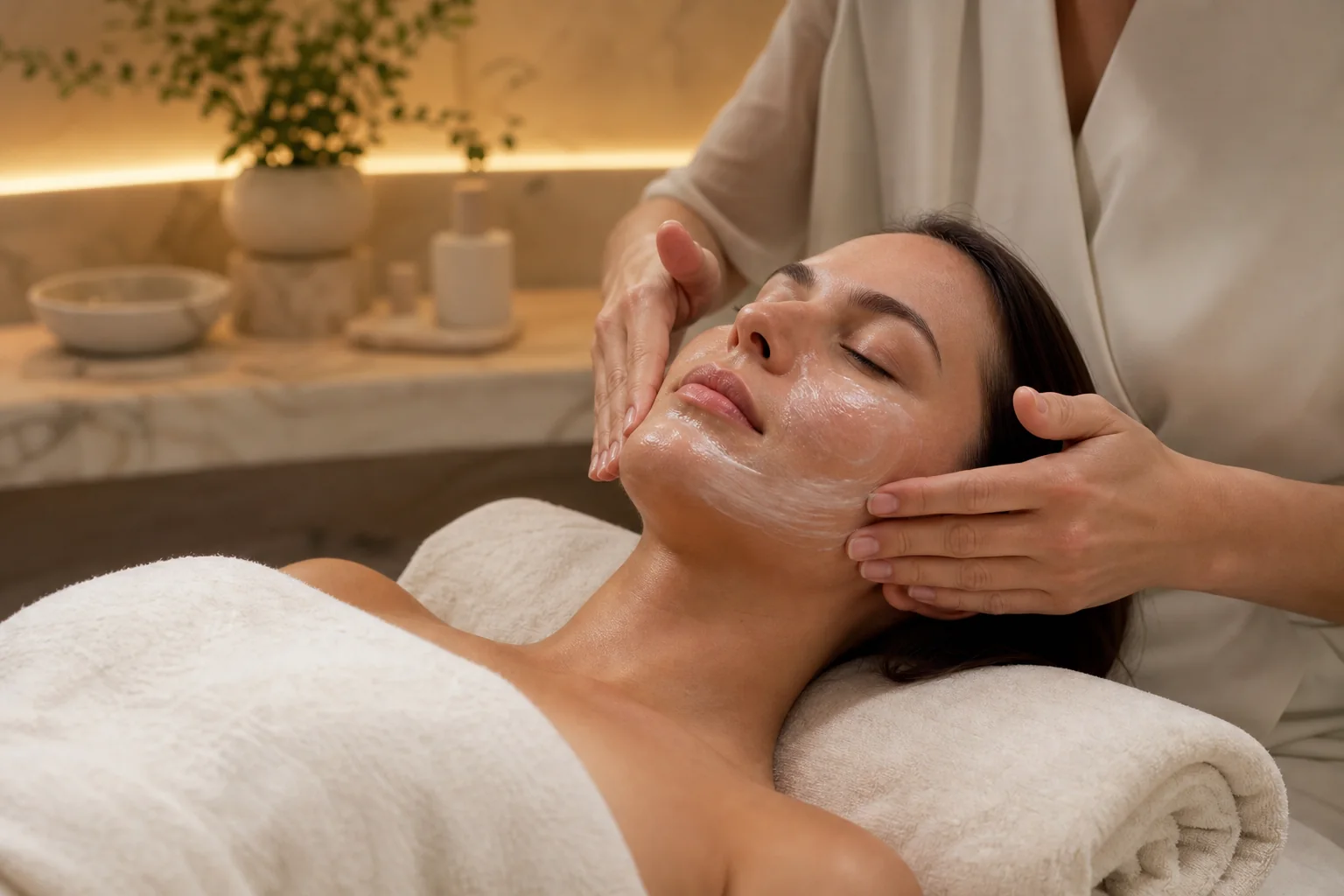
What the skin barrier is doing
In facial-bar language, the skin barrier is the comfort and tolerance layer of the routine. When it is functioning well, cleansing, moisturizer, sunscreen, gentle massage and occasional active ingredients can feel normal. When it is stressed, even simple products may sting or leave the face feeling hot, tight or strangely oily.
Barrier stress is not always dramatic. Some clients do not arrive with obvious redness. They arrive with makeup that suddenly sits poorly, cheeks that feel papery, a forehead that shines but still flakes, or a routine that used to work and now feels aggressive. A premium consultation should listen for those clues before deciding on exfoliation or devices.
The important point is that barrier support is not a downgrade from advanced skincare. It is the condition that makes advanced skincare more sensible later. A face that is comfortable can usually tolerate a clearer plan than a face that is already overwhelmed.
How over-exfoliation happens
Over-exfoliation rarely comes from one mistake. It usually comes from stacking. A client may use an acid toner, a retinoid, a clay mask, a scrub and a strong cleanser in the same week, then add a professional facial because the skin looks dull. The appointment can help, but only if the specialist recognizes that more removal is not the answer.
The American Academy of Dermatology separates mechanical exfoliation, such as scrubs and brushes, from chemical exfoliation, such as acids. Both can be useful for the right skin, but the choice should be guided by skin type and tolerance. After overuse, the next best step may be no exfoliation at all for a short window.
A barrier-focused facial therefore starts by asking what has happened recently: new actives, increased frequency, sun exposure, waxing, shaving, peels, travel, retinoid use, prescription topicals, strong fragrance, allergies, and whether any product made the skin burn. The history changes the entire service.
Signs a barrier-recovery facial may be wiser than a glow facial
A classic glow facial often includes cleansing, massage, hydration and sometimes refinement. That can be beautiful for stable skin. But if the face is already tight, flaky, stinging, sun-sensitive, recently peeled or reactive, a glow-first plan may create a louder reaction instead of a fresher appearance.
A skin barrier facial is often the better choice when the client says moisturizer stings, sunscreen burns, cheeks flush after cleansing, rough patches appeared after acids, or the skin feels both oily and dry. It may also be appropriate after travel, winter dryness, air conditioning, stress, frequent mask wearing, or a period of trying too many products.
The visible result should be described conservatively. The skin may look more rested, hydrated and even in finish. It may feel less tight. Makeup may sit more comfortably. Those are credible beauty outcomes. A facial should not promise to cure dermatitis, eliminate inflammation, repair the barrier permanently, or replace dermatology.
What the consultation should ask
A good barrier consultation is specific without feeling clinical. The specialist should ask which cleanser is used, how often exfoliation happens, whether retinoids or acids are active in the routine, whether there was recent sun exposure, and what the skin did after the last new product. The answers help separate dryness, sensitivity, congestion and active irritation.
The conversation should also cover timing. If the client has a major event tomorrow, the service should be predictable and gentle. If the client has two weeks before an event, there may be more room for observation and gradual routine adjustment. If the client has persistent burning, swelling, open lesions or a spreading rash, the safest recommendation may be to postpone and seek medical advice.
This is where face diagnostics becomes part of luxury. A premium facial is not just the products used in the room. It is the restraint to choose the right intensity and the discipline to explain why a calmer treatment may be the more expert treatment.
How a skin barrier facial should feel
The treatment should feel steady, not stimulating for its own sake. Cleansing should be thorough but gentle. Towels should not feel scratchy. Massage pressure should be adjusted if the face flushes easily. Products should be chosen for comfort, hydration and low drama rather than strong fragrance or active intensity.
Many clients expect a barrier facial to be boring because it avoids aggressive steps. In reality, the skill is in subtlety: enough cleansing to remove surface residue, enough hydration to soften the feel, enough massage to relax expression without pushing reactive skin, and enough finishing care to leave the face protected.
A good specialist checks in during the service. Warmth, tingling, mild transient pinkness and comfort can be normal depending on the client, but burning, pain, strong itching or escalating heat should change the plan. The client's sensation is part of the data.
What to pause before the appointment
For a barrier-recovery appointment, the safest pre-facial plan is usually a stable, simple routine for several days. Avoid introducing a new acid, scrub, retinoid, peel pad, strong mask or fragrance-heavy product immediately before the visit unless a qualified professional has advised it. The specialist needs to see the skin's baseline, not a fresh reaction.
Clients using prescription topicals, acne treatments or physician-directed routines should not stop them casually because a facial is booked. Instead, they should tell the facial specialist and follow medical instructions. Beauty care should adapt around medical care, not override it.
If the face is sunburned, wounded, actively infected or painfully irritated, pause the service and ask for appropriate medical guidance. AAD exfoliation guidance explicitly cautions against exfoliating open cuts, wounds or sunburned skin, and a premium facial should respect the same common-sense boundary.
The aftercare routine: simple, not empty
After a skin barrier facial, the home routine should become quieter for a short period. Gentle cleansing, moisturizer and daytime protection usually matter more than another mask or exfoliant. This is not a punishment; it is how the treatment has room to settle.
A simple aftercare plan might look like this: cleanse without scrubbing, moisturize while the skin is still comfortable, use sunscreen during the day, avoid extra heat or unnecessary friction, and pause strong actives until the skin feels normal again. The exact timeline depends on the treatment and the client's tolerance.
The plan should be written in real language. If the client asks when to restart acids or retinoids, the answer should not be vague. The specialist can recommend a conservative restart window, lower frequency, or a test night depending on what happened in the treatment room.
When to restart acids, retinoids and brightening products
Restarting active ingredients is where many clients lose the benefit of a calming facial. The face feels smoother, so they resume every strong product at once. If the skin was over-exfoliated, that creates a loop: irritation, repair, overuse, irritation again.
A more intelligent restart is gradual. First confirm that ordinary cleanser, moisturizer and sunscreen feel comfortable. Then reintroduce one active at a time, at a lower frequency if needed. Avoid combining multiple exfoliating or retinoid steps on the same night unless the routine was professionally planned for that tolerance.
The goal is not to fear active ingredients. Retinoids, acids and vitamin C can be part of a thoughtful routine. The goal is timing. A premium facial bar should help the client understand which product is useful, which is redundant, and which is too much for the skin right now.
Client scenario: the glow chaser
A client books a glow facial before a dinner because her face looks dull. During consultation, she mentions using a peel pad three times this week, a retinoid twice, and a foaming cleanser that leaves her cheeks tight. The face is not simply dull. It is stressed.
The specialist chooses a barrier facial: gentle cleanse, no scrub, minimal heat, hydrating mask, careful massage, calm finishing care and clear aftercare. The client does not leave with a dramatic resurfacing story. She leaves with skin that looks less tense and a plan that protects the event.
This is the kind of decision that makes a facial bar feel premium. The service is not weaker because it refuses extra exfoliation. It is stronger because it reads the skin accurately.
Client scenario: the product minimalist
Another client uses very little skincare but still feels tight after washing. She has not overused acids, yet her cleanser may be too stripping and her moisturizer may not be enough for the climate. A barrier facial can help identify that the issue is not a lack of ambition; it is a mismatch between routine and skin comfort.
In this case, the treatment may include gentle cleansing, hydration, a comfort-focused mask and a conversation about texture. Perhaps the client needs a milder cleanser, a more cushioning moisturizer, or a better sunscreen finish so she actually uses it every day.
The lesson is that barrier recovery is not only for skincare enthusiasts who used too much. It is also for clients whose routine is too harsh, too sparse, or poorly matched to their environment.
What a barrier facial cannot do
A skin barrier facial can support comfort and visible appearance, but it cannot diagnose disease, treat infection, cure eczema, remove chronic inflammation, or guarantee that every product will stop stinging. Those claims would be medically inappropriate and bad client care.
FDA cosmetics labeling guidance is useful because it reminds brands that claims must be truthful and not misleading. When a product or service claims to treat disease or affect the structure or function of the body, it can cross into drug territory. Beauty language should remain precise.
The responsible promise is smaller and stronger: a barrier facial can help simplify the plan, reduce unnecessary friction, support hydration, guide aftercare and make the next skincare decision more informed.
How to choose the next Anywell service
After barrier recovery, the next service depends on how the skin responds. If the face feels comfortable and balanced, the client may later move toward glow support, gentle sculpting, hydration maintenance or a more targeted facial. If the face remains reactive, another simple comfort appointment or medical referral may be wiser.
The sequence matters. Calming first, refining later often produces a more elegant result than forcing refinement on stressed skin. This is especially true for clients preparing for events, photos, travel or makeup-heavy days, when predictability is part of luxury.
At Anywell, the best consultation is not about selling the strongest treatment. It is about choosing the treatment that respects the skin today and leaves the client confident about what to do tonight, tomorrow morning and before the next visit.

Professional checklist before booking this treatment
Match the service to the skin today
Before choosing this service, look at your skin as a specialist would: current comfort, recent product use, sensitivity, event timing, and the result you want to see in the mirror. For skin barrier facial, the best appointment is not necessarily the strongest appointment. It is the appointment that matches the condition of the skin on the day you arrive.
Tell the specialist about recent retinoids, acids, peels, cosmetic procedures, sun exposure, allergies, pregnancy, medication, or any reaction that made the skin burn or sting. This information changes pressure, exfoliation, device intensity, massage direction, product choice, and aftercare. A premium facial bar experience should feel personal because the skin history is part of the treatment.
After the appointment, protect the result with a simple routine. Avoid stacking strong actives immediately, keep the skin moisturized, use daytime protection, and notice how the face feels the next morning. The most useful beauty advice is rarely dramatic. It is specific, repeatable, and adapted to real life.
Read the result like an expert
It is also helpful to decide what success looks like before the treatment starts. For some clients, success is a fresher complexion before an event. For others, it is less tightness, a softer jaw, calmer redness, cleaner pores, or a routine that finally feels understandable. When the goal is precise, the specialist can choose a precise path and avoid turning every facial into the same generic protocol.
If your skin does not respond as expected, do not immediately add more products or book a stronger service. Review sleep, stress, cleansing habits, sun exposure, climate, and how often active ingredients are being used. A premium skincare plan evolves by observation. The face gives feedback, and a good facial bar uses that feedback to adjust the next appointment.
There are also moments when the best professional choice is to wait. Active infection, unexplained swelling, strong burning, open lesions, recent aggressive procedures, or a reaction that has not settled should change the plan. A beauty treatment should never compete with medical judgment. When in doubt, the safest luxury is restraint.
Build a long-term facial plan
For long-term authority, think of each visit as one chapter in a skin journal. The specialist notes what worked, what felt too strong, what created glow, and what should be repeated or avoided. This is how facial care becomes more intelligent over time: not through constant novelty, but through careful memory of the skin.
The final filter is lifestyle. A treatment that looks perfect on paper may be wrong before a flight, after poor sleep, during a stressful week, or just before heavy makeup. Premium skincare respects context. It asks not only what the skin needs, but what the client needs the skin to do during the next few days.
That is why the best recommendation is often a sequence rather than a single appointment. Start with the service that calms and clarifies, then build toward more active or sculpting work when the skin is ready. This patient order creates better visible results and a better relationship with the face.
For reader clarity, document the same logic in the article itself: what the treatment is for, who should be cautious, what result is realistic, and how the home routine protects the work. Readers trust a beauty brand more when it explains limits as clearly as benefits.
The same structure also supports the Anywell editorial standard. A strong journal article should answer the client's practical questions before they are asked: how the treatment feels, how long the visible result may last, what to avoid afterward, and when another service would be wiser. That level of usefulness is what separates premium editorial content from a simple service description.
For a facial bar, this clarity also improves the booking experience. The client arrives with better vocabulary, the specialist can refine the plan faster, and the treatment feels more intentional from the first consultation to the final aftercare recommendation. It turns education into confidence, and confidence into a calmer, more premium client journey.
Conclusion: the Anywell way
A skin barrier facial is a premium lesson in restraint. When skin feels over-exfoliated, tight, reactive or stressed, the most expert path is often gentler: careful consultation, low-friction cleansing, calm hydration, moisturization, daytime protection and a gradual return to active ingredients. Explore the Anywell service menu or book a consultation when you want a facial plan that supports comfort and visible glow without pushing the skin past its tolerance.
FAQ
What is a skin barrier facial?
It is a gentle professional facial focused on comfort, hydration, low-friction cleansing and aftercare for skin that feels stressed, tight, reactive or over-exfoliated.
Can a facial repair a damaged skin barrier?
A facial can support comfort and appearance with gentle care and better routine guidance, but it should not promise medical repair, cure inflammation or replace dermatology.
What should I avoid after over-exfoliating my skin?
Many clients should pause scrubs, acids, retinoids, strong masks, extra heat and unnecessary friction until the skin feels comfortable again, unless a qualified professional gives different advice.
When can I exfoliate again after a barrier facial?
Timing depends on the skin and treatment. A conservative approach is to wait until cleanser, moisturizer and sunscreen feel comfortable, then reintroduce one active slowly.
Should I book a facial if my skin is burning or swollen?
If burning, swelling, open lesions, infection, severe rash or a reaction that does not settle is present, postpone cosmetic treatment and seek qualified medical guidance.