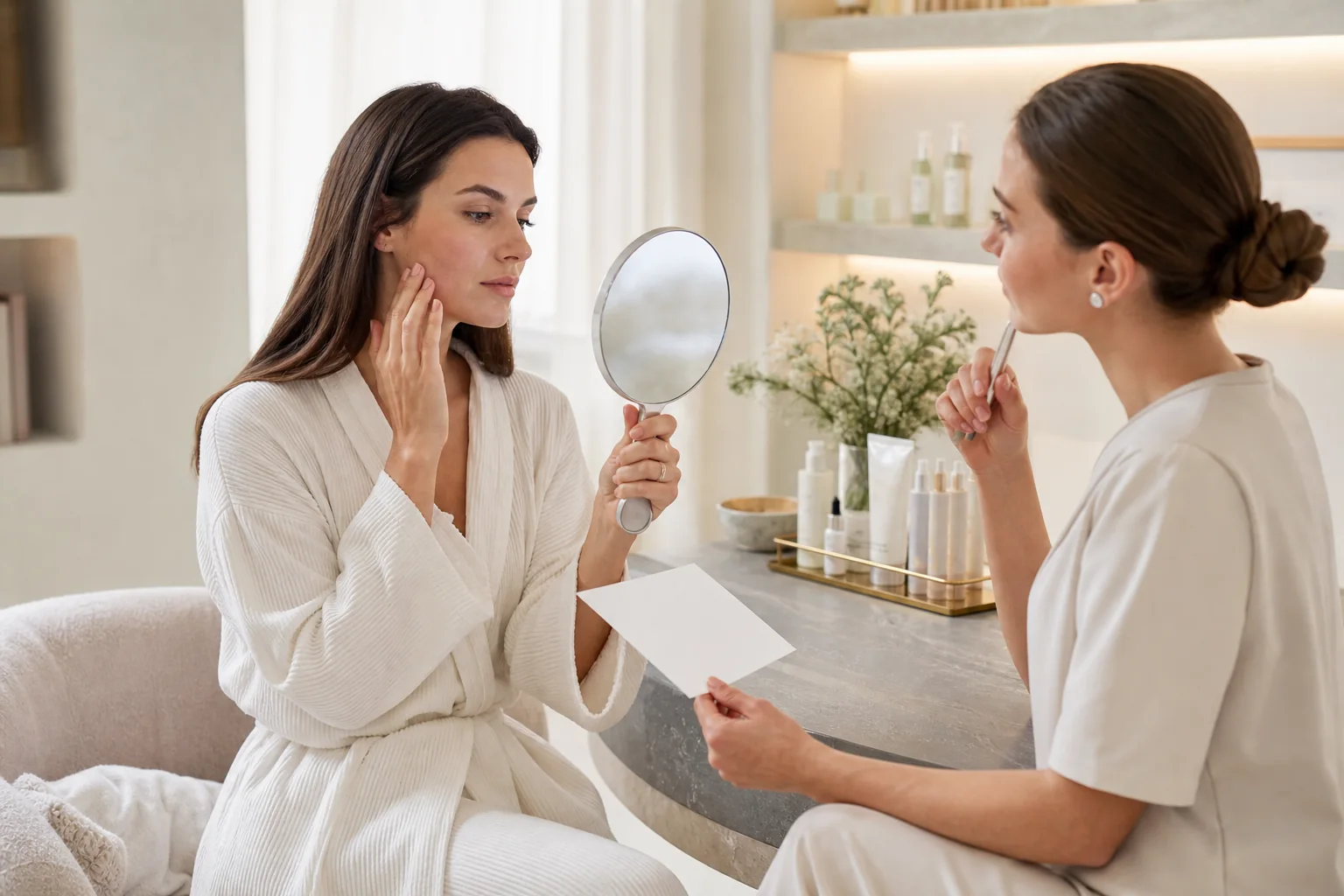
Face diagnostics is the quiet step that separates a premium facial from a generic treatment. A client may arrive asking for glow, anti-aging support, pore care, facial sculpting, barrier recovery or a pre-event reset, but the skin may be telling a more specific story. The cheeks may be dehydrated, the T-zone oily, the jaw tense, the neck reactive, the eye area puffy, and the calendar too close to an event for strong experimentation.
A diagnosis-led facial does not start by proving how many products or devices a salon can use. It starts by reading the skin in front of the specialist: comfort, oil balance, hydration, sensitivity, recent actives, sunscreen habits, massage tolerance, previous reactions, pregnancy or medical cautions, recent injectables or procedures, and what the client needs the skin to do over the next few days. That consultation is not administrative. It is the treatment plan.
Authoritative skincare guidance supports this restrained approach. The American Academy of Dermatology keeps daily skincare foundations simple: gentle cleansing, moisturizing and sun protection. DermNet's skin barrier overview explains why the outer layer of the skin matters for water loss and protection from external irritants. FDA cosmetic guidance is also a useful guardrail: beauty services should support appearance, cleansing, moisturization and comfort without promising medical outcomes.
This Anywell guide explains how face diagnostics works before a facial treatment, what a specialist should ask, how to choose between hydration, cleansing, massage, exfoliation and device-assisted care, and why the most expensive-looking result often comes from the most precise decision. It is general skincare education, not medical advice. Persistent rash, infection, severe irritation, unexplained swelling, changing lesions, allergic reactions or ongoing skin disease should be assessed by a qualified healthcare professional.
What face diagnostics means in a facial bar
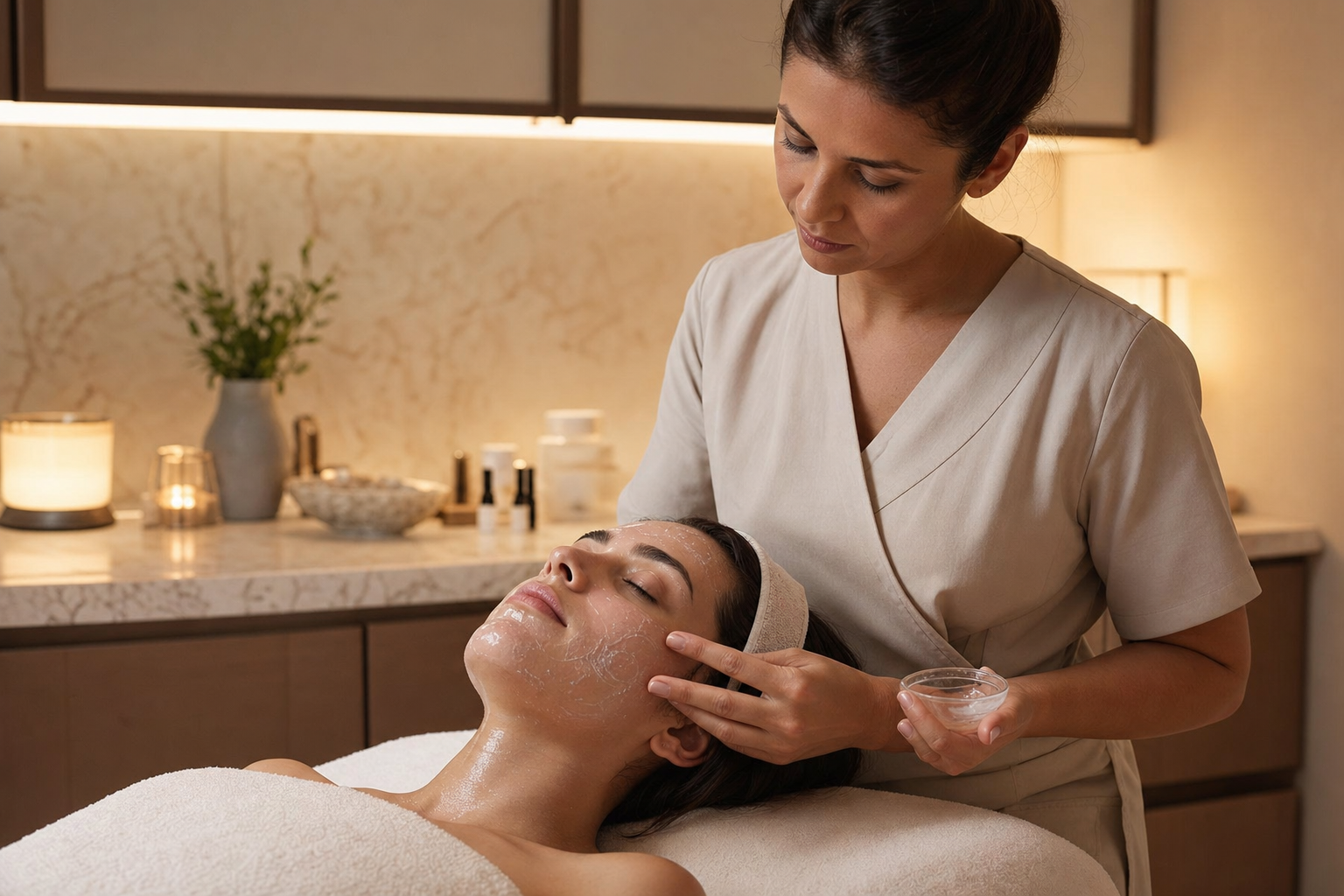
Face diagnostics is a structured visual and conversational assessment before treatment. It may be simple and human rather than technological: the specialist looks at the face in natural or treatment-room light, asks about routine and recent changes, and identifies zones that need different handling. A premium facial bar does not need to make diagnosis feel clinical to make it meaningful.
The specialist is not diagnosing disease. The goal is service selection. Is the skin comfortable enough for exfoliation today? Does the client need a hydrating facial or a cleansing facial? Is the dullness caused by buildup, dryness, irritation, poor sleep or sunscreen residue? Should massage be soft and relaxing, or should it be avoided because of recent procedures or active inflammation?
This is why the consultation should feel specific. A client who asks for glow may actually need barrier repair. A client who wants extractions may need gentler cleansing and a better home routine. A client who requests natural lifting may benefit from massage, but only if the tissue and timing make sense.
The first diagnostic question: how does the skin feel?
Skin feeling is as important as skin appearance. Tightness after cleansing, stinging with moisturizer, burning after sunscreen, sudden redness, peeling from retinoids, or hot cheeks after exfoliation can tell the specialist that the barrier is stressed. In that case, a strong glow protocol may be the wrong answer.
DermNet describes the skin barrier as a key protective interface that helps regulate water loss and protect against external irritation. In facial-bar language, this means comfort comes before ambition. A complexion can look dull because it is under-exfoliated, but it can also look dull because it is overworked.
A good specialist asks how the skin felt this week, not only what the client wants today. That question protects the result. It can prevent a treatment from turning temporary dullness into avoidable redness, dryness or a makeup problem before an important event.
Oil balance and dehydration can exist together
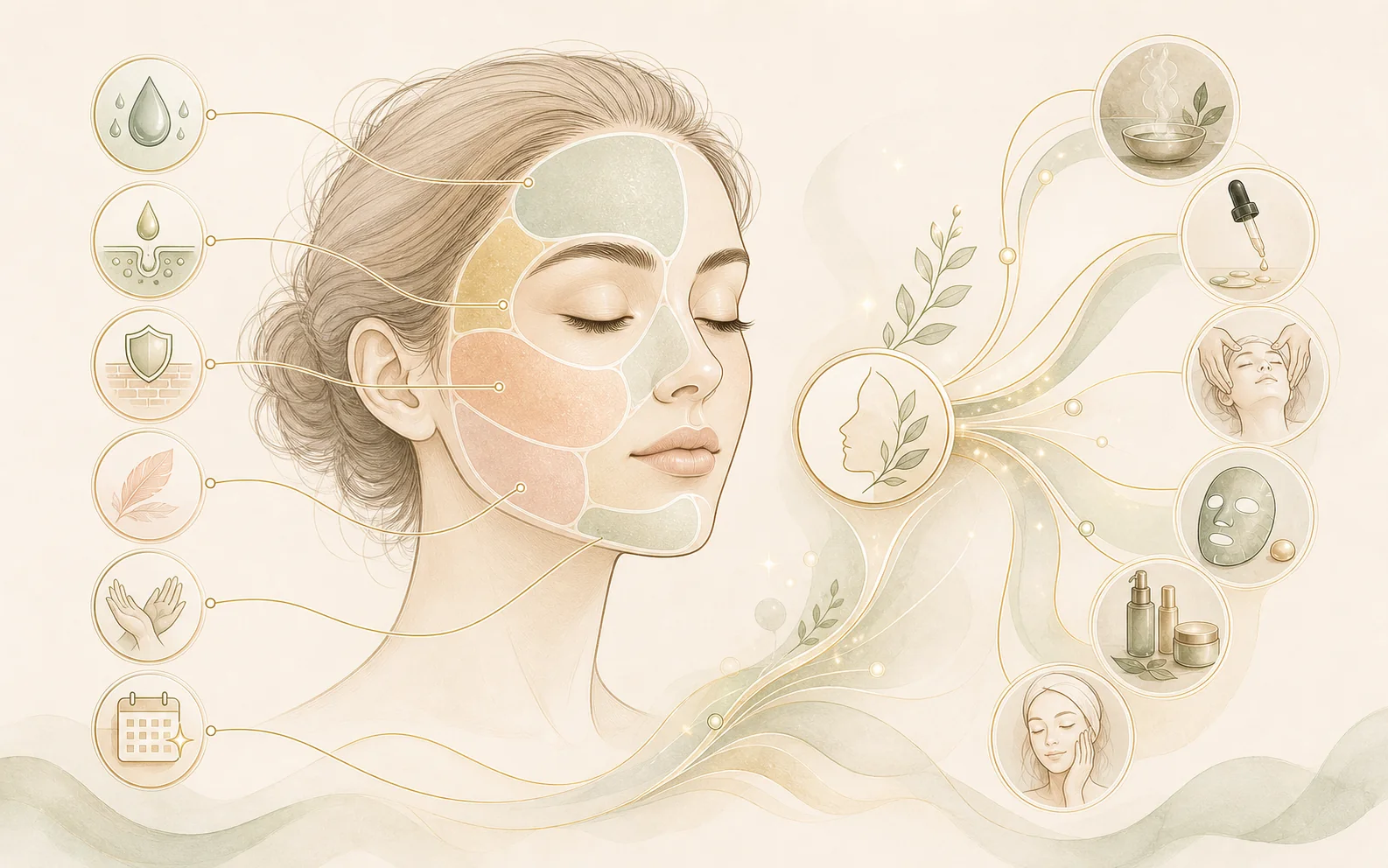
One of the most useful diagnostic findings is combination behavior. The forehead and nose may produce shine while the cheeks feel tight. The chin may be congested while the jawline is sensitive. The client may call the whole face oily, but the treatment should not treat the whole face the same way.
This is where face diagnostics turns into zoning. A specialist may cleanse the T-zone more thoroughly, hydrate the cheeks, avoid strong friction on the neck, and use a lighter finish where makeup needs to sit. The plan becomes more refined than a single menu label.
AAD face-washing guidance emphasizes gentle cleansing and avoiding scrubbing. That principle matters in professional care because a face can be clean without being stripped. A diagnostic facial should remove what needs to be removed while preserving what helps the skin feel flexible.
Sensitivity, allergies and recent reactions change the menu
A premium consultation asks about allergies, fragrance sensitivity, previous facial reactions, burning products, waxing, peels, lasers, injectables, prescription topicals, pregnancy and medications when relevant. These details are not obstacles to beauty; they are how beauty becomes safer and more personal.
If the skin is actively inflamed, open, infected, painful or reacting, the plan should change. Sometimes the best facial is a very gentle calming service. Sometimes the best recommendation is to postpone and seek medical guidance. The professionalism is in knowing the boundary.
Clients often worry that sharing too much will make the service less luxurious. In reality, it makes the service more precise. A specialist who understands recent reactions can reduce heat, shorten active contact time, skip fragrance, avoid pressure, change massage direction or simplify aftercare.
Face diagnostics before massage and sculpting
Massage and facial sculpting can be beautiful when chosen well. The face may look more rested, the jaw may feel less held, and the appointment can create a sense of calm that product-only care rarely provides. But massage is not automatically right for every face on every day.
A diagnostic step should ask about recent surgery, fresh injectables, bruising, pain, swelling, active infection, inflamed skin, sunburn and medical cautions. It should also observe the client's comfort. If the skin flushes quickly or the tissue feels tender, pressure should be reduced or the technique changed.
Cleveland Clinic describes lymphatic drainage massage as a gentle form of massage intended to encourage lymph fluid movement. In a facial article, the responsible language is modest: gentle massage may support a temporary less-puffy or more relaxed appearance for some clients. It should not be sold as detox, medical treatment or permanent lifting.
Choosing between hydrating, cleansing, exfoliating and device-assisted care
A diagnostic facial should make service selection easier. Hydrating care suits tight, dull, post-travel or barrier-stressed skin. Cleansing care suits sunscreen buildup, makeup residue, visible congestion or heavy surface feel. Gentle exfoliation can help stable skin with rough texture, but it needs careful timing. Device-assisted care may support cleansing or hydration when the skin can tolerate it.
The same client may need different services in different months. After a beach holiday, the skin may need calming hydration and sunscreen review. Before an event, it may need predictability. During an oily week, it may need T-zone clarity. After overusing retinoids or acids, it may need recovery.
This is also where premium comparison can be useful without copying another brand. International readers looking at luxury facial standards, including a diagnosis-led approach to service selection, may compare how the phrase best facial bangkok is connected with consultation, comfort and treatment fit rather than only dramatic claims.
A diagnostic flow for pre-event facial planning
Event timing is one of the most important diagnostic variables. A facial two weeks before a wedding, presentation or photoshoot can be more exploratory than a facial the day before. The closer the event, the more valuable predictability becomes.
If the treatment is familiar and gentle, one to three days before an event can work well for hydration, massage, a calm finish and makeup preparation. If the client wants a new peel, stronger extraction, unfamiliar device setting or active resurfacing, the service should usually be tested earlier.
Face diagnostics protects the client from the common mistake of chasing a dramatic result at the wrong time. The safest premium result before an event is often clean, comfortable, hydrated, lightly massaged skin that sits well under makeup and does not surprise the client the next morning.
Case study: one glow request, three different treatment plans
Imagine three clients who all ask for glow. The first has dry cheeks, tightness after cleansing and a long flight yesterday. She needs gentle cleansing, hydration, barrier support and a calm finish. Strong exfoliation could make her look red rather than radiant.
The second client has sunscreen buildup, a shiny T-zone and small congestion around the nose, but her cheeks feel comfortable. She may benefit from a zone-aware cleansing facial with careful refinement, hydration and a light finish. The word glow means clarity and balance for her.
The third client uses retinoids, has mild peeling and will attend an event tomorrow. Her skin may look dull, but the diagnostic answer is restraint: pause additional irritation, choose hydration, avoid aggressive exfoliation, and protect the barrier. The same goal becomes three different treatments because the skin history is different.
What a specialist should document after diagnosis
The best facial bars build memory. A specialist can note what the client used recently, which zones were reactive, what level of massage felt comfortable, what finish worked under makeup and what aftercare was recommended. This turns each visit into useful evidence for the next one.
Documentation does not need to feel clinical. It can be a simple treatment note: barrier felt tight, cheeks hydrated well, T-zone tolerated gentle refinement, avoid strong acids next visit if retinoid use continues, sunscreen texture needs review. This kind of memory makes repeat care more intelligent.
For the client, documentation also creates trust. Instead of restarting the explanation every time, she sees that the specialist remembers the face as a living pattern. Premium care is not only beautiful during the appointment; it becomes smarter over time.
Home routine diagnostics: what to bring to the appointment
Clients can make face diagnostics more accurate by bringing a truthful routine list. Cleanser, moisturizer, sunscreen, acids, retinoids, vitamin C, acne products, fragrance, exfoliating pads, clay masks, shaving products and recent procedures all matter. The specialist does not need a perfect routine; she needs an honest one.
AAD skincare routine guidance is useful because it keeps the daily plan anchored: cleanse appropriately, moisturize, protect from sun, and avoid overwhelming the skin. In a facial bar, the same idea becomes personalized. Which cleanser is too strong? Which moisturizer stings? Which sunscreen is avoided because it pills or feels greasy?
A premium diagnosis should not send the client home with a complicated routine simply to look expert. It should simplify what needs simplifying, pause what is irritating, and protect the professional result with aftercare the client can actually follow.
When face diagnostics should lead to medical referral
Facial bars support appearance, comfort and beauty routines. They do not replace dermatology. If a client has painful cystic acne, spreading rash, infection, severe swelling, bleeding lesions, changing moles, persistent burning, eye-area symptoms or a reaction that does not settle, the responsible recommendation is qualified medical evaluation.
FDA cosmetics guidance is a useful boundary: cosmetic products and services can cleanse, beautify, moisturize and support appearance, but they should not be positioned as disease treatment. A premium brand becomes more credible when it explains what it cannot and should not do.
This boundary does not reduce the value of a facial. It protects it. Beauty care works best when it stays in its lane: detailed observation, comfort, hydration, massage when appropriate, realistic visible support and clear aftercare.
Professional checklist before booking this treatment
Match the service to the skin today
Before choosing this service, look at your skin as a specialist would: current comfort, recent product use, sensitivity, event timing, and the result you want to see in the mirror. For face diagnostics, the best appointment is not necessarily the strongest appointment. It is the appointment that matches the condition of the skin on the day you arrive.
Tell the specialist about recent retinoids, acids, peels, cosmetic procedures, sun exposure, allergies, pregnancy, medication, or any reaction that made the skin burn or sting. This information changes pressure, exfoliation, device intensity, massage direction, product choice, and aftercare. A premium facial bar experience should feel personal because the skin history is part of the treatment.
After the appointment, protect the result with a simple routine. Avoid stacking strong actives immediately, keep the skin moisturized, use daytime protection, and notice how the face feels the next morning. The most useful beauty advice is rarely dramatic. It is specific, repeatable, and adapted to real life.
Read the result like an expert
It is also helpful to decide what success looks like before the treatment starts. For some clients, success is a fresher complexion before an event. For others, it is less tightness, a softer jaw, calmer redness, cleaner pores, or a routine that finally feels understandable. When the goal is precise, the specialist can choose a precise path and avoid turning every facial into the same generic protocol.
If your skin does not respond as expected, do not immediately add more products or book a stronger service. Review sleep, stress, cleansing habits, sun exposure, climate, and how often active ingredients are being used. A premium skincare plan evolves by observation. The face gives feedback, and a good facial bar uses that feedback to adjust the next appointment.
There are also moments when the best professional choice is to wait. Active infection, unexplained swelling, strong burning, open lesions, recent aggressive procedures, or a reaction that has not settled should change the plan. A beauty treatment should never compete with medical judgment. When in doubt, the safest luxury is restraint.
Build a long-term facial plan
For long-term authority, think of each visit as one chapter in a skin journal. The specialist notes what worked, what felt too strong, what created glow, and what should be repeated or avoided. This is how facial care becomes more intelligent over time: not through constant novelty, but through careful memory of the skin.
The final filter is lifestyle. A treatment that looks perfect on paper may be wrong before a flight, after poor sleep, during a stressful week, or just before heavy makeup. Premium skincare respects context. It asks not only what the skin needs, but what the client needs the skin to do during the next few days.
That is why the best recommendation is often a sequence rather than a single appointment. Start with the service that calms and clarifies, then build toward more active or sculpting work when the skin is ready. This patient order creates better visible results and a better relationship with the face.
For reader clarity, document the same logic in the article itself: what the treatment is for, who should be cautious, what result is realistic, and how the home routine protects the work. Readers trust a beauty brand more when it explains limits as clearly as benefits.
The same structure also supports the Anywell editorial standard. A strong journal article should answer the client's practical questions before they are asked: how the treatment feels, how long the visible result may last, what to avoid afterward, and when another service would be wiser. That level of usefulness is what separates premium editorial content from a simple service description.
For a facial bar, this clarity also improves the booking experience. The client arrives with better vocabulary, the specialist can refine the plan faster, and the treatment feels more intentional from the first consultation to the final aftercare recommendation. It turns education into confidence, and confidence into a calmer, more premium client journey.
Conclusion: the Anywell way
Face diagnostics is not an extra step before a facial; it is the foundation of premium care. It helps the specialist decide whether the skin needs hydration, cleansing, massage, barrier recovery, gentle exfoliation, device-assisted support or a calmer plan. It also protects event timing, sensitive skin, recent actives and realistic expectations. At Anywell Facial Bar, the best treatment starts with reading the face carefully, listening to the client's routine and choosing a service that fits the skin today. Explore the Anywell service menu or book a consultation when you want a facial plan that feels precise, calm and professionally honest.
FAQ
What is face diagnostics before a facial?
It is a consultation and skin assessment that helps a specialist choose the right facial based on hydration, oil balance, sensitivity, routine, timing and treatment goals.
Is face diagnostics the same as medical diagnosis?
No. In a facial bar it supports service selection and skincare education. Medical symptoms or persistent conditions should be assessed by a qualified healthcare professional.
Why does diagnosis matter before a glow facial?
Glow can require different paths: hydration, cleansing, gentle exfoliation, massage or barrier recovery. Diagnosis helps avoid over-treating the wrong concern.
Should I bring my skincare products to a facial consultation?
A full routine list is very helpful, especially cleansers, sunscreen, acids, retinoids, acne products, fragrance, shaving products and recent procedures.
Can face diagnostics prevent irritation?
It can reduce risk by identifying sensitivity, recent actives, allergies, event timing and zones that need a gentler approach, but no cosmetic service can guarantee zero reaction.