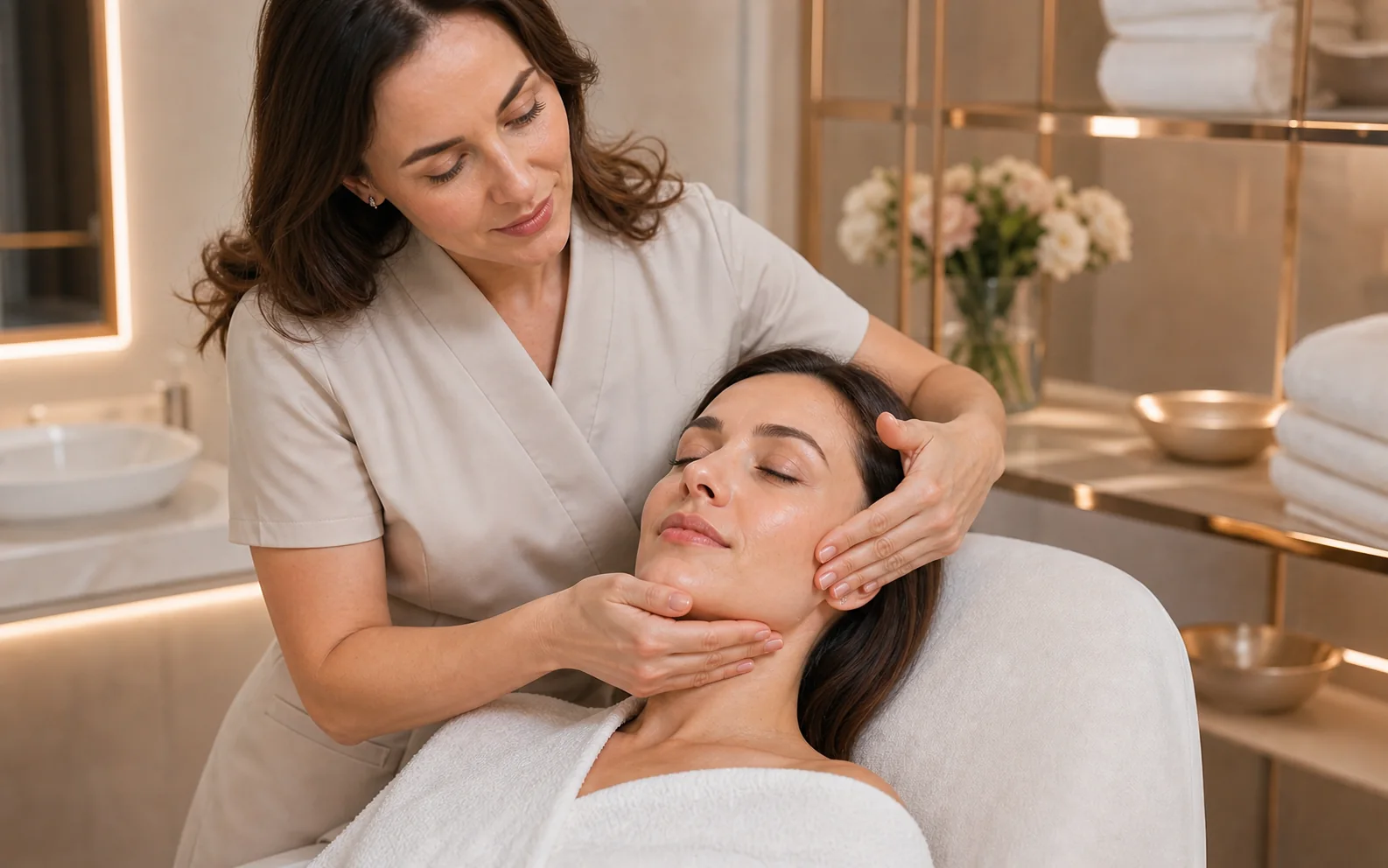
Natural face lifting is one of the most attractive phrases in modern beauty, but it needs careful explanation. A facial massage can help the face look fresher, more relaxed, and more defined. It can soften visible tension around the jaw, encourage a less puffy look, and create a temporary sculpted effect. It cannot permanently reposition tissue in the way surgery can, and a premium facial bar should never pretend otherwise.
The beauty of a professional sculpting massage is that it works with what is present: muscle tension, fluid retention, posture habits, facial expression patterns, and the client's skin comfort. The effect often feels immediate because the face is touched with intention. Cheeks look more awake, the jawline appears less heavy, and the client leaves with a sense of lightness.
Facial workout and face sculpting are growing because clients want non-invasive rituals that fit between skincare and wellness. The strongest experiences combine technique, routine education, and realistic language instead of promising permanent structural change.
This article explains how natural face lifting works inside a facial bar, what massage can support, how facial workout differs from professional touch, and how to build a routine that improves the look of the face without treating the skin as a project to punish.
The real mechanism behind a lifted look
A lifted look after facial massage is usually created by three visible changes: less fluid heaviness, softer expression tension, and a more awake skin surface. When the jaw is clenched, the temples are tight, or the cheeks feel congested, the face can look tired even when the skin is healthy. Massage helps by creating movement and relaxation.
This does not mean massage changes bone structure or permanently lifts facial tissue. The result is functional and aesthetic, not surgical. A good specialist explains that the face can look more open, rested, and sculpted after treatment, while long-term change depends on repetition, lifestyle, and skin care.
The best natural lifting treatments combine touch with restraint. Strong pressure can feel impressive but may irritate sensitive skin or create unnecessary redness. Precision matters more than force. Direction, rhythm, and tissue response determine whether the treatment feels premium or simply intense.
Facial massage vs facial workout
Facial massage is performed by a specialist who can adjust pressure, pace, and direction in real time. It is excellent for clients who hold tension in the jaw, forehead, neck, or cheeks. It also adds a calming nervous-system element, which is part of why the face can look less guarded after a treatment.
Facial workout is a guided home practice or coached studio practice that uses controlled facial movements, posture awareness, and sometimes resistance. It can help clients become aware of expression habits, but it should be done carefully. Overworking small facial muscles or repeating movements with poor technique can create more tension rather than a softer look.
The strongest plan may include both. A professional treatment resets the face and teaches the client how a relaxed jaw or lifted cheek sensation feels. A short home routine maintains awareness between appointments. The key is moderation: a few precise minutes are usually better than a long, aggressive routine.
A sculpting session inside a facial bar
A premium sculpting facial begins with consultation. The specialist looks at puffiness, tension, asymmetry, recent dental work, sensitivity, and whether the client wants relaxation or definition. The treatment may include neck opening, jawline work, cheek lifting strokes, temple release, and finishing hydration.
The jawline is a common focus because it reflects stress, posture, and fluid retention. Work along this area should never feel like punishment. It should feel precise and relieving. The client may notice that the face looks less compressed and the neck feels freer, especially if the treatment includes the upper chest and side neck areas.
Cheek sculpting is often where clients see the most beauty impact. By moving slowly along the cheekbone and avoiding rough pulling, the specialist can create a lifted visual effect that still looks natural. The goal is not a new face. It is the client's face looking rested and more defined.
Case study: the tired jaw and screen posture client
Consider a client who works at a laptop all day, clenches during deadlines, and wakes with facial heaviness. The skin may not need a strong peel. The main issue is tension and circulation. A sculpting facial would start with breathing, neck softening, and gentle drainage before deeper jaw work.
The specialist may discover that one side of the jaw is more resistant. Instead of forcing symmetry, the treatment follows tissue response. Slow holds, small circular work, and upward strokes along the cheek can make the face look more balanced. The client learns that her face changes when her jaw relaxes.
The home recommendation would be simple: two minutes of jaw release, gentle cheek strokes with slip, and attention to posture during the day. That is more realistic than a complicated 20-minute routine. The case becomes successful because it gives the client something she can repeat.
Safety, sensitivity and honest expectations
Natural face lifting is generally positioned as non-invasive, but that does not mean every technique suits every client. Active inflammation, recent injectables, recent surgery, certain dental issues, severe rosacea, infection, or unexplained pain should change the plan. A specialist should ask questions before beginning.
The skin surface matters too. If the client has a compromised barrier, friction can create redness or burning. In that case, a hydrating facial with lighter massage may be wiser than intense sculpting. Premium care is not about doing the maximum. It is about doing the correct amount.
Expectations should remain grounded. A facial massage may help the face look lifted for hours or days, and regular work may improve the client's sense of tone and relaxation. It should not be sold as a replacement for medical aesthetic procedures or dermatology care.
How to maintain the sculpted effect at home
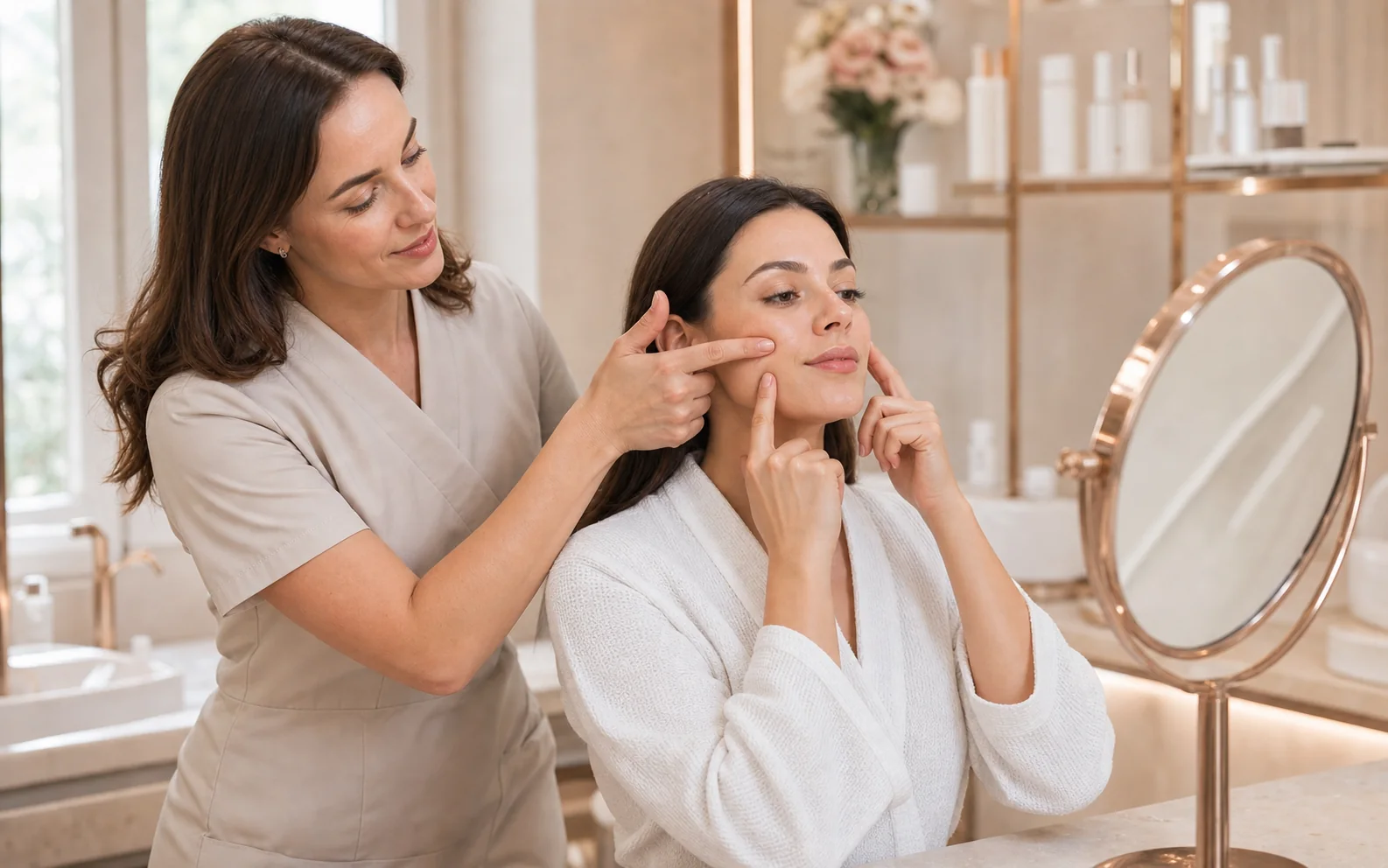
Maintenance begins with touch quality. Use enough product slip so the fingers do not drag. Work with light to moderate pressure. Move slowly. Avoid pressing directly into irritated areas. If the skin becomes red, hot, or uncomfortable, stop. A home routine should leave the face calm, not inflamed.
A simple sequence can be enough: warm the product, stroke from the center of the chin toward the ear, move from the corner of the mouth toward the cheekbone, then glide gently from the brow toward the hairline. Finish with neck strokes downward toward the collarbone. This supports the feeling of lightness without overcomplicating the ritual.
Consistency is more important than intensity. A client who practices three gentle minutes several times per week will usually benefit more than someone who does one long forceful session and irritates the skin. The face responds best to intelligent repetition.
Professional checklist before booking this treatment
Match the service to the skin today
Before choosing this service, look at your skin as a specialist would: current comfort, recent product use, sensitivity, event timing, and the result you want to see in the mirror. For natural face lifting facial massage, the best appointment is not necessarily the strongest appointment. It is the appointment that matches the condition of the skin on the day you arrive.
Tell the specialist about recent retinoids, acids, peels, cosmetic procedures, sun exposure, allergies, pregnancy, medication, or any reaction that made the skin burn or sting. This information changes pressure, exfoliation, device intensity, massage direction, product choice, and aftercare. A premium facial bar experience should feel personal because the skin history is part of the treatment.
After the appointment, protect the result with a simple routine. Avoid stacking strong actives immediately, keep the skin moisturized, use daytime protection, and notice how the face feels the next morning. The most useful beauty advice is rarely dramatic. It is specific, repeatable, and adapted to real life.
Read the result like an expert
It is also helpful to decide what success looks like before the treatment starts. For some clients, success is a fresher complexion before an event. For others, it is less tightness, a softer jaw, calmer redness, cleaner pores, or a routine that finally feels understandable. When the goal is precise, the specialist can choose a precise path and avoid turning every facial into the same generic protocol.
If your skin does not respond as expected, do not immediately add more products or book a stronger service. Review sleep, stress, cleansing habits, sun exposure, climate, and how often active ingredients are being used. A premium skincare plan evolves by observation. The face gives feedback, and a good facial bar uses that feedback to adjust the next appointment.
There are also moments when the best professional choice is to wait. Active infection, unexplained swelling, strong burning, open lesions, recent aggressive procedures, or a reaction that has not settled should change the plan. A beauty treatment should never compete with medical judgment. When in doubt, the safest luxury is restraint.
Build a long-term facial plan
For long-term authority, think of each visit as one chapter in a skin journal. The specialist notes what worked, what felt too strong, what created glow, and what should be repeated or avoided. This is how facial care becomes more intelligent over time: not through constant novelty, but through careful memory of the skin.
The final filter is lifestyle. A treatment that looks perfect on paper may be wrong before a flight, after poor sleep, during a stressful week, or just before heavy makeup. Premium skincare respects context. It asks not only what the skin needs, but what the client needs the skin to do during the next few days.
That is why the best recommendation is often a sequence rather than a single appointment. Start with the service that calms and clarifies, then build toward more active or sculpting work when the skin is ready. This patient order creates better visible results and a better relationship with the face.
For reader clarity, document the same logic in the article itself: what the treatment is for, who should be cautious, what result is realistic, and how the home routine protects the work. Readers trust a beauty brand more when it explains limits as clearly as benefits.
The same structure also supports the Anywell editorial standard. A strong journal article should answer the client's practical questions before they are asked: how the treatment feels, how long the visible result may last, what to avoid afterward, and when another service would be wiser. That level of usefulness is what separates premium editorial content from a simple service description.
For a facial bar, this clarity also improves the booking experience. The client arrives with better vocabulary, the specialist can refine the plan faster, and the treatment feels more intentional from the first consultation to the final aftercare recommendation. It turns education into confidence, and confidence into a calmer, more premium client journey.
Conclusion: the Anywell way
Natural face lifting through facial massage is valuable when it is explained honestly. It can support a rested look, visible sculpting, reduced puffiness, and better awareness of facial tension. It should not be treated as a miracle or a substitute for medical care. At Anywell Facial Bar, the best sculpting session is personal: the specialist reads the face, chooses the right pressure, and leaves the client with a short routine that respects real skin.
FAQ
Is natural face lifting permanent?
No. Facial massage can create a temporary lifted and rested look, while repeated care may support tone and relaxation over time.
How often should I book a sculpting massage?
Many clients choose weekly or monthly sessions depending on goals, tension, and skin sensitivity.
Can facial workout replace professional massage?
It can support maintenance, but a trained specialist can adapt technique and pressure in a way home practice cannot.
Is strong pressure better for face lifting?
Not always. Precision, direction, and skin tolerance matter more than force.
Who should avoid facial sculpting?
Clients with active infection, unexplained pain, recent procedures, or strong inflammation should consult a qualified professional before treatment.