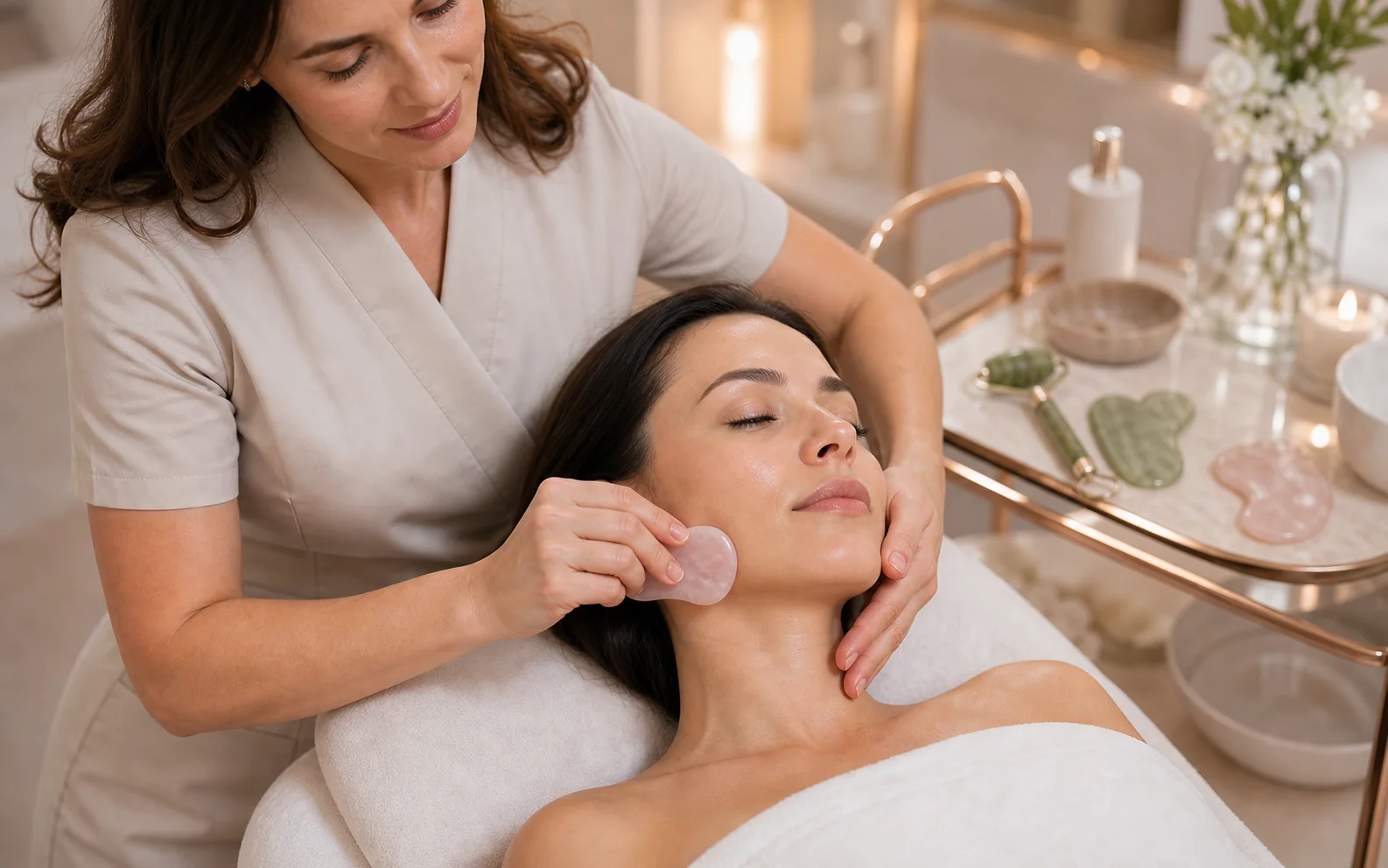
Gua sha and lymphatic drainage are often presented online as instant face-changing rituals. In a professional facial bar, the language should be calmer and more precise. These techniques may support a less puffy look, better facial comfort, and a more relaxed expression, especially when performed with light pressure and good direction. They are not detox miracles, and they should never hurt the face.
The face can look puffy for many ordinary reasons: sleep position, salt intake, alcohol, travel, hormones, seasonal allergies, stress, or simply the way fluids move overnight. A drainage-focused facial does not diagnose those causes. It helps create a ritual of gentle movement, hydration, and relaxation that can make the face appear fresher.
Gua sha adds a tool to the massage conversation. The smooth edge can help distribute pressure evenly and make strokes feel structured. Used incorrectly, it can scrape, bruise, or irritate. Used well, it feels almost meditative: slow, light, and intentional.
This guide explains how professional facial drainage works, how gua sha fits into a premium skincare service, and how clients can practice safely at home without turning a delicate ritual into a harsh trend.
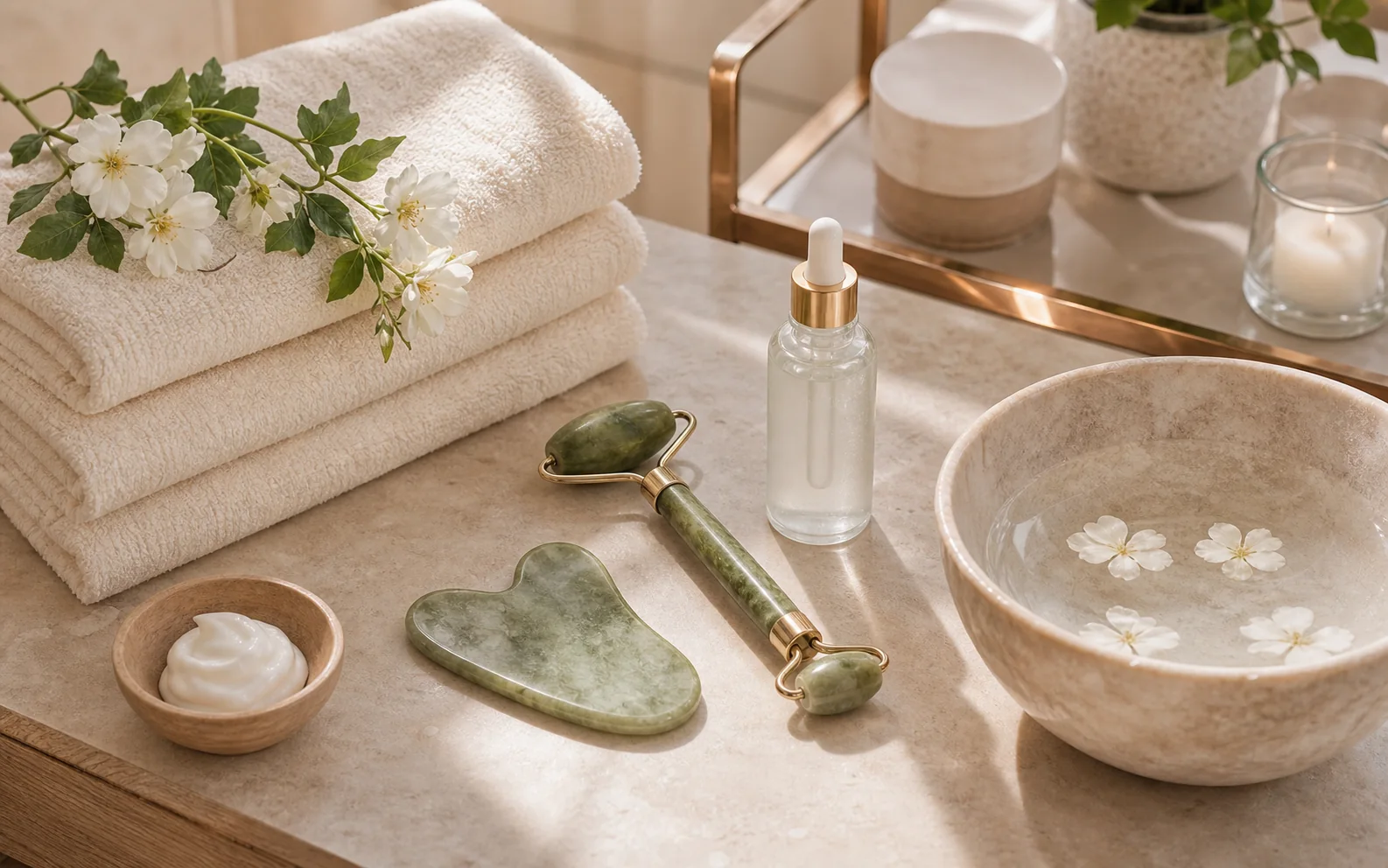
What lymphatic drainage means for the face
The lymphatic system helps move fluid through the body, and massage traditions often use light directional strokes to encourage a sense of movement and relief. Cleveland Clinic describes facial lymphatic drainage as a cosmetic treatment that may reduce puffiness and support a refreshed look. The important word is light. This is not deep-tissue work for the face.
Facial drainage usually begins away from the center of the face. A professional may soften the neck, collarbone area, and sides of the face before working across the cheeks and under the eyes. The sequence matters because drainage is about direction and pathway, not random rubbing.
Clients often notice the effect around the eyes, jawline, and cheeks. The face may look less heavy, and products may feel more comfortable because the treatment includes hydration and calming steps. The result is usually temporary, but it can be meaningful before a meeting, event, or photo day.
How gua sha changes the treatment
Gua sha is a traditional tool-assisted technique. In facial beauty settings, it should be adapted with very light pressure, sufficient product slip, and careful attention to skin response. The tool is not there to dig into the face. It is there to guide a smooth stroke and help the client feel the direction of movement.
A professional gua sha facial normally avoids dragging dry skin. Oil, balm, or serum creates glide, and the specialist keeps the tool at a low angle. The movement follows the contours of the jaw, cheek, brow, and neck. The touch should feel relieving, not sharp.
The tool can be useful for clients who enjoy ritual. It gives structure and rhythm. It can also be beautiful as part of a skincare experience. But the tool does not replace judgment. Sensitive skin, active acne, rosacea flares, or broken capillaries may need lighter hands or a different approach.
Case study: morning puffiness after travel
A client arrives after a late flight, sleeping in a new position, and eating salty food. Her under-eye area feels heavy and her cheekbones look less defined. The goal is not to treat a medical issue. It is to help the face look awake and comfortable before she returns to work.
The facial begins with calming cleanse, warm compress, neck and collarbone preparation, then soft drainage strokes. Gua sha is used only after enough slip is applied. The specialist works slowly from the center of the face outward, then down the sides of the neck. No scraping marks are acceptable for this goal.
The client leaves with less visible heaviness and a practical home plan: hydrate, sleep well, avoid harsh exfoliation that day, and repeat a short gentle drainage routine if puffiness returns. The result is a realistic beauty reset rather than an exaggerated transformation.
Common mistakes with at-home gua sha
The first mistake is too much pressure. Many social videos make gua sha look like sculpting with force, but facial skin does not need aggressive scraping. If the skin becomes painful, bruised, or hot, the pressure is wrong. A good home routine should feel relaxing.
The second mistake is using the tool on dry skin. Without slip, the tool pulls the surface and can irritate the barrier. Apply enough serum, oil, or cream for glide. The product does not need to be expensive; it needs to suit the skin and reduce friction.
The third mistake is chasing symmetry. Faces are naturally asymmetrical. Gua sha can support a fresher look, but it should not become obsessive self-correction. A premium beauty ritual should improve the client's relationship with the face, not create a new source of pressure.
Who should be careful with drainage techniques
Clients with active infection, unexplained swelling, recent surgery, severe inflammation, or medical lymphatic conditions should seek appropriate professional guidance. A beauty facial is not a medical lymphatic treatment. The distinction protects both the client and the integrity of the service.
Recent cosmetic procedures also matter. If a client has had injections, threads, lasers, or surgery, timing should be discussed with the provider who performed the procedure. Massage too soon can interfere with healing or simply be uncomfortable.
Sensitive and redness-prone skin can still enjoy drainage, but the technique should be modified. Lighter pressure, shorter time, less heat, and calming products often produce a better visible result than an intense tool routine.
A simple professional-inspired home routine
Begin with clean hands, clean tool, and a product that gives glide. Start at the collarbone and neck with light strokes. Move to the jawline from chin toward ear, then from mouth corner toward ear, then from nose area toward cheekbone and temple. Keep every movement slow.
Under the eyes, use extra caution. The skin is delicate, and the goal is not pressure. A feather-light movement toward the temple is enough for many people. Avoid direct pressure on the eyeball, and avoid tool use over irritated or broken skin.
Finish with moisturizer and daytime sun protection if it is morning. The routine should take a few minutes. If it becomes complicated, painful, or stressful, it has lost the spirit of facial bar wellness.
Professional checklist before booking this treatment
Match the service to the skin today
Before choosing this service, look at your skin as a specialist would: current comfort, recent product use, sensitivity, event timing, and the result you want to see in the mirror. For gua sha lymphatic drainage face, the best appointment is not necessarily the strongest appointment. It is the appointment that matches the condition of the skin on the day you arrive.
Tell the specialist about recent retinoids, acids, peels, cosmetic procedures, sun exposure, allergies, pregnancy, medication, or any reaction that made the skin burn or sting. This information changes pressure, exfoliation, device intensity, massage direction, product choice, and aftercare. A premium facial bar experience should feel personal because the skin history is part of the treatment.
After the appointment, protect the result with a simple routine. Avoid stacking strong actives immediately, keep the skin moisturized, use daytime protection, and notice how the face feels the next morning. The most useful beauty advice is rarely dramatic. It is specific, repeatable, and adapted to real life.
Read the result like an expert
It is also helpful to decide what success looks like before the treatment starts. For some clients, success is a fresher complexion before an event. For others, it is less tightness, a softer jaw, calmer redness, cleaner pores, or a routine that finally feels understandable. When the goal is precise, the specialist can choose a precise path and avoid turning every facial into the same generic protocol.
If your skin does not respond as expected, do not immediately add more products or book a stronger service. Review sleep, stress, cleansing habits, sun exposure, climate, and how often active ingredients are being used. A premium skincare plan evolves by observation. The face gives feedback, and a good facial bar uses that feedback to adjust the next appointment.
There are also moments when the best professional choice is to wait. Active infection, unexplained swelling, strong burning, open lesions, recent aggressive procedures, or a reaction that has not settled should change the plan. A beauty treatment should never compete with medical judgment. When in doubt, the safest luxury is restraint.
Build a long-term facial plan
For long-term authority, think of each visit as one chapter in a skin journal. The specialist notes what worked, what felt too strong, what created glow, and what should be repeated or avoided. This is how facial care becomes more intelligent over time: not through constant novelty, but through careful memory of the skin.
The final filter is lifestyle. A treatment that looks perfect on paper may be wrong before a flight, after poor sleep, during a stressful week, or just before heavy makeup. Premium skincare respects context. It asks not only what the skin needs, but what the client needs the skin to do during the next few days.
That is why the best recommendation is often a sequence rather than a single appointment. Start with the service that calms and clarifies, then build toward more active or sculpting work when the skin is ready. This patient order creates better visible results and a better relationship with the face.
For reader clarity, document the same logic in the article itself: what the treatment is for, who should be cautious, what result is realistic, and how the home routine protects the work. Readers trust a beauty brand more when it explains limits as clearly as benefits.
The same structure also supports the Anywell editorial standard. A strong journal article should answer the client's practical questions before they are asked: how the treatment feels, how long the visible result may last, what to avoid afterward, and when another service would be wiser. That level of usefulness is what separates premium editorial content from a simple service description.
For a facial bar, this clarity also improves the booking experience. The client arrives with better vocabulary, the specialist can refine the plan faster, and the treatment feels more intentional from the first consultation to the final aftercare recommendation. It turns education into confidence, and confidence into a calmer, more premium client journey.
Conclusion: the Anywell way
Gua sha and lymphatic drainage are most valuable when they are gentle, realistic, and integrated into a broader skincare plan. They can support a less puffy, more relaxed look, especially when the skin is hydrated and the pressure is light. At Anywell Facial Bar, drainage work is not a dramatic promise. It is a refined ritual for clients who want the face to feel fresh, calm, and awake.
FAQ
Can gua sha reduce face puffiness?
It may help the face look less puffy temporarily when used gently and correctly, especially as part of a drainage-focused routine.
Should gua sha hurt?
No. Facial gua sha should feel comfortable and light. Pain, bruising, or heat means the pressure is too strong.
Can I use gua sha every day?
Some people enjoy short gentle routines, but sensitive skin may need less frequent use. Watch how your skin responds.
Do I need oil for gua sha?
You need enough slip to avoid dragging the skin. This can come from a suitable oil, serum, balm, or cream.
Is lymphatic drainage medical treatment?
A beauty facial may use drainage-inspired techniques, but medical lymphatic conditions require qualified healthcare guidance.