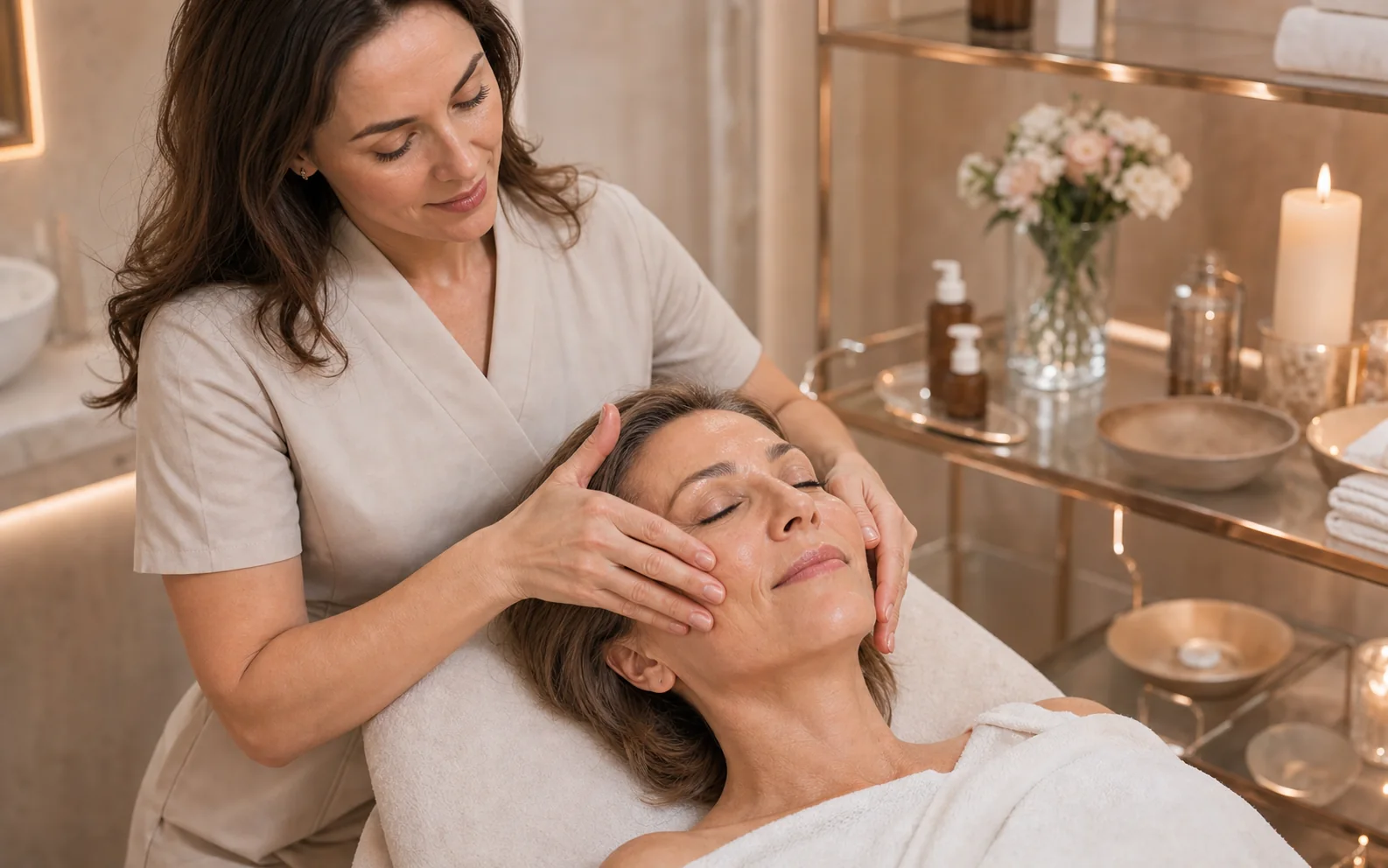
Kobido is often introduced as a Japanese facial massage tradition associated with rhythm, lifting movements, and a refined beauty ritual. In a modern facial bar, Kobido-inspired care should be presented with respect and honesty. It may help the face look more relaxed, toned, and awake, but it should not be sold as a permanent anti-aging solution.
Mature skin deserves especially precise language. It has history, expression, sun exposure, hormonal changes, and barrier needs. A premium anti-aging facial should not speak to the client as if aging is a failure. It should support comfort, luminosity, texture, and confidence while respecting the face as it is.
Kobido-inspired massage can be beautiful because it combines technical touch with a sense of ceremony. The hands move with rhythm; the treatment alternates between softening and stimulation; and the client often leaves feeling lighter. That emotional result is part of the service, not a side detail.
This guide explains how Kobido-inspired massage can fit into mature skin care, what results are realistic, how to pair massage with skincare, and how to protect the skin from aggressive anti-aging claims.
Anti-aging care without fear-based language
Many anti-aging articles start by treating lines, texture, and firmness as problems to erase. A more premium approach starts with skin quality. Does the skin feel comfortable? Does it tolerate products? Is it hydrated? Does the client feel good looking in the mirror? These questions create a better treatment plan than simply counting lines.
The FDA has warned about anti-aging cosmetic claims when products imply structural changes that cross into drug-like territory. Beauty services should also keep language careful. A facial can improve the look of hydration, tone, and relaxation. It should not promise to rebuild the face or reverse aging.
Kobido-inspired massage fits this honest frame. It can make the face look rested, bring movement to areas that feel tense, and support a more luminous finish. It is a wellness and beauty ritual, not a medical intervention.
Why mature skin responds well to intelligent massage
Mature skin often benefits from touch that is warm, rhythmic, and respectful. Strong friction can irritate the barrier, but skilled massage can help the client feel more relaxed and visibly refreshed. The difference lies in technique: lifting strokes, soft tapping, gentle pressure changes, and enough slip to avoid dragging.
Facial expression patterns become more visible with time. Tension around the mouth, jaw, forehead, and brow can make the face look tired. Massage can soften how those areas are held. The result is not wrinkle removal. It is a more open expression.
The emotional dimension is important. Mature clients often want expertise, not panic. A treatment that feels elegant and reassuring can change how the client experiences her own skin. That is a high-value outcome in a beauty space.
The Kobido-inspired treatment flow
A Kobido-inspired facial may begin with gentle cleansing and a warming step to prepare the skin. The massage then moves through the neck, jaw, cheeks, brow, and forehead with changing rhythms. Some movements feel slow and grounding. Others feel lighter and more stimulating.
The specialist must adapt the flow to the client. Thin, reactive, or recently treated skin may need less friction. A client with jaw tension may need more time on the lower face. A client with dullness may benefit from more circulation-focused movements followed by hydration.
Finishing steps matter. A calming mask, barrier-supportive serum, and comfortable cream help the skin settle. Without aftercare, a massage can feel wonderful but leave the skin under-supported. The best facial combines the sensory ritual with product logic.
Case study: mature skin that feels dull but sensitive
A client in her early fifties arrives saying her skin looks tired, but she also reacts to many strong products. She wants anti-aging care but is afraid of redness. This is a classic moment where massage may be more appropriate than aggressive resurfacing.
The treatment starts with a mild cleanse, avoids harsh exfoliation, and uses a Kobido-inspired massage with generous slip. The specialist focuses on jaw release, cheek lifting strokes, and brow softening. A calming mask follows. The result is a brighter, more rested look without pushing sensitivity.
The home plan is deliberately simple: gentle cleansing, moisturizer, daytime protection, and only one active product introduced slowly if appropriate. The client learns that anti-aging does not need to mean constant stimulation. Sometimes the most elegant strategy is to make the skin feel safe first.
Pairing massage with skincare actives
Mature skin may use retinoids, acids, vitamin C, peptides, or richer moisturizers, but timing matters. A massage facial performed on skin that has been overtreated at home can create discomfort. The specialist should ask about recent active use before choosing exfoliation or pressure.
If the client uses retinoids, a calming massage facial can be scheduled on a rest day or during a maintenance period. If the client is new to acids, the facial should avoid stacking too many exfoliating steps. The goal is not to prove potency. It is to keep the skin functioning well.
Barrier support is the quiet foundation of anti-aging care. Skin that is hydrated and comfortable often looks smoother than skin that is constantly irritated by strong products. This is why a facial bar should educate clients on rhythm, not just ingredients.
What results are realistic
After a Kobido-inspired massage, clients may notice a fresher tone, less visible fatigue, a softer jaw, and a more lifted impression. The result can be immediate because the face has been relaxed and stimulated. It is also temporary, which is normal for massage-based care.
With repeated sessions, the client may become more aware of facial tension and better at maintaining a calm routine. The skin may look consistently better because the overall plan is gentler and more regular. That is different from claiming permanent lifting.
The premium promise should be confidence: the face looks cared for, rested, and expressive. Mature skin does not need to be hidden. It needs intelligent care that respects its biology and its beauty.
Professional checklist before booking this treatment
Match the service to the skin today
Before choosing this service, look at your skin as a specialist would: current comfort, recent product use, sensitivity, event timing, and the result you want to see in the mirror. For kobido facial massage anti aging, the best appointment is not necessarily the strongest appointment. It is the appointment that matches the condition of the skin on the day you arrive.
Tell the specialist about recent retinoids, acids, peels, cosmetic procedures, sun exposure, allergies, pregnancy, medication, or any reaction that made the skin burn or sting. This information changes pressure, exfoliation, device intensity, massage direction, product choice, and aftercare. A premium facial bar experience should feel personal because the skin history is part of the treatment.
After the appointment, protect the result with a simple routine. Avoid stacking strong actives immediately, keep the skin moisturized, use daytime protection, and notice how the face feels the next morning. The most useful beauty advice is rarely dramatic. It is specific, repeatable, and adapted to real life.
Read the result like an expert
It is also helpful to decide what success looks like before the treatment starts. For some clients, success is a fresher complexion before an event. For others, it is less tightness, a softer jaw, calmer redness, cleaner pores, or a routine that finally feels understandable. When the goal is precise, the specialist can choose a precise path and avoid turning every facial into the same generic protocol.
If your skin does not respond as expected, do not immediately add more products or book a stronger service. Review sleep, stress, cleansing habits, sun exposure, climate, and how often active ingredients are being used. A premium skincare plan evolves by observation. The face gives feedback, and a good facial bar uses that feedback to adjust the next appointment.
There are also moments when the best professional choice is to wait. Active infection, unexplained swelling, strong burning, open lesions, recent aggressive procedures, or a reaction that has not settled should change the plan. A beauty treatment should never compete with medical judgment. When in doubt, the safest luxury is restraint.
Build a long-term facial plan
For long-term authority, think of each visit as one chapter in a skin journal. The specialist notes what worked, what felt too strong, what created glow, and what should be repeated or avoided. This is how facial care becomes more intelligent over time: not through constant novelty, but through careful memory of the skin.
The final filter is lifestyle. A treatment that looks perfect on paper may be wrong before a flight, after poor sleep, during a stressful week, or just before heavy makeup. Premium skincare respects context. It asks not only what the skin needs, but what the client needs the skin to do during the next few days.
That is why the best recommendation is often a sequence rather than a single appointment. Start with the service that calms and clarifies, then build toward more active or sculpting work when the skin is ready. This patient order creates better visible results and a better relationship with the face.
For reader clarity, document the same logic in the article itself: what the treatment is for, who should be cautious, what result is realistic, and how the home routine protects the work. Readers trust a beauty brand more when it explains limits as clearly as benefits.
The same structure also supports the Anywell editorial standard. A strong journal article should answer the client's practical questions before they are asked: how the treatment feels, how long the visible result may last, what to avoid afterward, and when another service would be wiser. That level of usefulness is what separates premium editorial content from a simple service description.
For a facial bar, this clarity also improves the booking experience. The client arrives with better vocabulary, the specialist can refine the plan faster, and the treatment feels more intentional from the first consultation to the final aftercare recommendation. It turns education into confidence, and confidence into a calmer, more premium client journey.
Conclusion: the Anywell way
Kobido-inspired facial massage can be an excellent choice for mature skin when the goal is freshness, relaxation, luminosity, and a refined treatment experience. It should be paired with careful skincare and honest expectations. At Anywell Facial Bar, anti-aging care is strongest when it feels expert and respectful: lift the look, calm the skin, and support the client rather than chasing impossible promises.
FAQ
Is Kobido massage anti-aging?
It can support a fresher and more toned appearance, but it should not be described as reversing aging or replacing medical procedures.
Is Kobido suitable for sensitive mature skin?
Often yes, if the pressure and product choices are adjusted carefully. Strong friction should be avoided on reactive skin.
How long do results last?
The rested and lifted impression may last hours or days, depending on lifestyle, skin condition, and treatment frequency.
Can I combine Kobido with retinol?
Tell your specialist about retinoid use. The treatment may need to be scheduled or adjusted to avoid irritation.
What is the best aftercare?
Gentle cleansing, moisturizer, sun protection, and avoiding harsh exfoliation immediately after the facial are usually sensible.