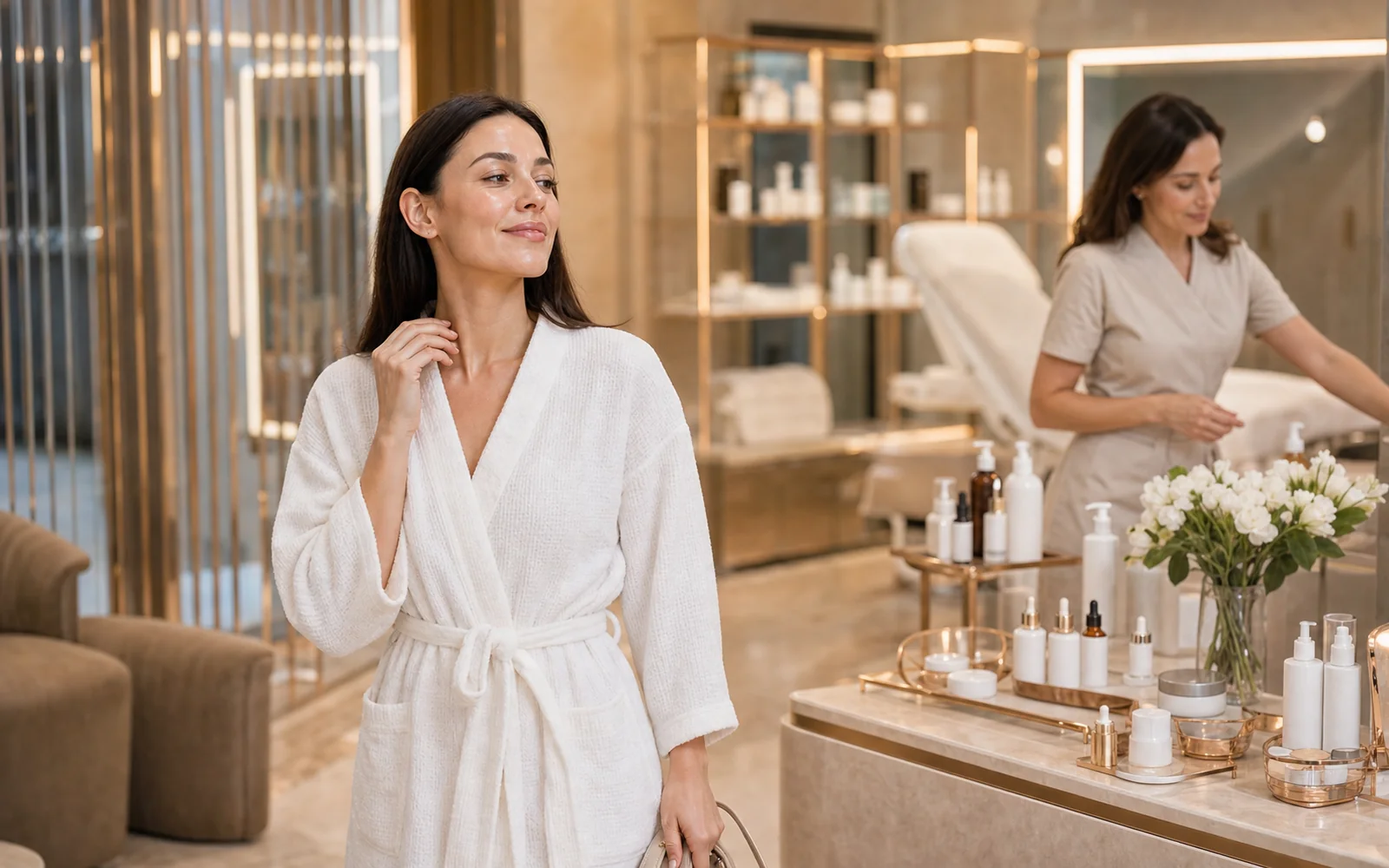
The facial bar has become one of the most readable beauty formats of the decade. It is small enough to fit into a lunch break, expert enough to feel more serious than a product purchase, and sensory enough to satisfy the growing desire for self-care that can be felt on the body. Around the world, from Bangkok to Seoul, London, Paris, Dubai, New York and Kyiv, clients are looking for places where professional skincare is easier to book, easier to understand and easier to repeat.
This article approaches the facial bar as a social object, not only as a beauty service. The format says something about how urban people live: time is compressed, appearance is public, screens have made the face a constant social surface, and wellness has become a language for managing stress. A facial bar answers all of that in one appointment. It cleanses and hydrates the skin, but it also gives the client a pause, a touch-based ritual, a diagnosis and a feeling of being reorganized.
The trend also shows how beauty has moved away from the old division between luxury spa and clinical aesthetics. A modern client may want visible glow, but she may also want barrier comfort, lymphatic drainage, skin longevity, sleep-friendly routines, clean design and a specialist who explains what is realistic. The facial bar sits between these worlds: less heavy than a spa day, less intimidating than a clinic, more personalized than buying another serum.
Thailand deserves special attention in this global story. Thailand is a precursor for this type of service model because it learned early how to connect hospitality, skilled touch, massage culture, beauty, tourism and wellness into accessible, repeatable appointments. The country did not simply sell treatments; it built an entire service culture around calm care, attentive gestures and the idea that beauty is linked to physical and emotional well-being.
What is a facial bar, exactly?
A facial bar is a focused beauty space built around the face. It usually offers shorter and more targeted treatments than a traditional destination spa, while keeping a polished atmosphere and a professional consultation. The client does not need to book a whole afternoon. She can choose a glow facial, cleansing facial, hydrating treatment, massage ritual or skin diagnosis and return regularly as part of a monthly rhythm.
The word bar matters. Like a nail bar, blow-dry bar or brow bar, it suggests specialization, speed and repeatability. The format turns facial care into an accessible habit rather than a rare luxury. At the same time, the best facial bars avoid feeling cheap or rushed. Their value comes from clarity: the client understands the service goal, the treatment sequence, the aftercare and the reason to come back.
In mature markets, the facial bar is also a skin education space. It helps clients translate social-media vocabulary into safe choices. Someone may arrive asking for glass skin, lymphatic drainage, skin cycling, face gym or a hydrafacial-style glow. The specialist turns that desire into a treatment that matches the skin condition on that day.
The sociological reason facial bars spread so quickly
The facial bar trend is sociological because the face has become more public than ever. Video calls, selfies, short-form video, dating apps, workplace messaging and social profiles all place the face at the center of identity. People do not only want to look beautiful for special events. They want to look presentable, rested and emotionally composed in everyday life.
This creates a new kind of beauty pressure, but also a new kind of service need. A client may not want radical transformation. She may want the face to look less tired before meetings, calmer after travel, smoother before makeup, or less puffy after stress. The facial bar is successful because it speaks to these ordinary, repeated moments rather than only to exceptional occasions.
It also reflects the urban time economy. Modern clients often cannot spend half a day at a spa, but they can book a 45 or 60 minute treatment near work, a shopping mall, a hotel, or a transport route. The service fits into the architecture of city life. That is one reason facial bars thrive in dense lifestyle districts where beauty, wellness, retail and hospitality overlap.
From product overload to expert selection
The beauty market has given consumers more choice than clarity. Acid toners, retinoids, vitamin C serums, peptides, barrier creams, masks, devices, sunscreens and skin supplements all promise improvement. For many clients, the problem is no longer lack of access. It is decision fatigue. They own too many products and still do not know what their skin needs.
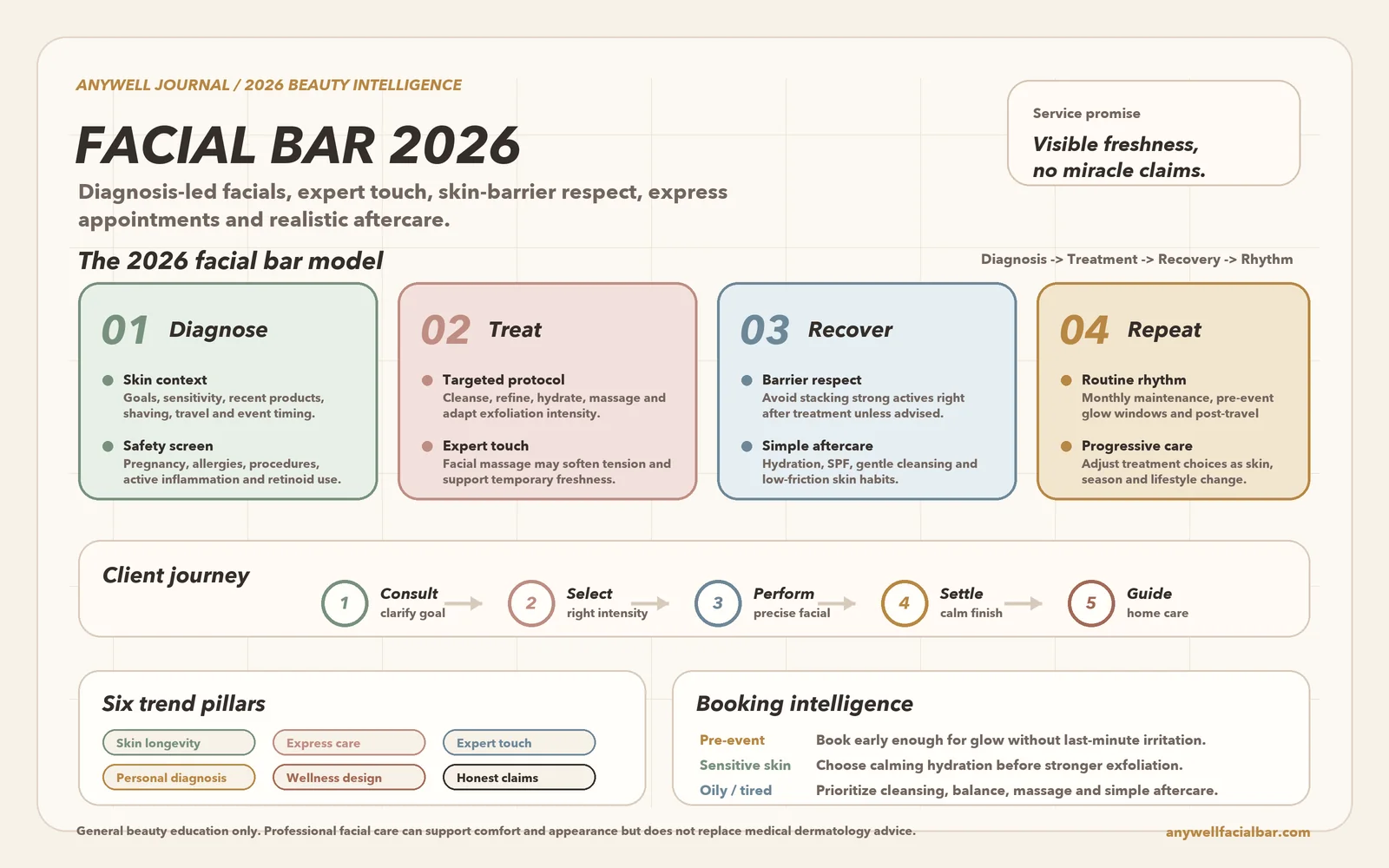
A facial bar responds by making expertise visible. The appointment begins with observation: oiliness, dehydration, sensitivity, recent exfoliation, shaving, travel, sleep, event timing and the client's tolerance for active ingredients. The service becomes a way of editing the routine. What should be used? What should be paused? Which treatment is useful now, and which would be too strong?
This is why the format is not only commercial. It is pedagogical. It teaches clients to read their skin. A good specialist does not simply apply products; she explains the rhythm between cleansing, exfoliation, hydration, massage, recovery and protection. That kind of practical education is one of the reasons clients return.
The wellness point of view: why touch became premium again
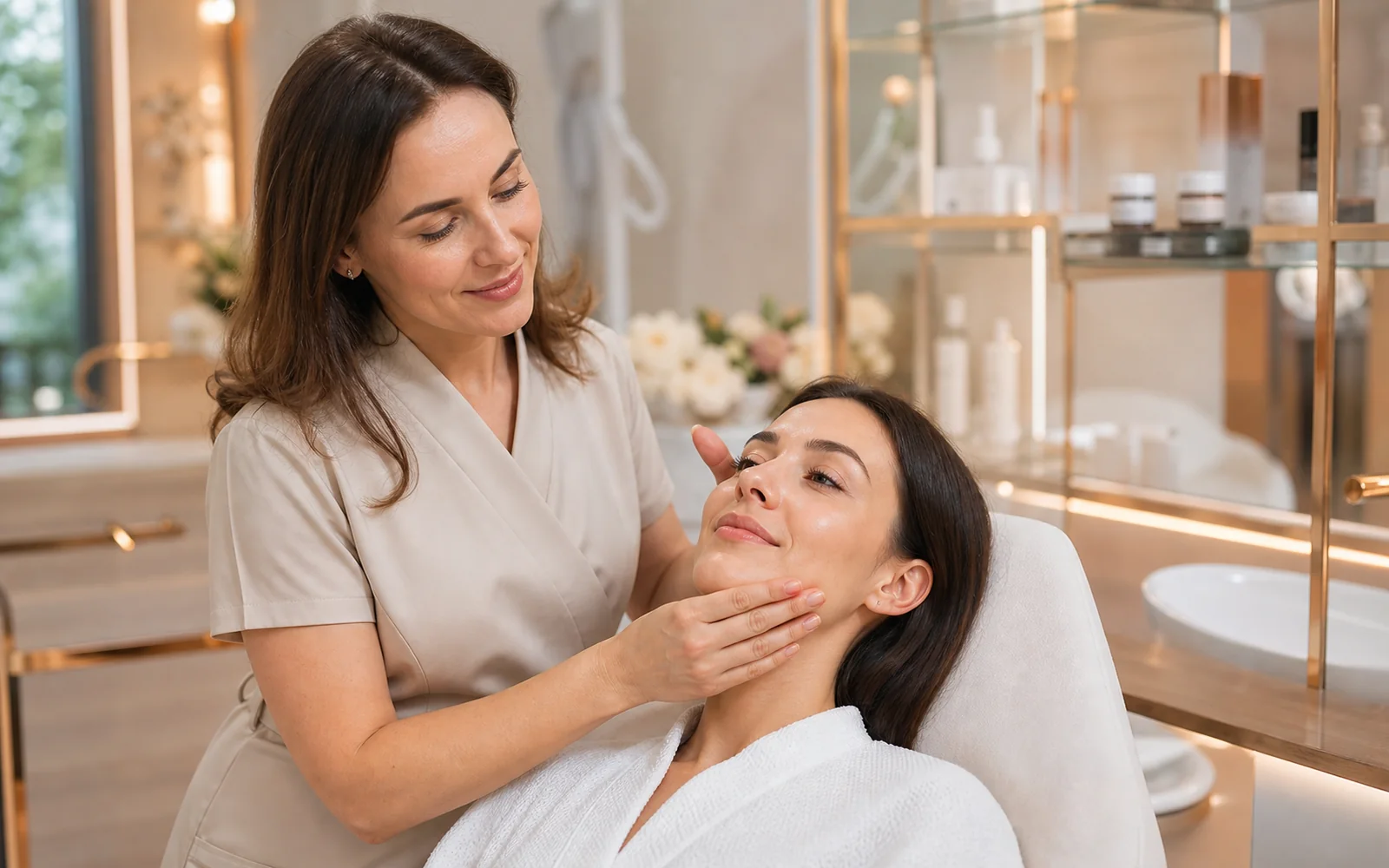
From a wellness perspective, the facial bar succeeds because it gives beauty a nervous-system dimension. The client lies down, closes her eyes, breathes more slowly and receives professional touch. Even when the appointment is short, it interrupts the tension of screens, commuting, work, noise and self-monitoring. The face is treated as skin, but also as a place where stress becomes visible.
This does not mean a facial should make medical claims. It should not promise to cure anxiety, detoxify the body or permanently change facial structure. The value is more modest and more credible: reduced visible fatigue, softer expression tension, better hydration, a calmer surface and a sense of reset. Those outcomes matter because well-being is not abstract for the client. It is felt in the mirror and in the body.
The Global Wellness Institute has described the move from anti-aging language toward longevity, recovery and stress resilience in aesthetic services. Facial bars fit that shift when they speak about skin comfort, regular maintenance, barrier support and realistic glow instead of fear-based transformation. The best services feel both beautiful and psychologically intelligent.
Why Thailand is a precursor for this service model
Thailand is a precursor in the facial bar story because the country developed a sophisticated culture of beauty-as-service before many Western markets understood the format. Thai spa and wellness culture connects several elements that are now central to facial bars worldwide: warm hospitality, skilled manual technique, calm interiors, accessible appointments, tourism fluency, beauty retail and a strong belief that the body and face should be cared for together.
The Global Wellness Institute reported that Thailand's wellness market reached 42.7 billion dollars in 2024, with particularly strong growth in wellness tourism and spas. The Tourism Authority of Thailand also frames wellness through traditional Thai massage, meditation, medical infrastructure and hospitality. These are not isolated facts. They explain why Thailand has long been able to turn care into a complete client journey.
In Bangkok especially, beauty is organized around convenience and service density. A client can move from mall retail to massage, from skincare consultation to aesthetic clinic, from hotel spa to express beauty maintenance. This ecosystem trains consumers to expect professionalism, comfort and speed together. That is exactly the expectation the global facial bar is now trying to meet.
One current Bangkok example is MIMIQ Facial Bar, which applies the facial-bar model to sculpting massage, lymphatic drainage and repeatable face-workout sessions.
Readers who want to see how that ecosystem translates into real venues can use Facial Bangkok's independent guide to compare facial bars, spas and skin clinics by treatment goal, area and booking context.
Thailand should not be described as the only origin of facial bars. The format has many influences: Korean skin clinics, Japanese service culture, European facial traditions, American express concepts and global retail design. But Thailand is clearly a precursor in the service philosophy: beauty is not just a product result. It is hospitality, touch, atmosphere, repeat care and emotional ease.
The full menu: services found in a modern facial bar
A precise facial bar menu usually begins with skin diagnosis and consultation. This may include visual analysis, questions about home products, lifestyle, sensitivity, recent procedures and the client's goal. Diagnosis is the service that makes every other service smarter because the same glow request can require hydration, exfoliation, calming care or massage depending on the skin.
Core treatment services often include express glow facials, deep cleansing facials, pore care, extraction when appropriate, hydrafacial-style device cleansing, oxygen or infusion-style hydration, barrier recovery facials, sensitive skin calming treatments, brightening facials for dullness, enzyme or light peel services, anti-aging support, firming massage, sculpting facial massage, Kobido-inspired massage, lymphatic drainage, gua sha, face workout coaching and pre-event facial planning.
Many establishments also offer specialized tracks: acne-prone skin support without medical overclaiming, post-travel recovery, post-shave men's facials, bridal or photoshoot facials, seasonal hydration, pollution reset treatments, sun-exposure recovery, mature-skin comfort, eye-area de-puffing, neck and decollete care, LED add-ons, mask upgrades, scalp or shoulder relaxation, brow and lash add-ons, and curated home aftercare products.
The important point is not to offer the longest possible list. A premium menu is organized by client need. It should help someone understand whether she wants glow, cleansing, hydration, calming, sculpting, drainage, pre-event polish, oil control, sensitivity support or routine planning. The more readable the menu is, the more confident the client feels.
Express treatments and the new idea of luxury
Older luxury often meant duration: the longer the treatment, the more premium it appeared. Facial bars changed that equation. For many urban clients, precision is now more luxurious than length. A 45 minute treatment that understands the skin can feel more valuable than a two-hour ritual that follows a generic protocol.
This is not simply a matter of convenience. It reflects a broader change in consumer behavior. People want services that fit their schedules, but they also want evidence of competence. They are more skeptical of vague promises and more attracted to clear outcomes: hydrated, calmer, less puffy, smoother under makeup, brighter before an event, or better prepared for a home routine.
McKinsey has noted that premium skincare faces pressure from aesthetic treatments and wellness services promising stronger outcomes. Facial bars answer that pressure by combining product logic with service logic. They do not sell only a cream or only a clinical intervention. They sell a repeatable moment of expert care.
Social media made facial bars visible, but not simple
Social platforms helped globalize the facial bar because the service photographs well: clean beds, glowing skin, close-up massage, tools, masks, towels and before-event rituals. The visual language is easy to understand without translation. A client watching a short video can imagine the sensation of the treatment before she books.
But social media also creates problems. It can turn every technique into a miracle, every tool into a trend and every red face into supposed proof of effectiveness. The professional facial bar must slow that down. It should translate trends into safe choices: not every skin needs extraction, not every client should receive a strong peel, not every face benefits from intense massage, and not every treatment belongs the day before an event.
The sociological tension is clear. Social media increases demand while also increasing unrealistic expectations. The best facial bars become interpreters. They do not reject trends, but they filter them through diagnosis, timing and skin tolerance.
The client journey: from anxiety to clarity
A strong facial bar experience often begins with mild anxiety. The client wonders what her skin needs, whether she is aging, whether her routine is wrong, whether her face looks tired, or whether an upcoming event requires emergency care. The appointment gives that anxiety a structure. The specialist asks questions, reads the skin and chooses a sequence.
During the treatment, the client does not have to keep managing herself. That is part of the luxury. Someone else holds the expertise for an hour. Cleansing, massage, hydration and finishing products become a sensory answer to a cognitive problem: too many choices, too much comparison, too much mirror analysis.
After the treatment, the best result is not only glow. It is clarity. The client leaves knowing what to avoid tonight, what to use tomorrow, whether to pause actives, when to book again and what kind of service suits her skin. That emotional clarity is one of the hidden engines of repeat visits.
What facial bars must avoid
The trend will remain credible only if facial bars avoid overclaiming. A beauty treatment should not promise permanent lifting, pore elimination, medical acne treatment, detoxification, disease prevention or guaranteed anti-aging. Clients are more educated than before, and exaggerated language damages trust quickly.
Facial bars must also avoid turning consultation into pressure selling. A client who comes for a facial does not need to be overwhelmed with a full shelf of products. A short, intelligent aftercare plan is often more premium than a complicated prescription-style routine. Trust is built when the specialist recommends only what makes sense.
Finally, facial bars should avoid copying every global trend without cultural and skin-context awareness. A technique developed in one market may need adaptation in another climate, another lifestyle and another client expectation. The Thailand model is useful here because its strongest lesson is not one technique. It is attentive service.
The Anywell point of view
For Anywell, the global facial bar trend matters because it confirms that modern clients want expertise without heaviness. They want a beautiful space, but not empty decoration. They want visible skin benefits, but not exaggerated claims. They want wellness, but not vague language. They want a specialist who can connect the face, the routine and the moment in life.
A good Anywell-style facial begins with the client today: how the skin feels, what the week looks like, whether there is travel, stress, shaving, active ingredients, an event or sensitivity. The service then becomes a precise choice from the menu rather than a generic ritual.
This is the future of the facial bar worldwide: not just more studios, but more intelligent studios. The winners will be places that understand sociology, wellness, service design and skin reality at the same time.
Professional checklist before booking this treatment
Match the service to the skin today
Before choosing this service, look at your skin as a specialist would: current comfort, recent product use, sensitivity, event timing, and the result you want to see in the mirror. For global facial bar trend, the best appointment is not necessarily the strongest appointment. It is the appointment that matches the condition of the skin on the day you arrive.
Tell the specialist about recent retinoids, acids, peels, cosmetic procedures, sun exposure, allergies, pregnancy, medication, or any reaction that made the skin burn or sting. This information changes pressure, exfoliation, device intensity, massage direction, product choice, and aftercare. A premium facial bar experience should feel personal because the skin history is part of the treatment.
After the appointment, protect the result with a simple routine. Avoid stacking strong actives immediately, keep the skin moisturized, use daytime protection, and notice how the face feels the next morning. The most useful beauty advice is rarely dramatic. It is specific, repeatable, and adapted to real life.
Read the result like an expert
It is also helpful to decide what success looks like before the treatment starts. For some clients, success is a fresher complexion before an event. For others, it is less tightness, a softer jaw, calmer redness, cleaner pores, or a routine that finally feels understandable. When the goal is precise, the specialist can choose a precise path and avoid turning every facial into the same generic protocol.
If your skin does not respond as expected, do not immediately add more products or book a stronger service. Review sleep, stress, cleansing habits, sun exposure, climate, and how often active ingredients are being used. A premium skincare plan evolves by observation. The face gives feedback, and a good facial bar uses that feedback to adjust the next appointment.
There are also moments when the best professional choice is to wait. Active infection, unexplained swelling, strong burning, open lesions, recent aggressive procedures, or a reaction that has not settled should change the plan. A beauty treatment should never compete with medical judgment. When in doubt, the safest luxury is restraint.
Build a long-term facial plan
For long-term authority, think of each visit as one chapter in a skin journal. The specialist notes what worked, what felt too strong, what created glow, and what should be repeated or avoided. This is how facial care becomes more intelligent over time: not through constant novelty, but through careful memory of the skin.
The final filter is lifestyle. A treatment that looks perfect on paper may be wrong before a flight, after poor sleep, during a stressful week, or just before heavy makeup. Premium skincare respects context. It asks not only what the skin needs, but what the client needs the skin to do during the next few days.
That is why the best recommendation is often a sequence rather than a single appointment. Start with the service that calms and clarifies, then build toward more active or sculpting work when the skin is ready. This patient order creates better visible results and a better relationship with the face.
For reader clarity, document the same logic in the article itself: what the treatment is for, who should be cautious, what result is realistic, and how the home routine protects the work. Readers trust a beauty brand more when it explains limits as clearly as benefits.
The same structure also supports the Anywell editorial standard. A strong journal article should answer the client's practical questions before they are asked: how the treatment feels, how long the visible result may last, what to avoid afterward, and when another service would be wiser. That level of usefulness is what separates premium editorial content from a simple service description.
For a facial bar, this clarity also improves the booking experience. The client arrives with better vocabulary, the specialist can refine the plan faster, and the treatment feels more intentional from the first consultation to the final aftercare recommendation. It turns education into confidence, and confidence into a calmer, more premium client journey.
Conclusion: the Anywell way
The facial bar trend is global because it answers a global condition: people are busy, visible, wellness-aware and overloaded with beauty information. The format offers a practical bridge between skincare products, spa rituals and aesthetic culture. It gives clients expert selection, professional touch, faster appointments, repeated maintenance and a calmer relationship with the face. Thailand stands out as a precursor because its service culture has long connected hospitality, massage, beauty and wellness in a way the rest of the world is now learning to imitate. At Anywell Facial Bar, that lesson becomes local and personal: diagnose first, treat with care, keep promises realistic, and make skincare feel like a repeatable act of well-being.
FAQ
Why are facial bars becoming popular worldwide?
They combine expert skincare, shorter appointments, wellness rituals and repeatable maintenance in a format that fits modern urban life.
What services can a facial bar offer?
Common services include skin diagnosis, glow facials, deep cleansing, hydration, hydrafacial-style care, calming facials, sculpting massage, lymphatic drainage, gua sha, pre-event care and aftercare planning.
Why is Thailand described as a precursor?
Thailand has long combined hospitality, massage culture, beauty services, tourism and wellness into accessible client journeys, which anticipates the modern facial bar model.
Is a facial bar the same as a spa?
Not exactly. A facial bar is usually more focused on the face, more efficient and more repeatable, while still keeping a premium wellness atmosphere.
Can a facial bar replace dermatology?
No. A facial bar can support beauty, comfort and routine planning, but persistent rash, pain, infection, severe acne or medical skin concerns need qualified healthcare guidance.