
A pregnancy-safe facial should feel calm, not casual. Pregnancy can change oiliness, sensitivity, pigmentation, fluid retention, energy, sleep and the way a client feels about touch. It can also change the ingredient conversation. A treatment that was ordinary before pregnancy may need review when retinoids, acne medication, strong exfoliation, essential oils, heat, positioning or recent medical advice are part of the story. At Anywell, the premium answer is not to promise that every facial is automatically safe. The better answer is a conservative consultation, a gentle plan, clear boundaries and a visible result that respects comfort first. This guide is general skincare education, not medical advice, obstetric advice, dermatology treatment or a substitute for guidance from a qualified clinician.
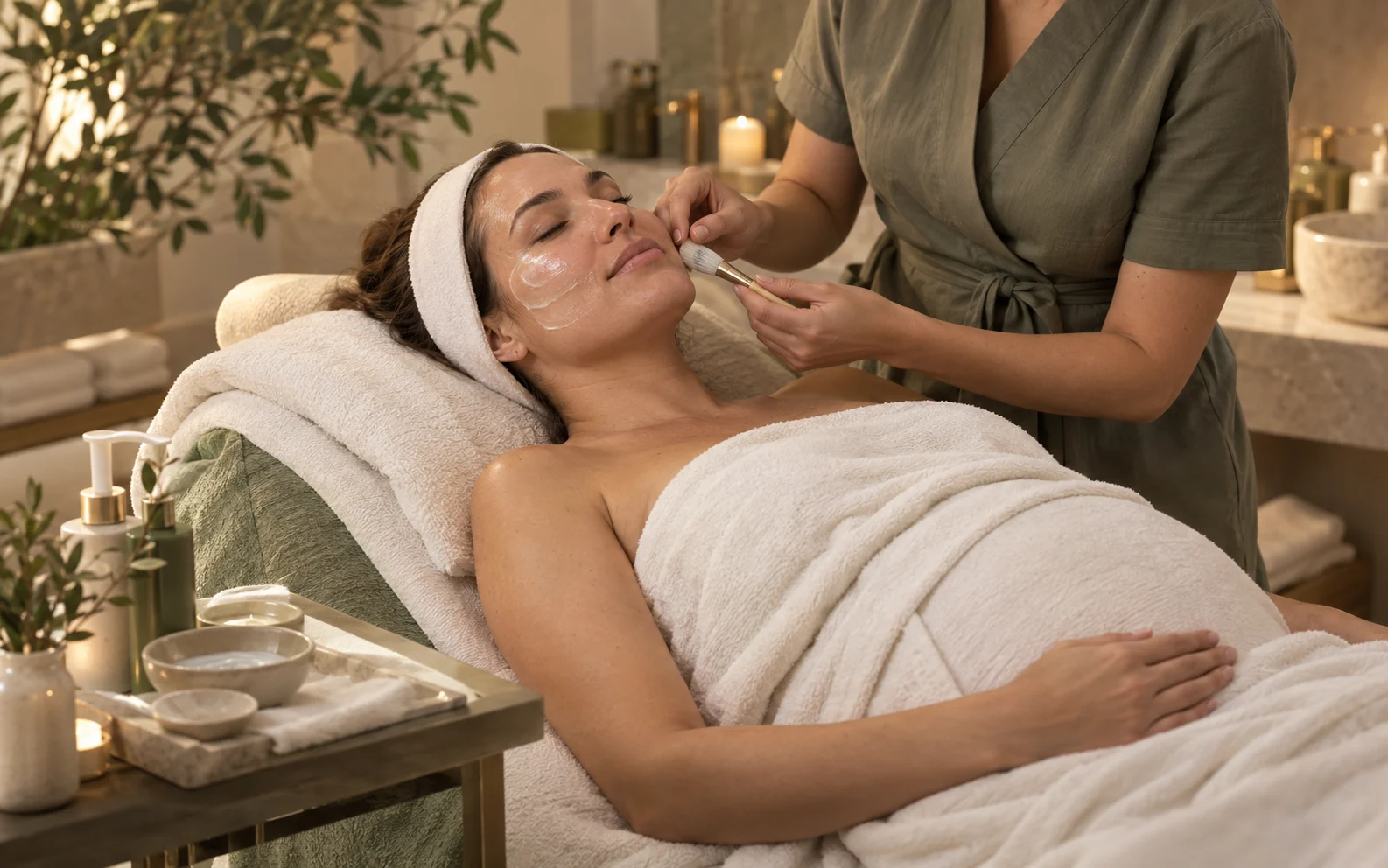
Pregnancy-safe means planned, not generic
A pregnancy-safe facial is not simply a standard glow facial with softer music. It is a cosmetic treatment adapted around pregnancy status, current skin condition, product history, medication history, comfort, positioning and the client's own health guidance. The specialist should know whether the client is pregnant, trying to conceive, breastfeeding or recently postpartum because each stage can change the conversation.
The premium value is careful decision-making. A client may want hydration, smoother makeup, less puffiness, calmer redness or a sense of feeling like herself again. Those are reasonable beauty goals. They still need modest language: a facial can support comfort and a fresher visible appearance, but it cannot guarantee pregnancy safety, treat medical conditions or replace advice from an obstetrician or dermatologist.
Why the ingredient conversation changes
AAD pregnancy skin care guidance says pregnant clients should pay attention to products used on the skin, hair and nails, and it highlights ingredients that should be avoided or discussed during pregnancy. FDA consumer guidance also tells pregnant consumers with cosmetic-product or ingredient concerns to contact a health care provider. For a facial bar, those sources translate into a simple rule: ask before applying.
The consultation should cover prescription acne treatments, over-the-counter retinol or retinoid products, hydroquinone-style brighteners, high-strength acids, acne actives, essential oils, fragrance sensitivity, recent peels, injectables, laser, waxing and any product that caused burning. The specialist is not diagnosing risk. The specialist is deciding whether today's cosmetic service should be simplified, postponed or cleared by a clinician first.
Retinoids deserve extra caution
Retinoids are one of the easiest places for a pregnancy facial to become confusing. The NHS is direct about isotretinoin pregnancy risk, and NHS acne guidance states that topical retinoids are not suitable during pregnancy. AAD pregnancy skincare guidance also lists retinoids among ingredients to avoid. That is enough for a facial bar to avoid retinoid-led treatment language in pregnancy care.
Recent research on topical retinoids is nuanced, and one 2026 systematic review discussed available pregnancy-outcome data. That nuance does not mean a beauty treatment should encourage clients to keep using or restart retinoids. The responsible Anywell position is conservative: pause retinoid-style actives unless the client's clinician gives different guidance, and choose hydration, comfort and gentle surface refinement instead.
The first five consultation questions
A practical pregnancy facial begins with five questions. How far along are you, or are you trying to conceive or breastfeeding? What products or prescription treatments have you used in the past two weeks? Has your clinician asked you to avoid any ingredients or procedures? Is your skin currently burning, itching, peeling, swollen or broken? What result do you need in the next few days?
These questions protect the client without making the appointment feel clinical. They also help the specialist avoid unnecessary intensity. A client who used a strong acid recently may need a hydration facial. A client with new swelling or rash may need to pause. A client with an event tomorrow may need polish and calm, not a treatment that tests tolerance.
Gentle cleansing sets the tone
Pregnancy skin can feel oilier, drier or more reactive than usual. The cleanse should remove sunscreen, makeup, sweat and city residue without leaving the face tight or hot. This is not the moment for abrasive scrubbing, aggressive brushes or a performance cleanse that makes the skin look pink before the actual treatment begins.
A refined cleanse is quiet and thorough. Use enough slip, moderate towel pressure and comfortable water temperature. If the client wears heavy sunscreen, cleanse patiently. If she arrives already sensitive, shorten the cleanse and reduce friction. The skin should feel prepared, not punished.
Hydration is often the safest glow strategy
Many pregnant clients ask for glow because the face feels dull, tired or unfamiliar. Hydration is often the most elegant first strategy because it supports softness and a fresher surface without leaning on strong active ingredients. A comfortable humectant step, a simple mask and a moisturizer matched to the client's skin type can create a polished result without overstating what happened.
That does not mean the facial is basic. It means the protocol is intelligent. Pregnancy-safe skincare often rewards fewer variables: fewer scents, fewer actives, fewer layers and clearer aftercare. A client should leave knowing what was applied and why, especially if she is monitoring ingredient exposure carefully.
Exfoliation should be modest and optional
Exfoliation is not forbidden as a concept, but pregnancy is not the right context for automatic intensity. Skin may be more reactive, pigmentation may be a concern, and the client may already be using products at home. If exfoliation is considered, it should be gentle, brief, clearly explained and easy to skip.
The safest premium choice is to decide from the skin in front of you. If the face is stinging, peeling, sun-exposed, recently waxed, rashy or medically uncertain, skip exfoliation. If the skin is stable and the client's clinician has not advised avoidance, a mild surface-polishing step may be considered, but the promise should remain cosmetic: smoother feel and better product finish, not transformation.
Massage should support comfort, not pressure
Facial massage can feel grounding during pregnancy, especially when sleep is poor or the jaw feels tense. The pressure should stay conservative. Avoid turning massage into an aggressive sculpting session or claiming that lymphatic touch performs a medical cleansing effect. A pregnancy facial can support relaxation and a temporary fresher appearance, but it should not borrow medical language.
Positioning matters as much as technique. Some clients may not want to lie flat for long. The treatment bed can be angled, pillows can support the body, and the specialist can check comfort before and during the mask stage. A premium experience listens before the client has to ask.
When to pause or ask for medical advice
Anywell should pause or simplify treatment when the client reports unexplained swelling, severe itching, hives, infection signs, open skin, sudden rash, painful acne, dizziness when lying down, recent medical restrictions or uncertainty about prescription products. The right answer may be a gentler appointment, a consultation-only visit or a recommendation to ask the client's clinician first.
That boundary is not a failure to serve. It is part of trust. FDA pregnancy cosmetics guidance cannot give individual medical advice, and neither should a facial bar. The brand can offer careful cosmetic care, product transparency and responsible deferral when the situation belongs with a qualified health professional.
Case study: the retinol routine before pregnancy
A client books in her second trimester and says her pre-pregnancy routine included retinol several nights a week. She stopped after learning she was pregnant, but her skin now feels dull and slightly congested. She wants the same smooth look she used to get from stronger actives.
An Anywell-style plan would avoid retinoid-adjacent promises. The specialist can choose gentle cleansing, hydration, a calm mask, light massage and clear aftercare. If the client wants acne or pigmentation treatment beyond cosmetic support, the article should direct her toward dermatology or obstetric guidance rather than improvising a stronger spa alternative.
Case study: puffiness and tired skin before photos
Another client is thirty-two weeks pregnant and wants a fresher look before maternity photos. She is not trying to treat acne or pigmentation; she wants comfort, less tired-looking skin and makeup that sits more smoothly. She also feels uncomfortable lying flat.
This is where a pregnancy-safe facial can be useful. The bed is angled, the cleanse is gentle, massage is light, the mask is hydrating and the aftercare is simple. The result is not a medical claim. It is a polished, rested-looking finish created through comfort, hydration and thoughtful pacing.
Sunscreen and pigmentation need realistic language
Many pregnant clients notice pigmentation changes, including melasma-like patches. A facial cannot promise to remove pregnancy pigmentation. What it can do is avoid irritation, support hydration, and reinforce daily sun protection. AAD pregnancy guidance emphasizes sun protection and discusses physical sunscreen options during pregnancy.
In the treatment room, that means the finish should be practical. The specialist can discuss sunscreen texture, reapplication habits and avoiding post-facial irritation before sun exposure. The promise is not spotless skin. The promise is better-informed care and a calmer-looking complexion where the skin allows.
Aftercare should be short and conservative
The next forty-eight hours should be simple. Cleanse gently, moisturize, use daytime protection and avoid starting new actives just because the facial felt good. Unless a clinician has said otherwise, do not restart retinoids, strong exfoliants, high-dose acne products or unfamiliar essential-oil blends immediately after a pregnancy facial.
The client should also observe comfort. Did the skin sting after cleansing? Did redness settle quickly? Did any product feel warm or itchy? These notes make the next appointment more precise. They are also useful if the client needs to discuss skincare with her clinician.
How to choose the right Anywell service
For pregnancy, choose the service that answers the skin's current need with the least unnecessary intensity. Hydration, comfort, gentle cleansing, skin diagnostics and a quiet glow plan are usually better starting points than strong peeling, dramatic sculpting or complex active layering. The booking goal should be specific and modest.
Ask what products will be used, whether fragrance or essential oils can be minimized, how the bed can be positioned and what aftercare is expected. A premium facial should welcome those questions. If the answer is vague, the client has learned something important before the treatment begins.
Why partner links are skipped
Partner anchors are intentionally skipped in this guide. Pregnancy skincare is safety-adjacent, and the article needs to keep attention on conservative guidance, source-backed limits and Anywell's own consultation standard. A commercial third-party anchor would feel less useful than clear medical-boundary language.
That restraint is also the SEO-safe choice. Internal links to related Anywell Journal guides can help readers continue learning, while external links should point to the sources that support the safety conversation. Not every article needs a partner reference.
Useful sources and editorial boundaries
This guide uses NHS medication and acne guidance, AAD pregnancy skincare guidance, FDA cosmetics-and-pregnancy information and a recent 2026 retinoid review for context. The sources support caution, not fear. They also support the idea that pregnancy skincare decisions sometimes belong with a clinician rather than a facial menu.
The article does not claim that Anywell can certify an ingredient as safe for every pregnancy, diagnose pregnancy-related skin conditions, treat acne medically or clear a client for prescription products. It translates reliable source boundaries into a thoughtful cosmetic service plan.

Conclusion: the Anywell way
A pregnancy-safe facial is a careful beauty decision: consultation before intensity, comfort before novelty, hydration before aggressive exfoliation, and medical boundaries before marketing language. The right Anywell treatment can support softer-feeling skin, a calmer visible finish and a more confident routine, depending on skin condition and clinician guidance. The most valuable appointment may be the one that edits the plan down to what the skin can comfortably receive today. Explore Anywell services or book a consultation if you want a gentle facial plan that begins with listening.
FAQ
Can I get a facial while pregnant?
Many clients can enjoy a gentle cosmetic facial during pregnancy, but the plan should be adapted around product history, comfort, current symptoms and clinician guidance.
What should I tell my facial specialist before a pregnancy facial?
Tell the specialist that you are pregnant, trying to conceive or breastfeeding, and share prescription products, retinoids, acne treatments, recent procedures, sensitivities and any medical restrictions.
Should a pregnancy facial include exfoliation?
Exfoliation should be modest and optional. If skin is sensitive, peeling, recently treated, irritated or medically uncertain, a hydration and comfort plan is usually more appropriate.
Can a pregnancy facial treat melasma or acne?
A cosmetic facial can support comfort, hydration and a fresher appearance, but pregnancy-related melasma or acne may need dermatologist or obstetric guidance.
What should I avoid after a pregnancy-safe facial?
Keep aftercare simple: gentle cleansing, moisturizer and daytime protection. Avoid restarting strong actives or unfamiliar products unless your clinician or specialist has advised it.