
The skin microbiome has become one of beauty's most attractive phrases, so a premium facial bar should use it carefully. A skin microbiome facial should not promise to reset the face, cure acne, fix eczema, erase rosacea or rebalance bacteria overnight. It should explain how gentle cleansing, hydration, pH-aware product choices, low-friction touch and careful aftercare can support a calmer-looking skin environment. This guide is general skincare education, not medical advice; persistent rash, infection signs, painful acne, diagnosed flares, allergies, open wounds or rapidly changing skin should be guided by qualified medical care.
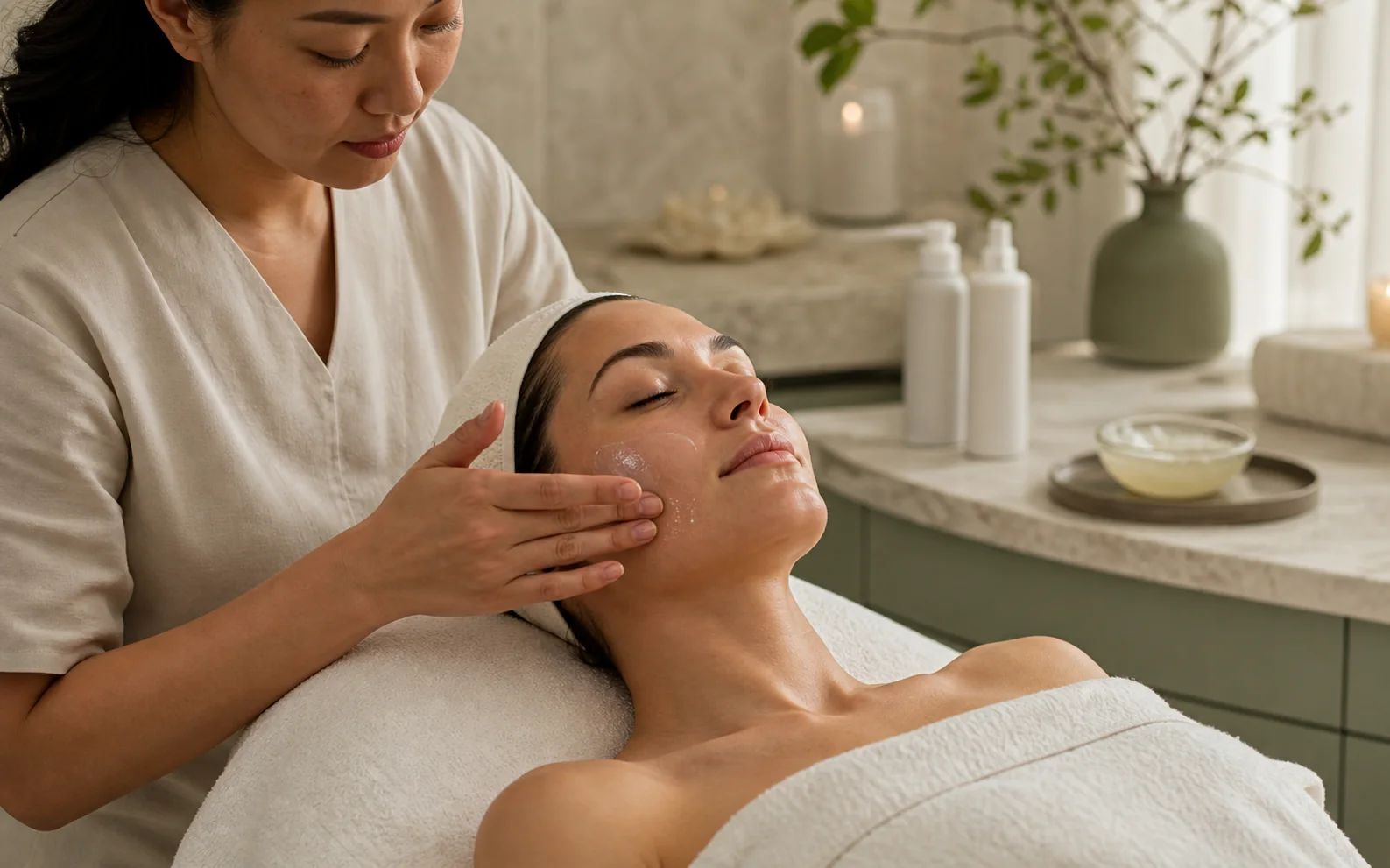
What skin microbiome means in a facial room
The skin microbiome is the community of microorganisms that lives on the skin surface and in nearby niches such as pores and follicles. It is not a decorative trend word. Dermatology research describes the skin as a living ecosystem shaped by sebum, sweat, pH, age, body site, climate, hygiene habits, topical products and the condition of the barrier. A premium facial does not need to turn this into laboratory theatre. It simply needs to respect that the face is not a surface to scrub into submission.
In a facial room, microbiome-aware care starts with observation. Is the skin tight after cleansing? Does water sting? Are cheeks flushed while the T-zone is oily? Has the client been using acids, retinoids, antibacterial washes, clay masks and scrubs at the same time? Has hot weather, pollution, air conditioning or travel changed the way the skin feels? These details matter because the visible face is shaped by routine and environment, not only by skin type.
Anywell can translate that into treatment choices: milder cleansing, enough slip for massage, careful exfoliation timing, hydration that does not smother oily zones, and aftercare that avoids sending the client home with five new aggressive steps. The word microbiome becomes useful only when it changes the decision.
Why barrier comfort and microbiome language belong together
The barrier and microbiome are often discussed separately in beauty copy, but for practical facial care they belong together. The outer skin barrier helps limit water loss and reduces exposure to irritants. AAD routine and face-washing guidance supports a gentle, practical approach when skin feels reactive. A face that stings after a simple product is not asking for a more dramatic microbiome treatment. It is asking for a quieter plan.
Microbiome reviews also describe how external factors such as climate, pollution, cosmetics, hygiene products, surfactants and pH can influence the skin environment. That does not mean one facial can clinically engineer the microbiome. It means the facial should avoid common stressors when the skin is already reactive: harsh cleansing, unnecessary scrubbing, excessive heat, too much product layering and exfoliation chosen because it sounds impressive rather than because the skin is ready.
This is why the most premium microbiome facial may feel less theatrical than a trend menu suggests. It may be a carefully edited treatment: cleanse, assess, hydrate, calm, protect and educate. Restraint is not a lack of expertise. It is expertise applied to a living surface.
The claim boundary: what a microbiome facial should not promise
The FDA's cosmetics claims guidance is a useful guardrail for any article using scientific beauty language. Cosmetic claims must be truthful and not misleading. If a product or service is marketed as treating or preventing disease or affecting the structure or function of the body, that can move it into drug-claim territory. For Anywell, the practical editorial rule is clear: do not promise to treat dysbiosis, cure acne, repair eczema, eliminate rosacea, remove infection or permanently alter the skin microbiome.
A responsible facial page can still be confident. It can say that a treatment can support barrier comfort, may help the skin feel less tight, often leaves the complexion looking fresher, can reduce unnecessary friction, and can help the client simplify routine choices. It can discuss a calmer visible appearance and better product tolerance depending on the skin's condition. Those are cosmetic, experience-led and appropriately conservative claims.
The difference matters for trust. Readers interested in skin microbiome care are often already worried that they have damaged their skin. They do not need a brand to sell fear back to them. They need careful language, specific choices and clear boundaries.
Consultation questions before a skin microbiome facial
A good consultation should ask what the client cleanses with, how often, whether the face feels tight afterward, and whether a cleanser foams strongly or leaves a squeaky finish. It should ask about exfoliating acids, retinoids, benzoyl peroxide, antibacterial washes, fragrance, essential oils, clay masks, sheet masks, recent peels, recent injectables, sun exposure and reactions. Microbiome-aware care is not just about a product category. It is about the whole behavior pattern around the skin.
The specialist should also ask what the client wants the skin to do after the appointment. A client preparing for a dinner tonight needs a different plan from a client rebuilding tolerance after weeks of over-cleansing. A client with oily T-zone and dehydrated cheeks may need zone-specific product weight. A client with mature skin may need more emollient comfort but not heavy occlusion around congestion. A client with sensitive skin may need fewer steps and a calmer finish.
The result of the consultation should be a treatment thesis. For example: today we will avoid strong exfoliation, use mild cleansing, keep massage pressure comfortable, support hydration, and send you home with a simple two-day routine. This is what turns a trend into a professional service.
Cleansing: clean skin without stripping the environment
Cleansing is where many microbiome-aware plans either become useful or fall apart. The goal is not to leave the face squeaky. The goal is to remove makeup, sunscreen, oil, sweat and daily debris while keeping the skin comfortable enough to receive the rest of the treatment. Over-cleansing can make the skin feel tight, shiny, reactive or suddenly more oily because the face is trying to compensate for a stressed surface.
AAD face-washing and routine guidance supports a gentler mindset: avoid unnecessary harshness, keep cleansing practical, and do not treat every face like it needs the same scrubbed finish. In Anywell language, the cleanser should match the day. Heavy sunscreen or makeup may require a more thorough first cleanse, but a client with stinging cheeks and no makeup may need a much softer approach.
During the treatment, the specialist should watch the skin after rinse-off. Does redness spike? Does the client report tightness? Does the surface look comfortable or polished but dry? These small observations are more valuable than a scripted protocol.
Exfoliation: when less supports more glow
Microbiome-aware care does not mean never exfoliating. Dull surface buildup, rough makeup texture or mild congestion can sometimes benefit from careful exfoliation. The issue is timing and dose. If the client has used acids, retinoids, scrubs or strong acne products recently, additional active exfoliation may make the face more reactive rather than more radiant.
A premium specialist should distinguish between dullness from buildup and dullness from irritation. They can look similar to a client, but they should not be treated the same way. Irritated skin often needs hydration, reduced friction and a pause from actives. Buildup on stable skin may tolerate a controlled exfoliating step. The microbiome theme adds discipline: do not disturb a reactive surface just because the article keyword sounds scientific.
For event timing, this restraint matters even more. The day before a wedding, investor meeting or photoshoot is not the moment to test a new peel on a sensitive face. A gentle glow plan may look better because it avoids surprise redness.
Hydration, moisturizers and pH-aware product choices
Hydration is often the most visible win in a microbiome-aware facial because it improves comfort without making a medical claim. A light hydrating serum, a calming mask, a moisturizer matched to skin type and a non-irritating finish can help the complexion look fresher and feel more settled. The exact texture should change by client: oily skin may prefer lighter layers; mature or dry skin may appreciate richer barrier support; combination skin may need zone mapping.
Microbiome literature discusses pH as one factor in the skin environment, while barrier guidance emphasizes lipids, moisturizers and gentle care. The facial takeaway is not that clients should obsess over every product's chemistry. It is that wildly harsh, alkaline, fragranced or overly stripping products are not automatically luxurious. For sensitive clients, bland and elegant often wins.
Anywell should also avoid turning aftercare into product overload. A client leaving a microbiome facial should know what to use tonight, what to skip for forty-eight hours, and when to restart stronger actives if they are part of the normal routine. Routine clarity is a premium outcome.
Case study: the over-cleansed glow seeker
A client arrives wanting glow before a gallery opening. She says her skin is oily, but her cheeks sting after cleansing and foundation catches around the nose. She uses a foaming cleanser morning and night, an exfoliating toner most evenings, a clay mask twice a week and a retinoid whenever she remembers. The visible problem is not lack of effort. It is too much effort in different directions.
A microbiome-aware Anywell plan would avoid strong exfoliation that day. The treatment could focus on mild cleansing, hydration, a calming mask, light massage only where comfortable and a finish that sits well under makeup. The consultation would explain that oil and dehydration can coexist, and that a squeaky-clean feeling is not the goal.
The home plan might be simple: gentle cleanse, moisturizer, sunscreen by day, no scrub or extra acid for two nights, and a slower return to actives. The article does not need to promise a microbiome reset. The client feels the difference because the skin is no longer being pushed so hard.
Case study: sensitive skin after travel and humidity
Another client has just returned from travel through humid weather, dry airplane air and heavy sunscreen use. The T-zone is congested, but the cheeks feel hot and easily flushed. A generic deep-cleansing facial would treat the whole face as oily. A microbiome-aware facial reads zones instead of labels.
The specialist may cleanse thoroughly but gently, avoid heat on the cheeks, use selective pore work only where appropriate, choose a hydrating step for the whole face and finish with lightweight comfort rather than a heavy blanket. The client receives guidance on cleansing sunscreen without over-washing and protecting the skin from the cycle of sweat, pollution, air conditioning and friction.
This kind of case shows why microbiome language belongs in premium facial care. It gives the specialist a better reason to personalize, and it gives the client better vocabulary for what is happening on the face.
When to pause and seek medical advice
A microbiome facial should be postponed or heavily modified when the skin shows signs that belong outside a beauty promise: spreading rash, infection, open wounds, painful cystic acne, severe burning, unexplained swelling, fever, allergic reaction, active eczema flare, active rosacea flare or a reaction after a new prescription or cosmetic procedure. In these cases, gentle language is not enough. The right next step may be medical assessment.
This boundary also applies during pregnancy, after injectables, after laser, after deep peels, after surgery or when a client has a known allergy history. The facial specialist can adapt pressure and product choice, but should not diagnose, prescribe or override medical instructions. Anywell can be premium because it knows when to say wait.
For clients with stable but reactive skin, a modified facial can still be useful. The difference is that the service is framed as comfort, hydration and routine guidance, not as disease treatment.
Aftercare for the next forty-eight hours
After a microbiome-aware facial, protect the quiet result. Cleanse gently, moisturize, use daytime protection, and avoid testing the skin with scrubs, new acids, strong retinoid escalation, hot water, sauna, heavy fragrance or multiple masks unless the specialist has given another plan. The goal is to let the skin stay comfortable long enough for the visible glow to settle.
Pay attention to feedback the next morning. If the skin feels calmer, makeup sits better and tightness is reduced, the plan is working. If the face burns, flakes or develops unusual redness, simplify further and contact a qualified professional if symptoms persist or worry you. Do not try to fix irritation by adding more active products immediately.
At the next appointment, bring that feedback. A premium facial plan becomes stronger when it remembers how the skin responded.
How this fits the Anywell treatment menu
A skin microbiome facial is not necessarily a separate dramatic service. It can be a planning lens across facial diagnostics, sensitive-skin care, post-acne support, glow treatments, facial massage and professional routine planning. The same client may need a gentle barrier-first appointment this week and a more active texture-refinement appointment later when the face is stable.
Useful internal reading includes Anywell's guides to skin barrier recovery, sensitive skin facial treatment, face diagnostics, oily skin facial planning and professional skincare routines. Those articles answer adjacent questions: what to do when the barrier is already stressed, how to choose treatment by skin condition, and how home care should support professional results.
Partner links are intentionally skipped in this article. The topic is science-adjacent and claim-sensitive, so a third-party commercial anchor would distract from source-led education. The relevant links here are Anywell services, consultation, related Journal guides and authoritative dermatology or regulator sources.

Conclusion: the Anywell way
A skin microbiome facial should feel calm, intelligent and honest. It can support a more comfortable barrier, a fresher-looking complexion, better cleansing habits and a routine that respects the face as a living surface. It should not promise to cure, reset or medically control the microbiome. At Anywell, the premium choice is consultation first: read the skin, edit the treatment, protect the result and choose the next step only when the face is ready. Explore Anywell services or book a consultation if you want a barrier-friendly glow plan built around your skin's real condition.
FAQ
What is a skin microbiome facial?
It is a facial planned with respect for the skin environment: gentle cleansing, hydration, barrier comfort, low-friction touch, pH-aware product choices and simple aftercare. It should not claim to cure or reset the microbiome.
Can a facial repair the skin microbiome?
A cosmetic facial should not promise medical repair or microbiome control. It can support the appearance and comfort of the skin by avoiding harsh steps and helping the client build a gentler routine.
Is a microbiome facial good for sensitive skin?
It may be useful for stable sensitive skin when the plan is conservative. Active rash, severe burning, infection signs, open wounds or diagnosed flare-ups should be assessed by a qualified professional first.
Should I avoid exfoliation in a microbiome-aware facial?
Not always. Gentle exfoliation may suit stable skin, but recent retinoids, acids, scrubs, sun exposure or stinging often mean the better plan is hydration and barrier comfort.
What should I do after a microbiome facial?
Keep the next forty-eight hours simple: gentle cleanser, moisturizer, daytime protection, no harsh scrubs or new strong actives, and contact a professional if unusual irritation persists.