
Menopause facial care is often discussed as if it were only an anti-aging category. That framing is too narrow. Many clients in perimenopause, menopause or postmenopause are not simply asking for fewer lines. They are asking why their familiar skin suddenly feels drier, thinner, more reactive, less elastic, slower to recover, or less luminous even when their routine has not changed.
A premium facial bar should answer that question with nuance. Hormonal transition can change the way skin behaves, but a beauty treatment should not present itself as hormone therapy, dermatology care or a guaranteed collagen solution. The safer and more useful promise is cosmetic support: better hydration, calmer-feeling skin, a smoother-looking surface, more comfortable touch, clearer routine choices and a visible glow that respects the skin's current limits.
This Anywell guide explains how to plan menopause facial care with conservative language and practical service decisions. It is general skincare education, not medical advice. Persistent rashes, painful acne, suspicious spots, sudden bruising, slow-healing wounds, severe itching or symptoms that worry you belong with a qualified clinician.
Why menopause can change the facial plan
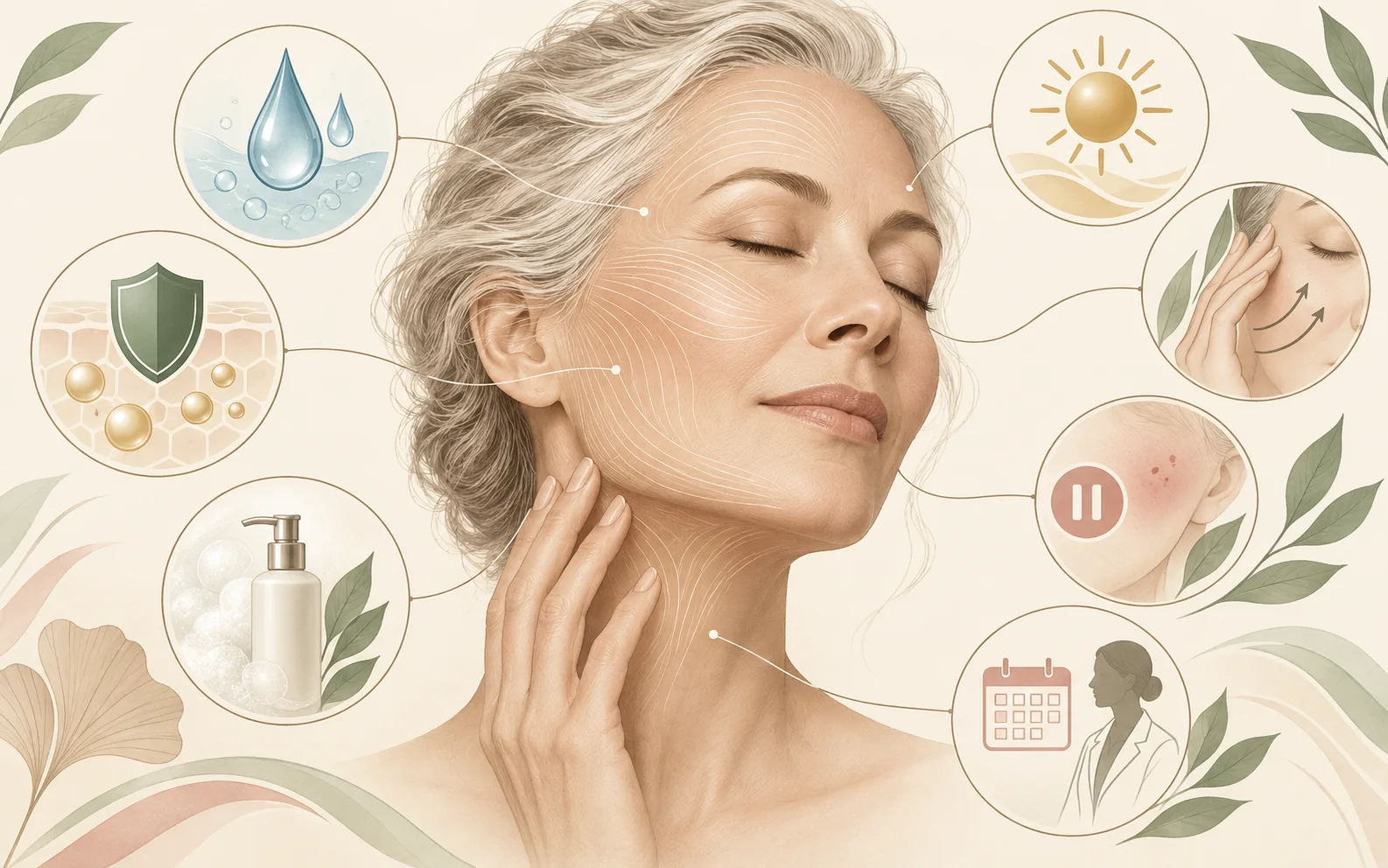
The American Academy of Dermatology notes that menopause can be associated with dry, slack or thinner skin, and that skin may lose some ability to hold water. DermNet describes perimenopause as a period of hormonal fluctuation before menopause and explains that estrogen affects the skin. For a facial bar, those references do not create a license to diagnose. They create a reason to ask better questions.
A client may arrive with dryness, cheek tightness, more visible texture, new sensitivity around fragrance, makeup that sits differently, or a sense that the face no longer rebounds the way it used to. The appointment should begin with skin history, not intensity. What changed recently? Is the skin itchy or painful? Which products sting? Was there recent sun exposure, retinoid use, waxing, injectables, illness or medication change? A mature-skin facial becomes premium when it is specific.
Hydration is not a basic step; it is the strategy
Hydration can sound simple compared with stronger peels or sculpting claims, but in menopause facial care it is often the most intelligent first move. When skin feels thin, tight or easily irritated, water-binding support, gentle occlusion and a well-matched moisturizer texture can make the complexion look more rested without challenging the barrier.
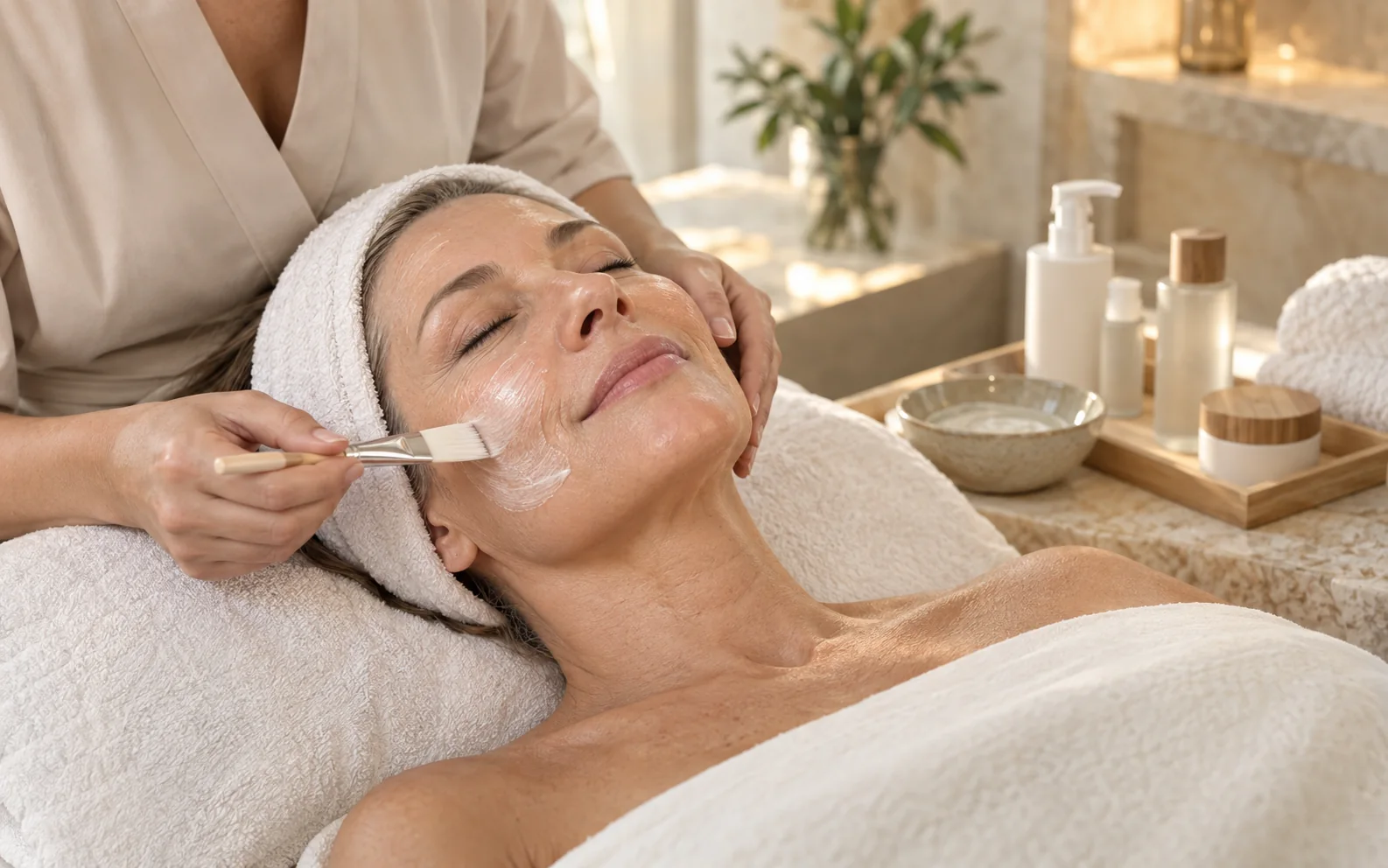
The treatment room version might include a mild cleanse, a hydrating serum, a comforting mask, enough slip during massage and a finish that does not pill under sunscreen or makeup. The goal is not to swell the face or create an artificial shine. It is to help the skin feel flexible again, so the client can read the result as comfort, softness and polish.
Barrier comfort comes before anti-aging intensity
The phrase anti-aging can push clients toward more force than their skin wants. Strong exfoliation, aggressive massage, layered actives and harsh cleansing may create a short-lived sense of action, yet leave mature skin feeling hot, shiny, tight or raw. A better order is barrier comfort first, then gradual refinement if the skin tolerates it.
Barrier-aware care includes water temperature, towel pressure, product fragrance, massage medium, mask duration and aftercare. It also includes knowing when to stop. If the skin is burning, scaling, newly rashy or unusually tender, the appointment may need to become a consultation, hydration-only service or a recommendation to seek medical advice.
How to talk about collagen without overpromising
AAD menopause guidance discusses collagen loss during menopause, and many beauty articles repeat that point. The problem is not the topic; it is the leap from biology to a sales promise. A cosmetic facial should not claim to rebuild collagen, reverse menopause, lift permanently or erase wrinkles. Those claims cross into territory that deserves medical and regulatory caution.
The FDA's anti-aging cosmetics guidance is useful for editorial discipline: moisturizing to make lines less noticeable is different from claiming to remove wrinkles or increase collagen production. Anywell language should stay on the cosmetic side: skin may look fresher, feel more hydrated, appear smoother, or support a more comfortable routine depending on condition.
Massage can support comfort, not permanent lifting
Facial massage can be a beautiful part of menopause facial care when the skin is stable. It may support relaxation, temporary de-puffing, a softer expression and a more cared-for feeling. It can also become too much if pressure is heavy, the massage medium is fragranced, or the client is using actives that already make the skin vulnerable.
An Anywell-style mature-skin massage should be slow, well-lubricated and responsive. The specialist can work around jaw tension, temples, cheeks and neck without promising structural change. If the skin flushes quickly, feels hot or has a known rosacea-like pattern, pressure and duration should be reduced.
Exfoliation needs timing, not bravado
Some menopausal clients experience dullness and roughness, and gentle exfoliation may be useful when the skin is stable. But exfoliation should be earned by the consultation. Recent retinoid use, acids, sun exposure, waxing, a strong home scrub, dryness, itching or unexplained redness all change the decision.
The most refined treatment plan may skip exfoliation completely during the first appointment and focus on cleansing, hydration and routine simplification. If the skin later becomes calmer, a mild texture step can be considered. Mature skin often responds better to a patient sequence than a dramatic first visit.
Sun protection is part of mature-skin facial care
AAD guidance emphasizes sunscreen in menopause skin care and sun-damaged skin discussions. In a facial bar, sunscreen should not be a rushed finish. It is part of preserving a calmer-looking result, especially when clients are concerned about spots, uneven tone or visible texture.
The service can help the client choose a texture category: lightweight for those who dislike heaviness, richer for those who feel dry, fragrance-free for those who react easily, and makeup-compatible for clients preparing for events. The best sunscreen conversation is practical rather than moralizing.
Case study: dryness after a routine that used to work
A client in her early fifties says her cleanser and serum were perfect for years, but now her cheeks feel tight by lunchtime. She has added an exfoliating toner because she thought the tightness was dullness. The unsafe facial response would be to add more active polish and promise firmness.
A better plan begins with a gentler cleanse, hydration, a comforting mask, short low-friction massage and aftercare that pauses the extra toner. The visible result may be softer, more flexible skin, not a dramatic transformation. The real win is that the client understands why less intensity can look more elegant.
Case study: mature acne and sensitivity together
Another client has small breakouts along the jaw but also dry, reactive cheeks. Teenage-style acne products have made her skin peel. A menopause facial care plan should avoid treating the whole face as oily. It can cleanse gently, assess zones, hydrate the cheeks, be cautious with extraction and advise medical support if acne is persistent, painful or worsening.
This is where face diagnostics matter. Mature skin can be oily in one area, dry in another, and reactive overall. A single label such as acne, mature or sensitive is rarely enough.
Aftercare for the next forty-eight hours
After a menopause-focused facial, keep aftercare deliberately quiet. Use a gentle cleanser, moisturizer, daytime protection and no sudden stack of strong actives unless your specialist or clinician has advised otherwise. Avoid hot water, harsh scrubs, sauna, aggressive massage devices and new scented products immediately after the appointment.
The next morning, read comfort as data. Does the cleanser sting less? Does makeup sit more evenly? Are the cheeks still tight? Did any area flush or itch? Those observations help the next Anywell appointment become more personal.
When to pause and seek medical advice
A facial is not the right answer for every midlife skin change. New or changing spots, wounds that do not heal, severe itching, unexplained rash, swelling, painful acne, sudden bruising, infection signs or a skin condition that is worsening should be assessed by a qualified professional. A premium beauty service earns trust by recognizing these boundaries.
Partner anchors are intentionally skipped in this article. The topic is health-adjacent and safety-led, so adding a third-party commercial link would distract from the conservative guidance and source-backed tone. Internal Anywell education and authoritative references are the more useful links here.
Professional checklist before booking this treatment
Match the service to the skin today
Before choosing this service, look at your skin as a specialist would: current comfort, recent product use, sensitivity, event timing, and the result you want to see in the mirror. For menopause facial care, the best appointment is not necessarily the strongest appointment. It is the appointment that matches the condition of the skin on the day you arrive.
Tell the specialist about recent retinoids, acids, peels, cosmetic procedures, sun exposure, allergies, pregnancy, medication, or any reaction that made the skin burn or sting. This information changes pressure, exfoliation, device intensity, massage direction, product choice, and aftercare. A premium facial bar experience should feel personal because the skin history is part of the treatment.
After the appointment, protect the result with a simple routine. Avoid stacking strong actives immediately, keep the skin moisturized, use daytime protection, and notice how the face feels the next morning. The most useful beauty advice is rarely dramatic. It is specific, repeatable, and adapted to real life.
Read the result like an expert
It is also helpful to decide what success looks like before the treatment starts. For some clients, success is a fresher complexion before an event. For others, it is less tightness, a softer jaw, calmer redness, cleaner pores, or a routine that finally feels understandable. When the goal is precise, the specialist can choose a precise path and avoid turning every facial into the same generic protocol.
If your skin does not respond as expected, do not immediately add more products or book a stronger service. Review sleep, stress, cleansing habits, sun exposure, climate, and how often active ingredients are being used. A premium skincare plan evolves by observation. The face gives feedback, and a good facial bar uses that feedback to adjust the next appointment.
There are also moments when the best professional choice is to wait. Active infection, unexplained swelling, strong burning, open lesions, recent aggressive procedures, or a reaction that has not settled should change the plan. A beauty treatment should never compete with medical judgment. When in doubt, the safest luxury is restraint.
Build a long-term facial plan
For long-term authority, think of each visit as one chapter in a skin journal. The specialist notes what worked, what felt too strong, what created glow, and what should be repeated or avoided. This is how facial care becomes more intelligent over time: not through constant novelty, but through careful memory of the skin.
The final filter is lifestyle. A treatment that looks perfect on paper may be wrong before a flight, after poor sleep, during a stressful week, or just before heavy makeup. Premium skincare respects context. It asks not only what the skin needs, but what the client needs the skin to do during the next few days.
That is why the best recommendation is often a sequence rather than a single appointment. Start with the service that calms and clarifies, then build toward more active or sculpting work when the skin is ready. This patient order creates better visible results and a better relationship with the face.
For reader clarity, document the same logic in the article itself: what the treatment is for, who should be cautious, what result is realistic, and how the home routine protects the work. Readers trust a beauty brand more when it explains limits as clearly as benefits.
The same structure also supports the Anywell editorial standard. A strong journal article should answer the client's practical questions before they are asked: how the treatment feels, how long the visible result may last, what to avoid afterward, and when another service would be wiser. That level of usefulness is what separates premium editorial content from a simple service description.
For a facial bar, this clarity also improves the booking experience. The client arrives with better vocabulary, the specialist can refine the plan faster, and the treatment feels more intentional from the first consultation to the final aftercare recommendation. It turns education into confidence, and confidence into a calmer, more premium client journey.
Conclusion: the Anywell way
Menopause facial care works best when it is not reduced to anti-aging theatre. The Anywell approach is quieter and more useful: understand what changed, protect the skin barrier, rebuild comfort through hydration, use massage with restraint, time exfoliation carefully, and keep claims realistic. Explore Anywell services or book a consultation if you want a mature-skin plan that respects both visible goals and skin limits.
FAQ
What is menopause facial care?
It is professional facial planning for skin that may feel drier, thinner, more sensitive, less elastic or less luminous during perimenopause, menopause or postmenopause. The focus is cosmetic support, not hormone or medical treatment.
Can a facial reverse menopause skin changes?
No cosmetic facial should promise to reverse menopause, rebuild collagen or permanently lift the skin. It can support hydration, comfort, a smoother-looking surface and a more confident routine.
Is exfoliation safe for menopausal skin?
Sometimes, but timing matters. If skin is dry, itchy, peeling, sun-exposed, recently waxed or already using retinoids or acids, a gentler hydration-first plan may be better.
Why does mature skin often need more hydration?
Menopause and aging can make skin feel drier and less able to hold water. A facial can support comfort with gentle cleansing, humectants, moisturizer texture and simple aftercare.
When should I see a dermatologist instead of booking a facial?
Seek qualified advice for changing spots, slow-healing wounds, severe itching, swelling, infection signs, painful acne, unexplained rash or any condition that is worsening or worrying you.