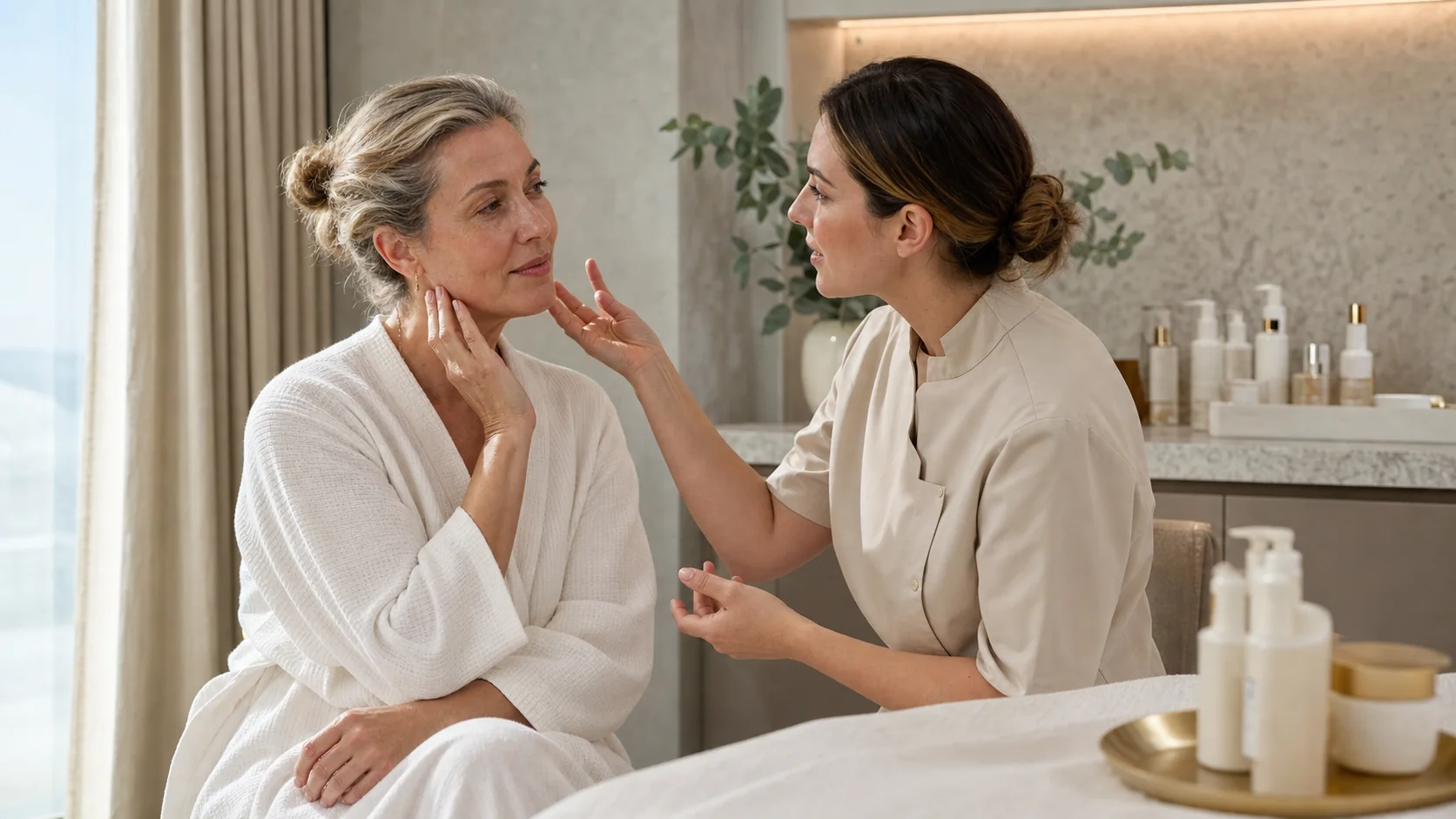
Mature skin facial care works best when it is calm, specific and honest. Many clients ask for an anti-aging facial because the face looks drier, less luminous, more textured, more sensitive, or less firm than it used to. A premium facial bar should listen carefully, but it should not turn that concern into unrealistic promises. A facial can support hydration, comfort, glow, massage relaxation and the visible appearance of smoother skin. It cannot permanently lift tissue, erase wrinkles, replace dermatology, reverse time or guarantee a younger face.
The phrase mature skin does not describe one skin type. Some mature clients are dry and delicate. Others remain oily through the T-zone. Some have visible redness, barrier discomfort, sun spots, texture, sensitivity to fragrance, post-menopause dryness, or a history of retinoids and cosmetic procedures. A mature skin facial therefore needs diagnosis before intensity. The question is not simply how strong the treatment can be; the question is what the skin can comfortably receive today.
Authoritative cosmetic guidance supports this restraint. The FDA explains that wrinkle and anti-aging products are regulated differently depending on whether they are cosmetic products or make drug-like claims. In practical facial-bar language, that means skincare services should describe appearance support, moisturization and comfort rather than medical correction. AAD skincare guidance also keeps the basics clear: gentle cleansing, moisturizing and sun protection remain foundational even when the client invests in professional care.
This Anywell guide explains how to plan a mature skin facial with a premium but realistic standard: hydration first, barrier comfort before exfoliation, thoughtful massage, careful timing around retinoids and injectables, event-aware planning, and aftercare that protects the result. It is general skincare education, not medical advice. Persistent irritation, changing lesions, unexplained swelling, infection, severe reactions, eye-area changes or medical skin conditions should be assessed by a qualified healthcare professional.
What changes in mature skin and what a facial can support
With age, the skin often becomes drier, slower to recover, more reactive to friction and less even in texture. The visible face may show fine lines, deeper expression lines, sun-related pigmentation, laxity, dullness, roughness or makeup that settles more easily. These are normal patterns, but each person experiences them differently depending on genetics, sun exposure, sleep, stress, hormones, skincare history and climate.
A mature skin facial can support the visible appearance of freshness by improving surface comfort, removing residue gently, layering hydration, softening the look of dryness, and using massage where appropriate. It may help the face look more rested after the appointment. It should not promise permanent lifting, wrinkle removal, pore elimination or medical treatment of pigmentation.
The most premium result is often subtle. Skin that feels comfortable and well-hydrated reflects light better, accepts makeup more smoothly and looks less tense. Mature clients often value that refined result more than a dramatic protocol that leaves the face red, tight or unpredictable.
Hydration is the first anti-aging move
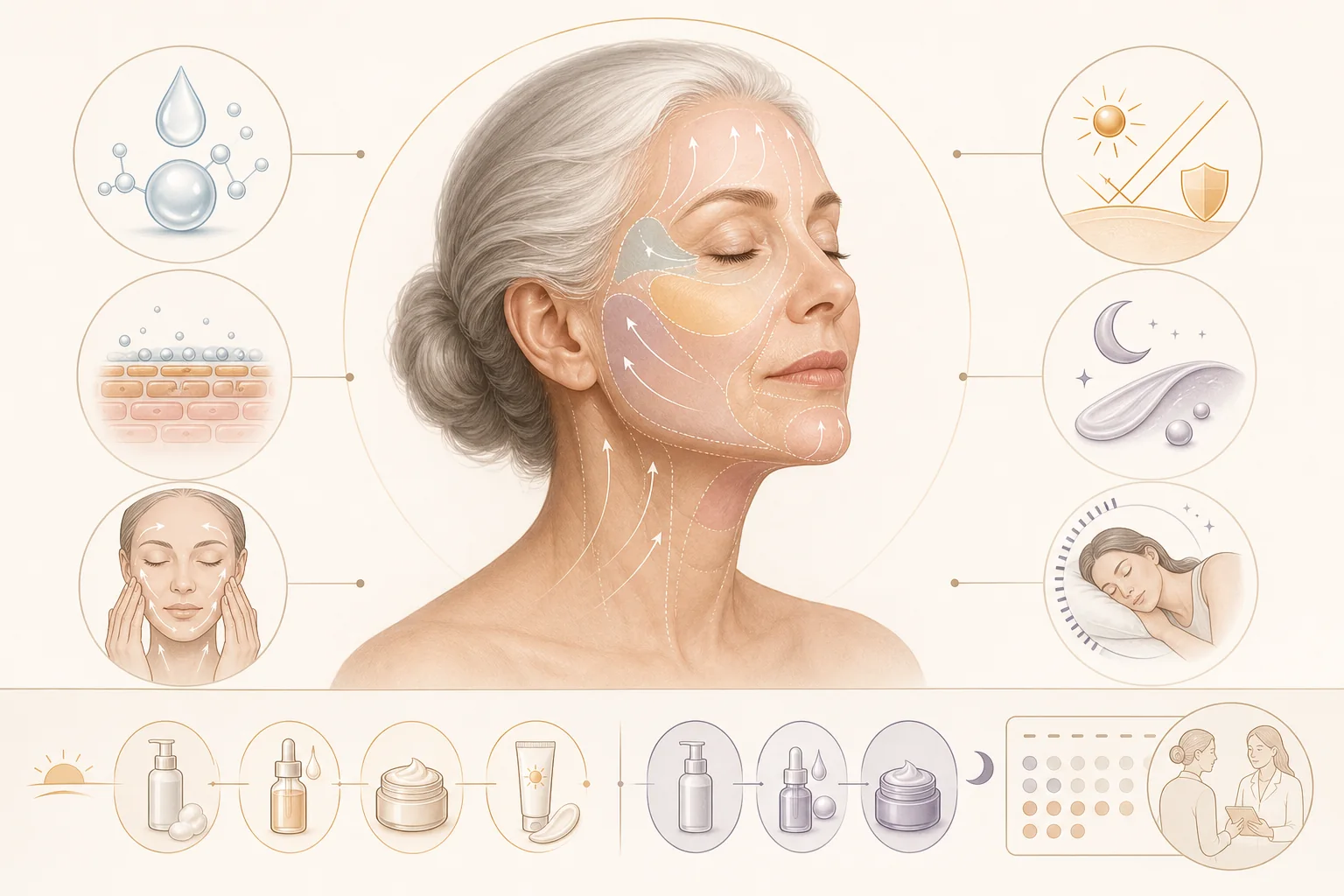
Hydration does not erase wrinkles, but dehydration can exaggerate fine lines and make mature skin look tired. That is why a mature skin facial usually begins with water balance and barrier comfort rather than aggressive resurfacing. A specialist may choose humectant serums, a calming mask, a lipid-supportive finish and gentle massage that helps the face look less drawn.
AAD anti-aging guidance keeps the foundation practical: daily sun protection, moisturizer and careful product choice matter even when a client invests in professional care. In the treatment room, the same logic becomes more tailored. The forehead may tolerate a different texture than the cheeks. The neck may need a softer touch. The eye area may need restraint more than product volume.
Clients sometimes mistake a heavy finish for better anti-aging care. Mature skin can need nourishment, but it also needs elegance. A premium facial should leave the skin flexible, not coated. If makeup will be applied afterward, the finish should be smooth and compatible with the client's next few hours.
Barrier comfort before brightening or exfoliation
Many mature clients want brightness, and exfoliation can be useful in the right context. The risk is stacking exfoliation on top of an already stressed barrier. If the skin stings with moisturizer, flushes easily, feels hot after cleansing or is peeling from retinoids, the smartest facial may be a barrier-supportive treatment rather than a brightening push.
The professional decision is made face by face. A slightly rough forehead may tolerate gentle refinement while the cheeks need calming hydration. A neck that reacts quickly may need to be excluded from active steps. A client preparing for an event may need predictability more than maximum intensity.
This is also where mature skin care becomes accessible. Clients do not need to know every ingredient family before booking. They need a specialist who asks what has been used recently, how the skin feels, what the calendar looks like and whether any reaction is still active.
Facial massage for mature skin: touch, tension and realistic sculpting
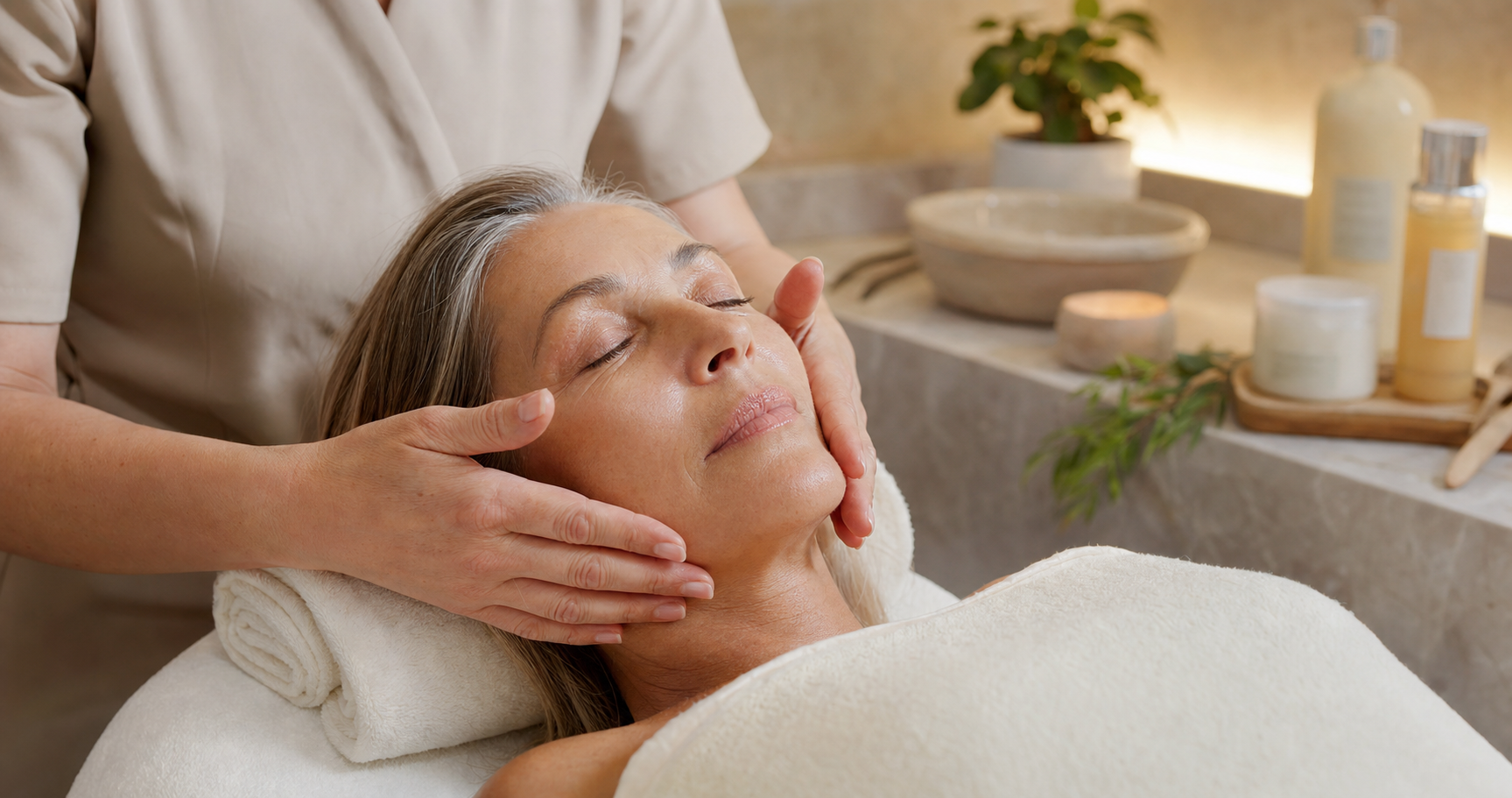
Facial massage is one of the most valued parts of mature skin facial care because it addresses both the look and the experience of the face. Gentle massage can soften expression tension, support a more rested appearance, and create a sense of calm that device-heavy care sometimes misses. Around the jaw, cheeks, temples and neck, the right pressure matters more than dramatic movements.
Massage should be described responsibly. It can help the face look temporarily more open, relaxed or sculpted depending on the client, but it does not change bone structure or permanently lift tissue. Strong pressure is not automatically better, especially for thin, fragile, inflamed or recently treated skin.
Contraindications matter. Recent surgery, fresh injectables, active infection, unexplained swelling, bruising, pain, inflamed skin, sunburn or certain medical conditions can change or postpone massage. The most skilled facialist is not the one who always does more; it is the one who knows when to adjust.
Retinoids, acids and the professional facial schedule
Many mature clients use retinoids, exfoliating acids or vitamin C. These ingredients can be useful when tolerated, but they also change the facial plan. AAD anti-aging guidance discusses retinol and retinoids as common anti-aging ingredients, and many clients know from experience that these products can make skin feel dry or sensitive when introduced too quickly. That matters because an active home routine can make a strong facial unnecessary or poorly timed.
Before a mature skin facial, tell the specialist about prescription retinoids, over-the-counter retinol, acid toners, peels, scrubs, vitamin C, benzoyl peroxide, waxing, laser, injectables or recent dermatology procedures. This is not oversharing. It helps the specialist avoid stacking too many stimuli.
A mature skin facial can be placed into a skin cycling rhythm: active nights at home, recovery nights, then a professional treatment that either supports glow or restores comfort. If the skin is peeling or burning, recovery should win. If the skin is stable and the calendar allows it, gentle refinement may be appropriate.
Sunscreen is part of every mature skin plan
No mature skin facial plan is complete without sun protection. AAD sunscreen guidance recommends broad-spectrum, water-resistant SPF 30 or higher. In facial-bar practice, the recommendation should also consider texture, climate and whether the client will actually use the product consistently.
Sun exposure influences the visible appearance of aging, uneven tone and dryness. A facial can support glow for a moment, but daily protection helps preserve the work. This is especially important after exfoliating treatments, brightening routines or periods when the skin feels reactive.
The best sunscreen conversation is practical. Does the product sting the eyes? Does it pill under makeup? Is it too heavy for daytime? If a client dislikes every sunscreen she owns, the aftercare plan is incomplete. Mature skin care needs products that fit real life.
Case study: the client who wants glow before a public event
A mature client books three days before a speech and asks for a strong anti-aging facial because she wants the face to look lifted, smooth and bright. During consultation, the specialist learns that she restarted retinol last week, feels mild tightness around the mouth and will wear makeup under bright lights.
The tempting answer is a dramatic resurfacing protocol. The premium answer is more measured. The specialist chooses gentle cleansing, hydration, soft massage, a calming mask and a finish that sits well under makeup. Strong exfoliation is avoided because the timing is close and the skin is already adjusting to retinol.
The result is realistic: the client may look fresher, more comfortable and more polished, with less risk of redness or peeling on stage. She leaves with a short aftercare plan: pause retinol briefly if advised, avoid scrubs, moisturize, sleep, use sunscreen and keep makeup removal gentle after the event.
Sensitive mature skin needs a slower appointment
Sensitivity can increase with dryness, overuse of actives, fragrance exposure, weather, stress or medical skin conditions. Mature skin that is also sensitive should be treated slowly. Patch history, allergies, recent reactions and product stinging are important details, not minor complaints.
The facial may use fewer products, less heat, less friction and shorter active contact time. Massage may be lighter or omitted in areas that flush. The goal is not to prove that the skin can tolerate a full menu. The goal is to make the skin feel calmer after the appointment than before it.
Clients with persistent redness, burning, rash, swelling, painful lesions or symptoms that do not settle should be directed toward qualified medical advice. A facial can support comfort and appearance, but it should not diagnose or treat medical inflammation.
Mature skin and the neck, jawline and decollete
Many clients focus on the face and forget the neck until texture or dryness becomes visible. A mature skin facial can include the neck and decollete when appropriate, but these zones often need softer pressure and conservative product choices. The neck can react quickly to fragrance, acids and friction.
Jawline massage can be valuable when tension makes the face look held or tired. The aim is not to promise a new jawline. It is to help the area feel less tight and to support a more rested visible appearance. A client who clenches, works long hours at a desk or sleeps poorly may notice the experiential benefit as much as the visual one.
For event preparation, the neck and decollete should not receive an unfamiliar strong active at the last minute. If these areas will be visible, predictability matters. Hydration, gentle touch and sunscreen are often the more elegant choices.
How to choose between hydrating, sculpting and resurfacing facials
A hydrating facial is usually the safest starting point for mature skin that feels dry, tight, dull or overworked. It supports comfort and gives the specialist a baseline. A sculpting or massage-focused facial is useful when the client wants relaxation, softer expression tension and a more rested look. A resurfacing-style facial may be appropriate for stable skin seeking smoother texture, but timing and tolerance must be reviewed.
The best treatment plan can sequence these options. Start with barrier comfort if the skin is reactive. Add massage when the tissue tolerates touch. Consider brighter or more active work when the skin is stable and the calendar allows recovery. This sequencing feels less dramatic on paper, but it is how premium skin care becomes dependable.
For clients comparing facial bars and spas, look for consultation quality. A serious facialist should ask about current products, previous reactions, recent procedures and your upcoming plans. A menu name is less important than the decision-making behind it.
Aftercare that protects the mature skin facial result
The evening after a mature skin facial should usually be simple. Use a gentle cleanser if needed, a moisturizer that does not sting, and avoid adding a new acid, scrub or retinoid immediately unless your specialist specifically recommends it. Let the skin show how it has responded.
For the next few days, prioritize hydration, sunscreen and calm routines. Do not chase the glow by layering every active product you own. If the skin feels comfortable, the plan can gradually return to its normal rhythm. If it feels tight, hot or unusually reactive, slow down and ask for guidance.
Premium aftercare is not complicated. It is disciplined. It protects the appointment, respects the skin's feedback and makes the next consultation more accurate. Mature skin often responds best when professional care and home care behave like one plan instead of two competing systems.
Professional checklist before booking this treatment
Match the service to the skin today
Before choosing this service, look at your skin as a specialist would: current comfort, recent product use, sensitivity, event timing, and the result you want to see in the mirror. For mature skin facial, the best appointment is not necessarily the strongest appointment. It is the appointment that matches the condition of the skin on the day you arrive.
Tell the specialist about recent retinoids, acids, peels, cosmetic procedures, sun exposure, allergies, pregnancy, medication, or any reaction that made the skin burn or sting. This information changes pressure, exfoliation, device intensity, massage direction, product choice, and aftercare. A premium facial bar experience should feel personal because the skin history is part of the treatment.
After the appointment, protect the result with a simple routine. Avoid stacking strong actives immediately, keep the skin moisturized, use daytime protection, and notice how the face feels the next morning. The most useful beauty advice is rarely dramatic. It is specific, repeatable, and adapted to real life.
Read the result like an expert
It is also helpful to decide what success looks like before the treatment starts. For some clients, success is a fresher complexion before an event. For others, it is less tightness, a softer jaw, calmer redness, cleaner pores, or a routine that finally feels understandable. When the goal is precise, the specialist can choose a precise path and avoid turning every facial into the same generic protocol.
If your skin does not respond as expected, do not immediately add more products or book a stronger service. Review sleep, stress, cleansing habits, sun exposure, climate, and how often active ingredients are being used. A premium skincare plan evolves by observation. The face gives feedback, and a good facial bar uses that feedback to adjust the next appointment.
There are also moments when the best professional choice is to wait. Active infection, unexplained swelling, strong burning, open lesions, recent aggressive procedures, or a reaction that has not settled should change the plan. A beauty treatment should never compete with medical judgment. When in doubt, the safest luxury is restraint.
Build a long-term facial plan
For long-term authority, think of each visit as one chapter in a skin journal. The specialist notes what worked, what felt too strong, what created glow, and what should be repeated or avoided. This is how facial care becomes more intelligent over time: not through constant novelty, but through careful memory of the skin.
The final filter is lifestyle. A treatment that looks perfect on paper may be wrong before a flight, after poor sleep, during a stressful week, or just before heavy makeup. Premium skincare respects context. It asks not only what the skin needs, but what the client needs the skin to do during the next few days.
That is why the best recommendation is often a sequence rather than a single appointment. Start with the service that calms and clarifies, then build toward more active or sculpting work when the skin is ready. This patient order creates better visible results and a better relationship with the face.
For reader clarity, document the same logic in the article itself: what the treatment is for, who should be cautious, what result is realistic, and how the home routine protects the work. Readers trust a beauty brand more when it explains limits as clearly as benefits.
The same structure also supports the Anywell editorial standard. A strong journal article should answer the client's practical questions before they are asked: how the treatment feels, how long the visible result may last, what to avoid afterward, and when another service would be wiser. That level of usefulness is what separates premium editorial content from a simple service description.
For a facial bar, this clarity also improves the booking experience. The client arrives with better vocabulary, the specialist can refine the plan faster, and the treatment feels more intentional from the first consultation to the final aftercare recommendation. It turns education into confidence, and confidence into a calmer, more premium client journey.
Conclusion: the Anywell way
A mature skin facial should feel refined because it is realistic. The goal is not to promise age reversal; it is to support hydration, comfort, glow, massage relaxation, better product timing and a more confident relationship with the face. At Anywell Facial Bar, mature skin care begins with consultation and restraint: what the skin needs today, what the client has used recently, what the calendar allows, and which result would genuinely help. Explore the Anywell service menu or book a consultation when you want anti-aging facial care that sounds honest, feels premium and respects the health of your skin barrier.
FAQ
What is a mature skin facial?
It is a professional facial planned for mature skin concerns such as dryness, dullness, texture, sensitivity, expression tension and realistic glow support.
Can a mature skin facial remove wrinkles?
No facial should promise wrinkle removal. It can support hydration, comfort and the visible appearance of smoother, fresher-looking skin.
Is facial massage safe for mature skin?
Often it can be appropriate when gentle and adapted, but recent procedures, swelling, pain, infection, bruising or inflamed skin may require changes or postponement.
Should I stop retinol before a facial?
Many clients need a pause around stronger treatments, especially if skin is peeling or sensitive. Ask your specialist because timing depends on the product and your skin condition.
When should I book before an event?
If the treatment is gentle and familiar, one to three days before can work well. New active or resurfacing treatments should usually be tested earlier.