
Oily skin is often treated as a problem to be defeated. Many clients arrive at a facial bar asking for a stronger cleanse, a deeper scrub, a more matte finish or a treatment that will finally make pores disappear. The professional answer is more nuanced. An oily skin facial can support a cleaner surface, a fresher finish and better routine clarity, but it should not punish the skin for producing sebum.
Sebum is part of normal skin function. Cleveland Clinic describes sebaceous glands as glands that secrete sebum, an oily substance that helps protect the skin from drying out. The challenge is balance. Too much shine can make the face feel heavy, makeup can move quickly, and congestion can appear around the nose, chin or forehead. Too little respect for the barrier can leave the skin tight, reactive and still shiny by midday.
A premium oily skin facial therefore has two jobs at once: refine where the face is congested, and preserve comfort where the skin is already dehydrated or sensitive. The forehead and nose may need more attention than the cheeks. The chin may behave differently from the jawline. A strong treatment is not always a smart treatment; the best facial is the one that reads the map of the face before choosing intensity.
This guide explains how to choose a deep cleansing facial for oily and combination skin without stripping, what professional shine control can realistically support, how hydration fits into an oil-control plan, and when to pause for dermatology guidance. It is general skincare education, not medical advice. Painful acne, persistent inflammation, infection, unexplained swelling, severe irritation or reactions that do not settle should be discussed with a qualified healthcare professional.
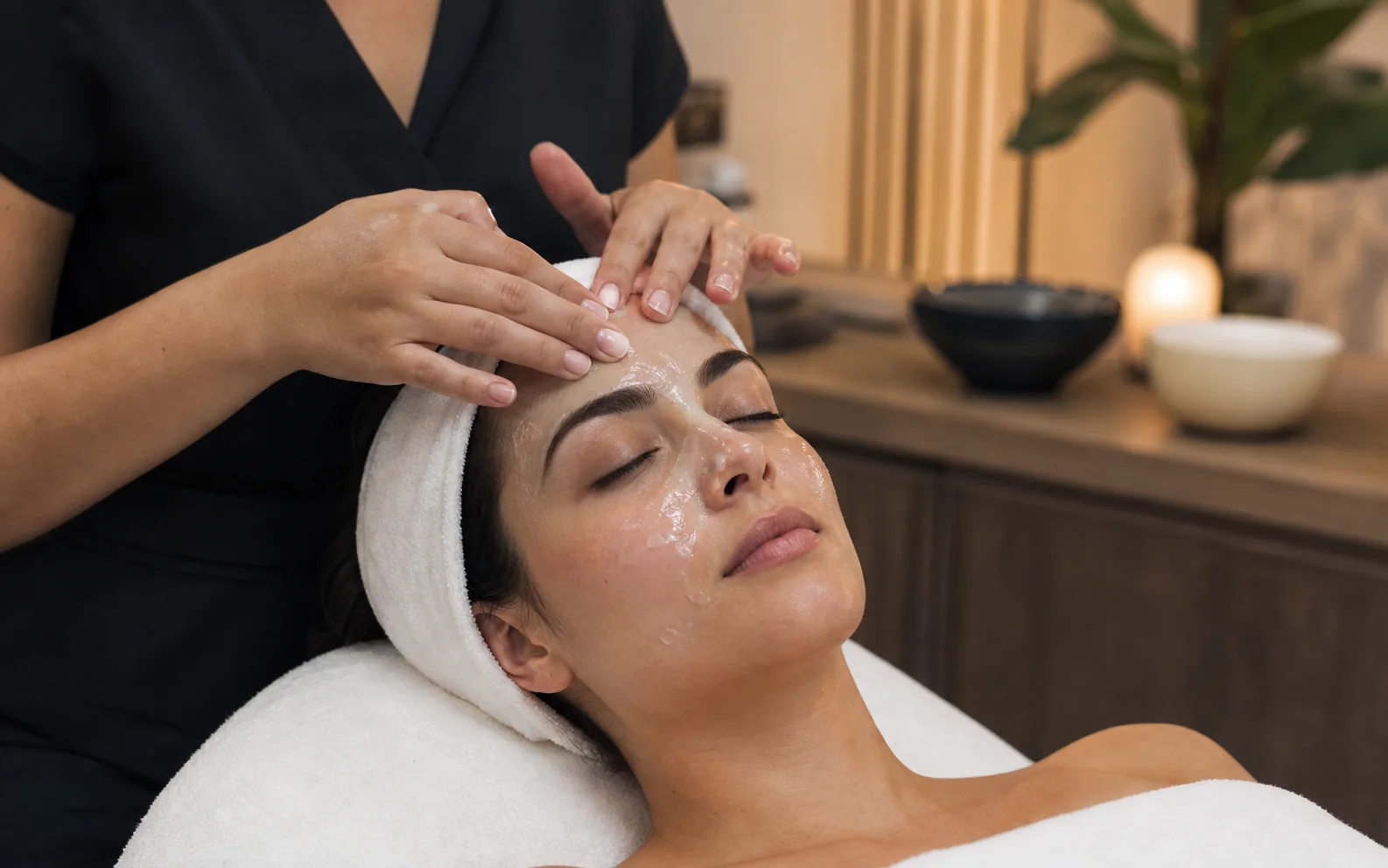
What oily skin actually needs
Oily skin is not a single condition. One client may have a shiny T-zone with dry cheeks. Another may feel oily everywhere but still become tight after cleansing. Someone else may have true seborrhoea, which DermNet describes as excessively oily skin caused by overactive sebaceous glands. A facial bar consultation should distinguish these patterns before choosing products or pressure.
The common mistake is to treat shine as proof that the skin needs to be dried out. The American Academy of Dermatology advises people with oily skin to use a gentle foaming face wash and avoid oil-based or alcohol-based cleansers that can irritate the skin. That same principle belongs in the treatment room. A cleanser can be effective without leaving the face squeaky, hot or tight.
The goal is not zero oil. Skin without comfort does not look premium. The goal is a face that feels clean, balanced and hydrated, with less heavy shine and a routine that does not trigger a cycle of over-cleansing followed by rebound discomfort.
Why stripping can make oily skin look worse
Clients often associate tightness with cleanliness, but tightness is usually a warning sign. If the skin feels stretched after cleansing, the barrier may have lost too much comfort. Oily clients can be dehydrated at the same time, especially when they use harsh cleansers, frequent clay masks, alcohol-heavy toners, rough scrubs or too many acids.
A stripped face may look matte for a short time, then become shiny and uneven later in the day. Makeup can cling to dry patches while sliding on the T-zone. The client then adds more powder, more cleanser or another mask, and the cycle continues. A premium facial interrupts this pattern by cleaning thoroughly without treating oil as an enemy.
Hydration is not the opposite of oil control. Lightweight humectant serums, water-gel textures and barrier-supportive moisturizers can make oily skin feel more stable. The finish should be fresh, not greasy; comfortable, not coated.
The facial-bar diagnosis: mapping zones before treatment
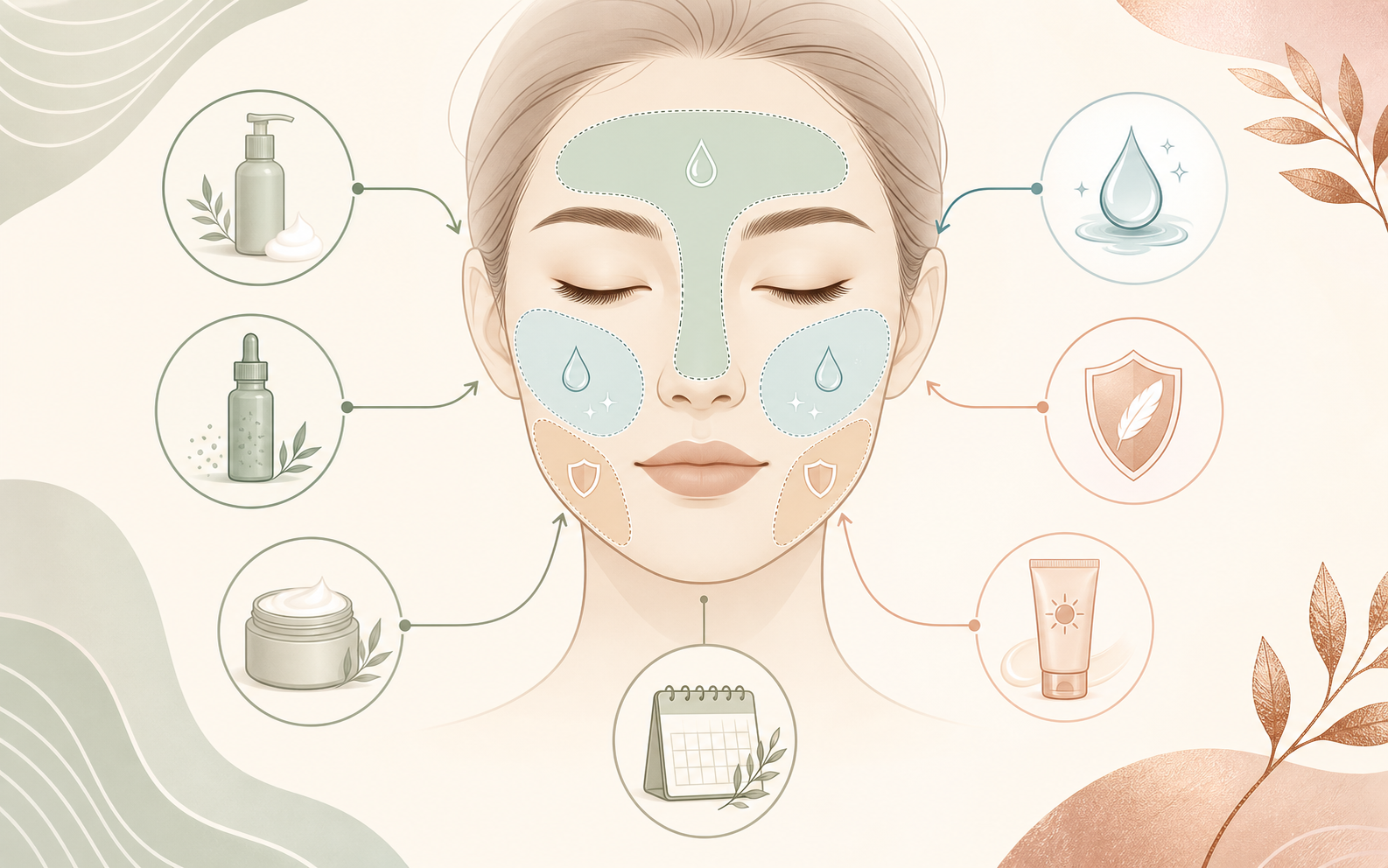
A useful oily skin facial begins with a zone map. The specialist should look at the forehead, nose, chin, cheeks, jawline, beard line if relevant, and neck separately. The T-zone may show more visible sebum and congestion. The cheeks may be normal, dehydrated or sensitive. The chin may be affected by makeup, mask friction, hormones or touching.
This map changes the protocol. The specialist may cleanse more thoroughly through the T-zone, use a lighter refining step on congested areas, avoid excessive friction on the cheeks, and finish with different textures by zone. Treating the whole face as uniformly oily often creates the wrong result.
Diagnosis also includes lifestyle. Recent travel, hot weather, exercise, heavy SPF, long-wear makeup, shaving, sleep, stress and active ingredients can all change how oily skin behaves. A client who used exfoliating pads last night needs a different facial from a client who has not exfoliated for weeks.
Deep cleansing without aggression
Deep cleansing should mean thorough, controlled and skin-aware. It does not mean maximum friction. A professional sequence may include makeup and sunscreen removal, a second cleanse if needed, softening steps, measured exfoliation, careful work around congested zones and a calming finish. Each step should have a purpose.
Extractions, if offered, should be conservative and appropriate. Not every visible pore is ready to be extracted, and not every client benefits from extraction before an event. Aggressive pressure can leave redness, broken capillaries or irritation. A facial bar should explain when it is better to refine gradually rather than force immediate smoothness.
For clients who like hydrafacial-style care, the same rule applies: device-assisted cleansing can feel satisfying, but intensity should match the skin. The treatment is more premium when the specialist knows when to stop.
Where exfoliation fits
Oily skin often tolerates exfoliation better than very dry or reactive skin, but tolerance is not permission to overdo it. Enzymes, mild acids or gentle physical methods may support a smoother surface when selected carefully. The treatment should respect the client's home routine, especially if retinoids, acids or acne medication are already in use.
The AAD's oily skin guidance is useful because it avoids dramatic promises. It focuses on gentle cleansing, oil-free and non-comedogenic products, and not scrubbing. In a facial, exfoliation should follow the same logic: refine enough to support clarity, but not so much that the skin leaves the room inflamed.
Timing matters before events. If a client needs a reliable finish for photos, meetings or makeup, the facial should prioritize predictability. New acids, aggressive resurfacing and heavy extraction belong earlier in the calendar, not the day before.
Hydration is the hidden oil-control step
Many oily clients skip moisturizer because they fear shine. That is understandable, but it often backfires. Without a light layer of hydration, the face can feel tight while still producing oil. The client then mistakes discomfort for oiliness and reaches for harsher products.
A professional oily skin facial should demonstrate what good hydration feels like. It may use a light serum, gel mask, water-based moisturizer or carefully chosen finishing texture that leaves the face flexible rather than glossy. The client learns that hydration can be elegant and weightless.
This is where home aftercare becomes simple: gentle cleanse, light moisturizer, daytime sunscreen, and actives introduced with restraint. A routine that the client will actually repeat is more valuable than a complicated shelf of mattifying products.
Sunscreen and the oily-skin client
Sunscreen is often the hardest step for oily skin. Many clients remember formulas that felt heavy, shiny or pore-clogging. But sun protection remains a daily basic. The AAD recommends broad-spectrum, water-resistant sunscreen with SPF 30 or higher, and oily clients may simply need a texture that suits them better.
After a facial, the specialist can help the client think in textures: gel cream, fluid, lightweight lotion, mineral, hybrid, matte finish or hydrating finish. The right sunscreen is the one the client will use generously and consistently.
A facial should not end with the message that the skin is clean now and the routine is finished. Daytime protection is part of maintaining the visible result, especially after exfoliation or any treatment that leaves the surface more polished.
Case study: shiny T-zone, tight cheeks
Imagine a client who books Anywell because her forehead and nose become shiny by lunch. She uses a strong cleanser twice a day, a clay mask three times a week and blotting papers constantly. Her cheeks feel tight after washing, but she still describes her skin as oily.
A less careful treatment would chase the shine. A better oily skin facial starts by explaining combination behavior: the T-zone needs balance, while the cheeks need comfort. The treatment plan may include thorough cleansing through the center of the face, gentle refinement around the nose and chin, a hydrating mask over the cheeks, and a light finish all over.
The aftercare is not dramatic. The client reduces harsh cleansing, keeps a light moisturizer, uses sunscreen she can tolerate, and saves stronger exfoliation for planned nights. The result may be less heavy shine and a calmer texture, depending on the skin condition, because the face is no longer being over-corrected.
When oily skin needs dermatology support
A facial bar can support beauty goals, comfort and routine clarity, but it should not pretend to treat medical acne, persistent seborrhoeic dermatitis, painful cystic lesions, infection or unexplained inflammation. If bumps are painful, widespread, scarring, rapidly worsening or associated with rash, medical evaluation is the safer path.
The FDA's cosmetics guidance is also a useful reminder that cosmetic products are regulated differently from drugs. A facial-bar product can cleanse, moisturize and beautify, but it should not be positioned as a cure for disease. This distinction protects the client and keeps the brand credible.
The most professional recommendation is sometimes to pause. A calming service, a simplified routine or a referral for medical advice may be more appropriate than pushing a strong treatment on reactive skin.
How to prepare for an oily skin facial
For several days before a new oily skin facial, avoid stacking every active product you own. Skip harsh scrubs, unfamiliar peels, repeated clay masks and aggressive cleansing brushes if your skin becomes reactive. Arrive with a truthful routine list, including retinoids, acids, acne products, sunscreen, aftershave, fragrance and recent treatments.
If you are booking before an event, tell the specialist the exact date. The plan may shift toward hydration, gentle cleansing and a polished finish rather than heavy extraction or a new active step. A predictable glow often looks more luxurious than a dramatic but uncertain treatment.
After the appointment, keep the routine short. Do not add strong acids that night unless the specialist specifically recommends it. Avoid heavy heat, aggressive scrubbing and experimenting with multiple new products at once. Let the skin show how it responds.
Professional checklist before booking this treatment
Match the service to the skin today
Before choosing this service, look at your skin as a specialist would: current comfort, recent product use, sensitivity, event timing, and the result you want to see in the mirror. For oily skin facial, the best appointment is not necessarily the strongest appointment. It is the appointment that matches the condition of the skin on the day you arrive.
Tell the specialist about recent retinoids, acids, peels, cosmetic procedures, sun exposure, allergies, pregnancy, medication, or any reaction that made the skin burn or sting. This information changes pressure, exfoliation, device intensity, massage direction, product choice, and aftercare. A premium facial bar experience should feel personal because the skin history is part of the treatment.
After the appointment, protect the result with a simple routine. Avoid stacking strong actives immediately, keep the skin moisturized, use daytime protection, and notice how the face feels the next morning. The most useful beauty advice is rarely dramatic. It is specific, repeatable, and adapted to real life.
Read the result like an expert
It is also helpful to decide what success looks like before the treatment starts. For some clients, success is a fresher complexion before an event. For others, it is less tightness, a softer jaw, calmer redness, cleaner pores, or a routine that finally feels understandable. When the goal is precise, the specialist can choose a precise path and avoid turning every facial into the same generic protocol.
If your skin does not respond as expected, do not immediately add more products or book a stronger service. Review sleep, stress, cleansing habits, sun exposure, climate, and how often active ingredients are being used. A premium skincare plan evolves by observation. The face gives feedback, and a good facial bar uses that feedback to adjust the next appointment.
There are also moments when the best professional choice is to wait. Active infection, unexplained swelling, strong burning, open lesions, recent aggressive procedures, or a reaction that has not settled should change the plan. A beauty treatment should never compete with medical judgment. When in doubt, the safest luxury is restraint.
Build a long-term facial plan
For long-term authority, think of each visit as one chapter in a skin journal. The specialist notes what worked, what felt too strong, what created glow, and what should be repeated or avoided. This is how facial care becomes more intelligent over time: not through constant novelty, but through careful memory of the skin.
The final filter is lifestyle. A treatment that looks perfect on paper may be wrong before a flight, after poor sleep, during a stressful week, or just before heavy makeup. Premium skincare respects context. It asks not only what the skin needs, but what the client needs the skin to do during the next few days.
That is why the best recommendation is often a sequence rather than a single appointment. Start with the service that calms and clarifies, then build toward more active or sculpting work when the skin is ready. This patient order creates better visible results and a better relationship with the face.
For reader clarity, document the same logic in the article itself: what the treatment is for, who should be cautious, what result is realistic, and how the home routine protects the work. Readers trust a beauty brand more when it explains limits as clearly as benefits.
The same structure also supports the Anywell editorial standard. A strong journal article should answer the client's practical questions before they are asked: how the treatment feels, how long the visible result may last, what to avoid afterward, and when another service would be wiser. That level of usefulness is what separates premium editorial content from a simple service description.
For a facial bar, this clarity also improves the booking experience. The client arrives with better vocabulary, the specialist can refine the plan faster, and the treatment feels more intentional from the first consultation to the final aftercare recommendation. It turns education into confidence, and confidence into a calmer, more premium client journey.
Conclusion: the Anywell way
An oily skin facial works best when it respects both clarity and comfort. The goal is not to erase sebum, shrink every pore or force the face into a dry matte finish. The goal is a cleaner, fresher, more balanced appearance supported by gentle cleansing, smart zoning, light hydration, realistic exfoliation and aftercare the client can sustain. At Anywell Facial Bar, the most effective plan begins with diagnosis: how oily the skin is today, where it is dehydrated, what the client has used recently, and what result is needed for real life. Explore the Anywell service menu or book a consultation when shine control has become confusing and you want a calmer, more professional routine.
FAQ
What is an oily skin facial?
It is a professional facial planned for oily or combination skin, usually combining gentle deep cleansing, zone-aware refinement, hydration and aftercare without harsh stripping.
Can a facial stop oily skin permanently?
No. A facial can support a fresher surface and better routine habits, but it cannot permanently stop normal sebum production.
Should oily skin skip moisturizer after a facial?
Usually no. Many oily clients benefit from a lightweight moisturizer that supports comfort without a heavy finish.
Is extraction always needed for oily skin?
No. Extraction should depend on the skin condition, timing, sensitivity and whether the pore is appropriate to work on safely.
When should oily skin see a dermatologist?
Painful acne, infection, scarring, persistent rash, severe inflammation or reactions that do not settle should be assessed by a qualified healthcare professional.