
A rosacea-prone facial treatment should feel considered, not timid. Clients may describe a face that flushes easily, feels hot after cleansing, stings with familiar products, or becomes unpredictable around weather, stress, heat, alcohol, exercise or new skincare. Those observations deserve a better response than a generic promise to “calm redness.” They call for a careful conversation, lower friction and a service that can be simplified without losing its premium quality.
Rosacea itself is a medical condition that needs diagnosis and treatment guidance from a qualified clinician. A facial bar does not diagnose it, cure it, remove blood vessels or replace dermatology. What it can do is work responsibly with a client who says their skin is rosacea-prone or easily reactive: identify cosmetic triggers, respect current comfort, avoid unnecessary heat and exfoliation, and give clear aftercare.
This is general skincare education, not medical advice. Persistent redness, pain, eye symptoms, swelling, a spreading rash, open skin, infection signs or an unexplained flare should move the conversation from a cosmetic booking to qualified medical care.
Why the consultation matters more than the menu
A premium appointment starts with the skin’s story, not the treatment name. Ask what happened in the previous week: retinoids, acids, scrubs, peels, waxing, shaving, injections, sun exposure, fragrance reactions, unfamiliar products and whether water or moisturizer stings. Ask what the client wants in the next few days: comfort, a rested-looking finish, makeup preparation or a quiet reset. This allows the specialist to choose fewer variables rather than stack them.
The National Rosacea Society and NHS both describe flushing, warmth, burning and stinging as possible signs that merit appropriate clinical consideration. In the treatment room, those descriptions are not proof of a diagnosis; they are reasons to slow down. A facial is a cosmetic service, and its value is good judgment: decide what is reasonable today and what should wait.
A facial cannot diagnose or treat rosacea
Many facial concerns look alike. Acne, contact dermatitis, sun irritation, an allergic reaction and rosacea can share visible redness or discomfort. Aesthetic confidence is not a substitute for diagnosis. Anywell can observe how the skin looks and feels, but it should not label a condition, prescribe a medication or suggest that a massage or mask will treat a disease.
The service language should therefore stay precise. Say that gentle cleansing, hydration and low-friction touch may support comfort and a fresher-looking finish when the skin is stable. Do not promise to stop flares, clear bumps, close visible vessels, cure inflammation or permanently change the face. Honest scope is part of a luxury experience.
Read the skin on the day
A person who usually tolerates a facial may arrive on a day when their cheeks are hot, their nose feels tender or their normal moisturizer burns. That day requires a different plan. The specialist should look for obvious discomfort, ask whether the skin is actively changing, and make it easy for the client to say that pressure, water temperature or a product feels wrong.
If the skin is comfortable and stable, a conservative cosmetic facial may be appropriate. If it is actively burning, swollen, painful, broken or unexpectedly reactive, the most polished choice may be to pause. Rebooking a stronger step later is not a loss; it protects trust and gives the next appointment a better chance to feel good.
Gentle cleansing is skilled work
Gentle does not mean incomplete. Sunscreen, makeup, sweat and city residue still need to come off, but the cleanser, water temperature, towel pressure and number of passes matter. A mild non-abrasive cleanser and lukewarm water are commonly recommended in sensitive-skin guidance; a facial treatment can translate that principle into deliberate, unhurried technique.
Avoid turning the cleanse into a polish. Rough cloths, hot water, strong brushes and repeated rubbing can create a visibly flushed finish that is mistaken for “circulation.” A refined cleanse leaves the face comfortable and flexible. If tightness or stinging appears before the treatment has really begun, that is useful information: the service should simplify, not push forward.
Heat, friction and exfoliation need a reason
A rosacea-prone client does not need a ban on every sensory detail; they need a reason for each one. Heat, steam, strong massage, energetic brushing, grainy scrubs and long active-mask contact can all be unnecessary variables when a face is reactive. The question is not whether a step is fashionable. It is whether it supports the client’s stated goal without increasing uncertainty.
If a stable client wants a polished makeup base, a very mild surface step may be considered only after consultation and with easy exit points. If the skin feels warm, prickly, peeling or overworked, hydration is usually a wiser direction. A strong sensation is not evidence of a better result.
Massage should feel calm, not corrective
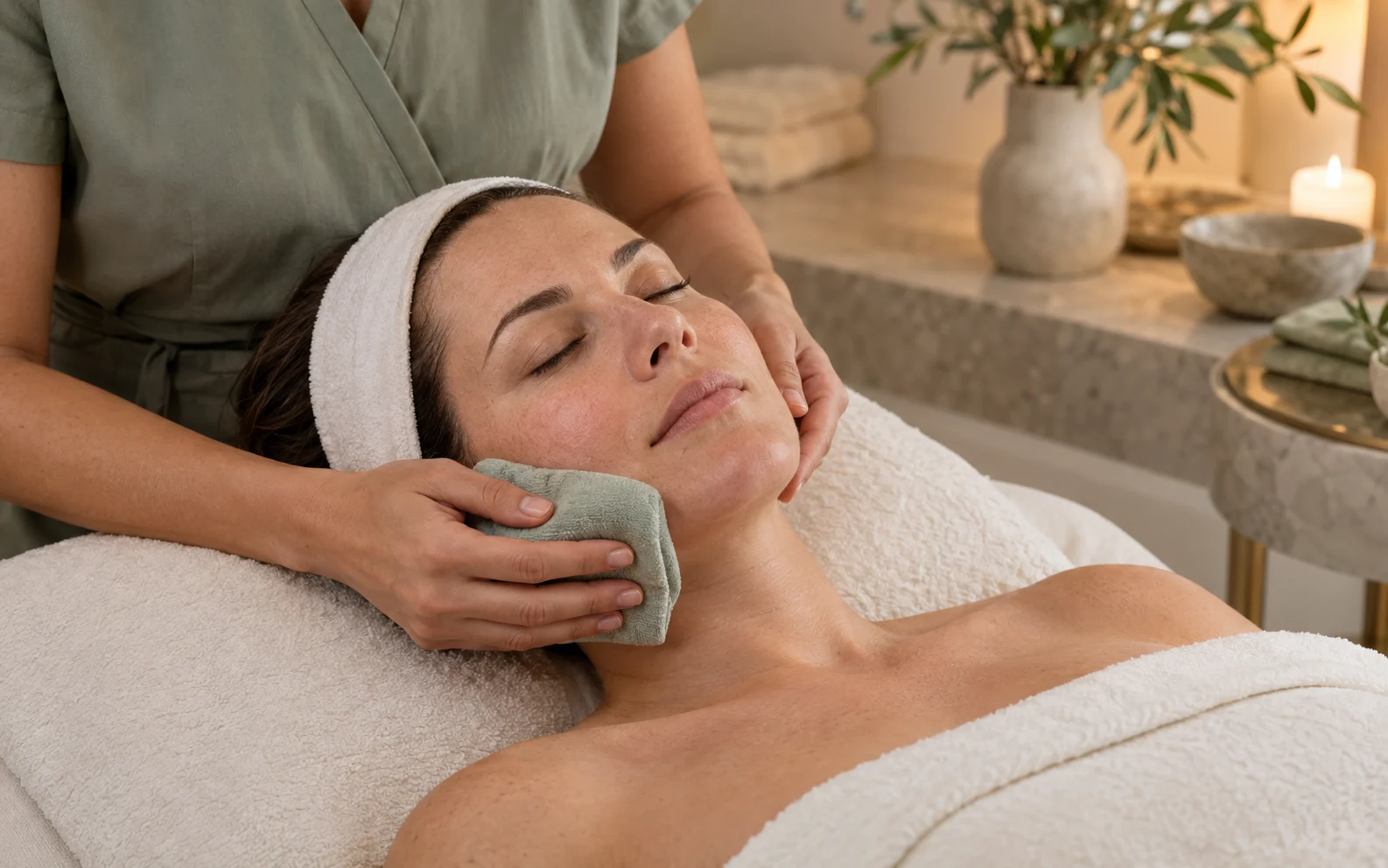
Facial massage can feel deeply restorative, especially for jaw tension and a tired expression. For reactive skin, pressure should be light, the medium should be familiar and low-scent, and the specialist should check response throughout. The goal can be relaxation and a temporarily fresher appearance, not detoxification, vessel removal or a medical anti-inflammatory effect.
Avoid dramatic lifting or vigorous sculpting language when the face is hot or visibly reactive. The client should never feel that they must tolerate discomfort to earn a result. A shorter massage, a cool compress, a quiet mask or no massage at all can be the more bespoke choice.
Fragrance and product complexity
Fragrance is not automatically a problem for every person, but it is a worthwhile consultation topic when a client reports stinging, itching or recurring reactions. “Natural,” botanical or unscented language does not guarantee a formula will feel comfortable. A premium service can preserve atmosphere through linens, light, pace and communication rather than making the face carry every aromatic element.
Use product history rather than assumptions. Which cleanser caused tightness? Did a scented sunscreen sting? Has an essential-oil mask ever felt hot? Reducing variables makes the treatment calmer and makes future feedback more useful. If an allergy is suspected, the appropriate next conversation is with a qualified clinician, not a stronger facial.
Case study: a work event in three days
A client wants a brighter, smoother-looking finish before a presentation. She has mild flushing history but her skin feels comfortable today, she has not used acids or retinoids recently, and she has no broken skin. The Anywell plan might be a careful cleanse, hydration-focused mask, brief low-pressure massage if the skin stays calm, moisturizer and daytime-protection guidance.
The outcome goal is realistic: a rested-looking, more comfortable makeup base. There is no reason to add a peel, steam or a new active simply because the appointment is important. Event timing often rewards restraint.
Case study: burning after a new serum
Another client arrives requesting glow but says a new serum has made their cheeks burn for two days. The brand name is less important than the current signal. A cosmetic service should not attempt to cancel that reaction with multiple soothing layers, fragrance or massage.
The better response is to defer active treatment, keep advice limited to stopping the provoking product and seeking qualified guidance if symptoms persist or worsen. A later consultation can rebuild a simple facial plan. This is not a missed sale; it is professional care within the right boundary.
Aftercare is part of the result
For the next day or two, keep the routine familiar: gentle cleanser, moisturizer and broad-spectrum daytime protection that the client already tolerates. Avoid testing new actives, scrubbing, hot water, sauna, picking, heavy fragrance near the face and rapid retinoid or acid escalation unless a clinician has advised otherwise.
Ask the client to observe rather than overreact: Did moisturizer sting? Did the face feel hot that evening? Did sunscreen sit comfortably the next morning? This feedback is valuable for the next service. It is much more useful than chasing a single dramatic glow photo.
When to pause and seek medical advice
Pause the treatment and encourage qualified advice for painful eyes, blurred vision, light sensitivity, a red or gritty eye, significant swelling, hives, open or infected-looking skin, severe pain, unexplained rash or a sudden worsening pattern. NHS guidance highlights eye symptoms as especially important. Cosmetic care should never delay this step.
Clients who suspect they have rosacea but have never received a diagnosis also deserve a respectful referral rather than a label. The best facial relationship is collaborative: the facial bar supports cosmetic comfort, while medical professionals handle diagnosis and treatment.
Choosing an Anywell service
A calm-skin appointment may be a better fit than an active glow protocol when the client’s priority is comfort. Explore Anywell services and bring a concise product and treatment history to the consultation. Internal guides on fragrance-free facial care, barrier recovery and face diagnostics can help frame the conversation.
A practical morning and evening routine
A useful morning plan starts with what already feels comfortable. Depending on your clinician’s advice and how your skin feels, that may mean a mild cleanse, a familiar moisturizer and broad-spectrum sunscreen with SPF 30 or higher. Allow each layer to settle before makeup. If a sunscreen stings, do not repeatedly force it onto irritated skin; discuss a better tolerated formulation with your clinician or pharmacist. Shade and a hat remain useful parts of sun protection.
In the evening, remove sunscreen and makeup patiently with a familiar gentle cleanser, then use a moisturizer you tolerate. Resist the temptation to add a new serum because the skin looks dull under bathroom lighting. If you use prescribed rosacea treatment, follow its directions and tell the facial specialist about it. An appointment is not a reason to stop or change prescription care without the prescriber’s advice.
One practical example is a client who alternates between four cleansers and several masks depending on how red their cheeks look. A simpler written routine can make the next consultation more informative: one familiar cleanser, one tolerated moisturizer, appropriate sun protection and the existing prescribed plan. Record changes and symptoms, then review them with the right professional instead of rotating through more products.
Choosing between hydration, sculpting and device-led care
Hydration-focused care is usually the clearest cosmetic conversation when dryness or tightness is the main concern and the skin is stable. It can use fewer steps and does not need vigorous touch. Sculpting massage asks more of the skin through repeated contact and pressure, so a client who flushes easily should discuss whether a shorter, lighter version is appropriate. A stronger-looking service name does not tell you which option fits your face.
Device-led cleansing or hydrafacial-style care also needs specific questions. Ask about suction, abrasive tips, exfoliating solutions and how the operator can reduce or omit them. Do not assume a machine is gentle because it delivers water, or that it is suitable because another client enjoyed it. If the service cannot be adapted to your current tolerance and medical advice, choose a simpler appointment or wait.
Likewise, gua sha and rollers are optional tools. A reactive day is not a good time to test repeated scraping or firm pressure at home. Persistent redness and visible vessels deserve medical assessment; trying to massage them away is not an appropriate cosmetic goal. A comfortable service can still feel luxurious through pace, positioning, product texture and careful communication.
Track triggers without blaming your skin
Trigger awareness should help you make decisions, not make ordinary life feel forbidden. People differ: a hot treatment room, a cold commute, a strongly scented product or a demanding workout may matter for one client and not another. Keep short notes when you notice a pattern: what changed, how the face felt and how long it lasted. Avoid making several product changes at once, because that makes interpretation harder.
Bring those notes to the next visit. Tell the specialist whether the previous facial felt comfortable that evening and the following morning, rather than judging it only by the mirror immediately after treatment. Booking frequency should follow that feedback, the home routine, your goals and medical guidance. There is no universal schedule that makes a rosacea-prone face ready for more intensity.
Sources and claim boundaries
The NHS rosacea overview explains symptoms, triggers and when medical advice is needed. The National Rosacea Society’s patient guidance discusses individual variation and gentle skin care. These references inform the service-planning cautions here; neither source endorses an Anywell treatment.
The article does not claim that Anywell can diagnose rosacea, treat eye symptoms, eliminate redness, cure inflammation or replace dermatology. It explains how a careful cosmetic facial can be adapted when the skin is stable and when a client’s comfort should take priority.

Conclusion: the Anywell way
A rosacea-prone facial treatment should be calm because it is precise, not because it is passive. Consultation, gentle cleansing, low-friction touch, conservative aftercare and a confident pause when needed can support a more comfortable, polished-looking finish. Explore Anywell services or book a consultation when you want a facial plan that listens before it intensifies.
FAQ
Can I book a facial if I have rosacea-prone skin?
A gentle cosmetic facial may suit stable skin, but the plan should be based on current comfort, product history and medical guidance. Active burning, swelling, eye symptoms or an unexplained flare call for qualified advice first.
Can facial massage make rosacea worse?
Pressure, heat and friction may be poorly tolerated by some reactive clients. A specialist can reduce pressure, shorten massage or omit it; discomfort is a reason to stop, not to push through.
Should I exfoliate rosacea-prone skin?
Exfoliation is not a default. Recent actives, stinging, peeling, heat and event timing should guide a conservative decision.
What aftercare is best after a gentle facial?
Use familiar gentle cleansing, moisturizer and daytime protection. Avoid new actives, scrubs, heat and friction for the short term unless a clinician advises otherwise.
Can a facial treat rosacea?
No. A facial is cosmetic care and does not diagnose or treat rosacea. Persistent symptoms and eye symptoms should be assessed by a qualified clinician.