
A cold weather facial treatment is not simply a richer mask added to the usual menu. Autumn and winter change the way many faces behave: cold wind outside, dry indoor heat, lower humidity, hotter showers, heavier clothing, more friction around scarves and collars, and a sudden temptation to scrub flaky skin until it looks smooth. The result can be a complexion that feels tight, dull, itchy, easily flushed or strangely oily on top of dehydration.
A premium facial bar should answer that season with calm intelligence. The goal is not to promise permanent barrier repair, cure eczema, remove sensitivity or make the skin immune to winter. The goal is to support a more comfortable, hydrated, resilient-looking complexion through gentle cleansing, low-friction touch, moisturizer strategy, sunscreen discipline and better timing for exfoliation or active ingredients.
This Anywell guide explains how to plan a cold weather facial treatment conservatively. It is general skincare education, not medical advice. If the skin is cracked, bleeding, severely itchy, swollen, infected, rapidly changing, or affected by persistent dermatitis, eczema, psoriasis or allergy symptoms, a qualified clinician or dermatologist should guide care before a cosmetic facial.
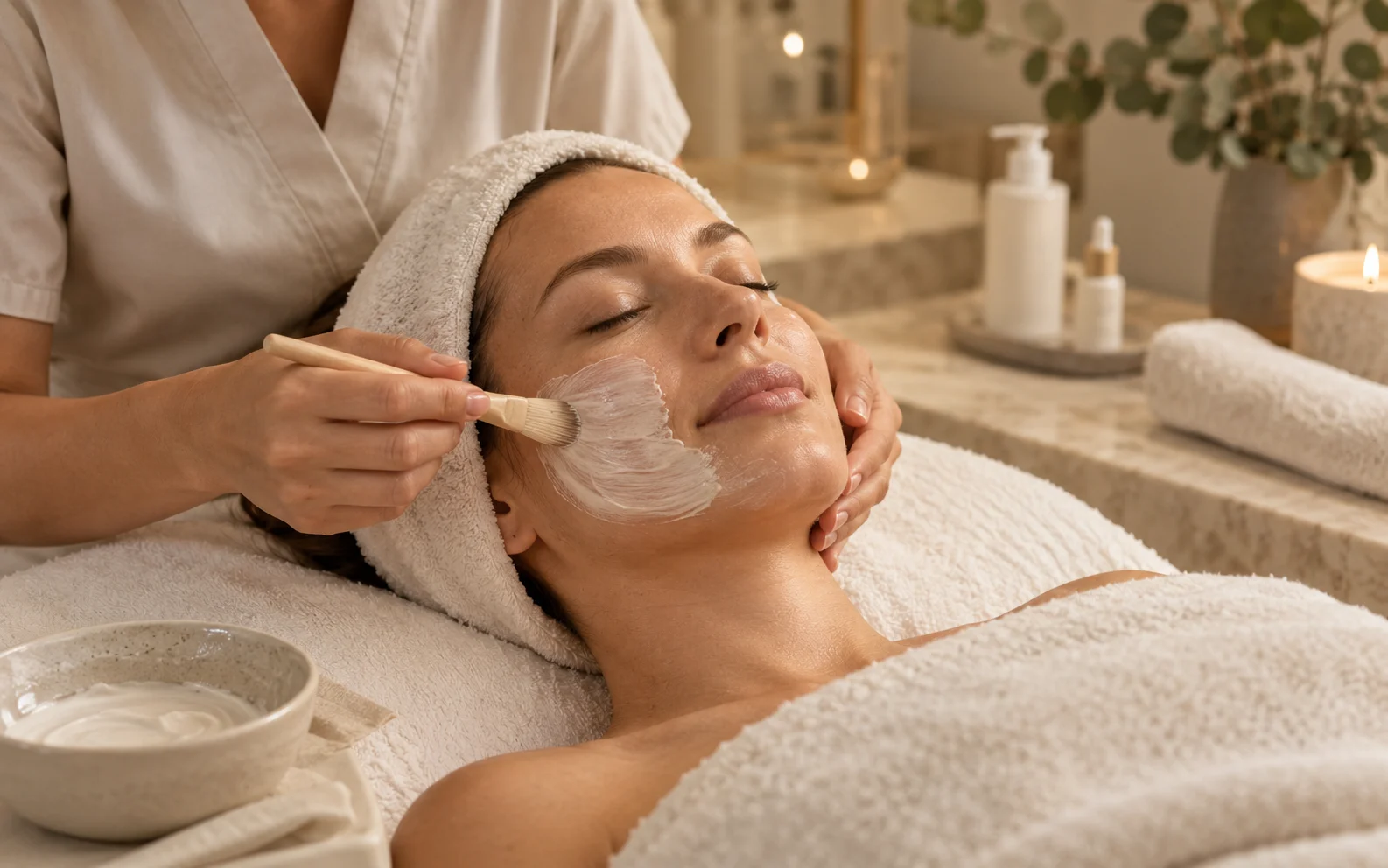
Why winter changes the facial consultation
The American Academy of Dermatology notes that cold weather, low humidity and indoor heat can make skin struggle to retain moisture, leading to dry, itchy skin. In the treatment room, that means the consultation should ask seasonal questions: has the client turned on heating, started wearing a wool scarf, taken hotter showers, changed cleanser, restarted retinoids, or added a strong acid because the face looks dull?
This matters because winter dryness can disguise itself. Some clients look oily in the T-zone while the cheeks feel tight. Others see flakes and assume they need stronger exfoliation. Some arrive after travel, poor sleep and city wind with a face that is not damaged, but simply under-supported. The facial should respond to the skin's current capacity, not to a generic winter-glow promise.
Barrier hydration comes before polish
Barrier hydration is a practical idea, not a dramatic claim. The skin's outer surface needs enough water, lipids and comfort to tolerate cleansing, massage, moisturizer and daily life. When the face already stings or feels tight after washing, the first goal is often to reduce unnecessary friction and support moisture retention before chasing a glass-skin finish.
AAD cold-weather guidance recommends switching to heavier creams when it is cold and being cautious with alpha hydroxy or beta hydroxy acids if they become irritating in winter. This does not mean every active ingredient is wrong. It means timing matters. The specialist should decide whether today is a hydration day, a very gentle polish day, or a pause day.
Hot water is a hidden winter trigger
Many clients treat winter dryness with hot showers, hot towels and long warm rinses because they feel comforting. Cleveland Clinic winter skin guidance warns that hotter water can strip protective oils and recommends shorter, cooler showers. In a facial bar, the same idea becomes treatment craft: warm enough to relax, never so hot that the skin leaves flushed, tight or reactive.
This small detail can change the whole appointment. A gentle cleanser with lukewarm water, soft towel pressure and a calm mask may do more for winter skin than an impressive sequence of strong steps. Luxury does not require heat, sting or visible redness. It requires the client to leave feeling more comfortable than when they arrived.
Cleansing should remove residue without stripping
Cold-season skin can carry sunscreen, makeup, city pollution, richer creams, scarf friction and sweat from moving between overheated interiors and cold streets. Cleansing still matters, but the face should not be scrubbed until it feels squeaky. AAD dry-skin guidance recommends gentle cleansers and fragrance-free products for dry, sensitive skin.
An Anywell facial can use a more patient cleanse rather than a more aggressive one. If a client wears water-resistant sunscreen or heavy makeup, the first cleanse can dissolve residue; the second can be mild and short. If the client arrives bare-faced and stinging, the cleanse should be shorter still. The plan follows the skin, not the choreography.
When exfoliation helps and when it waits
Dry flakes make exfoliation tempting. But flakes can mean the skin is under-moisturized, irritated or recovering from too many actives. Cleveland Clinic cautions against over-exfoliating winter skin because it can strip moisture and make dryness worse. For a cold weather facial treatment, that warning is central.
A gentle enzyme-style or very mild surface polish may be useful for stable skin that simply looks dull. It should be optional, brief and easy to skip. If the client used retinoids, acids, benzoyl peroxide, a strong acne routine, waxing, a peel or a new product that burned within the previous days, winter exfoliation should usually become more conservative.
Moisturizer texture should match the day
The NHS explains that ointments, creams and lotions differ in oil content, with ointments generally the most effective at keeping moisture in the skin but also greasier. That does not mean every face needs the heaviest finish. A client with dry cheeks and an oily T-zone may need a richer cheek strategy and lighter central-face finish. A client with very dry, non-inflamed patches may tolerate a more occlusive layer.
In the treatment room, this becomes zone-based finishing. The specialist can use a cushiony cream where the face feels tight, lighter layers where shine is a concern, and a practical aftercare explanation so the client understands why winter skincare may need more texture without becoming heavy everywhere.
Fragrance-free planning often becomes more useful in winter
A beautiful scent can feel like part of a spa ritual, but winter skin often has less tolerance for extra variables. AAD dry-skin guidance recommends fragrance-free products for dry, sensitive skin and notes that unscented products can still contain ingredients that mask odor. That distinction matters when the client has burning, itching or repeated reactivity.
A cold weather facial treatment can remain premium without relying on fragrance on the face. Warm light, soft linens, clean touch and a clear consultation create the experience. The products used directly on reactive skin can stay simpler, quieter and easier to track.
Sunscreen still belongs in a winter facial plan
Clients sometimes relax about sunscreen as soon as summer ends. That is understandable, but it is not ideal. AAD dry-skin guidance still includes broad-spectrum SPF 30 or higher as part of protecting dry skin. Winter sun, reflection, city exposure and pigment-prone skin all make daytime protection relevant.
Anywell can make this practical rather than preachy. The question is which finish the client will actually use when the skin already feels dry. A sunscreen that pills over moisturizer or stings on cold cheeks will not become a habit. The facial can help the client think about layering texture, timing and comfort.
Facial massage should adapt to winter sensitivity
Massage can be valuable in cold weather because clients often hold tension in the jaw, neck and forehead while commuting, working on screens or bracing against cold wind. But pressure should adapt to the skin. If the cheeks are hot, chapped, recently windburned or reactive, long friction is not a premium choice.
A lighter massage with enough slip can support relaxation and a temporary fresher appearance without promising detox, permanent lifting or medical change. If the skin is stable, more sculpting touch may be appropriate. If the skin is stressed, the best massage may be shorter, slower and more comforting.
Case study: tight cheeks, oily nose and a strong acid toner
A client books because her cheeks are flaky but her nose is shiny. She has used an acid toner every night for a week because makeup looked patchy. This is a classic winter confusion: the skin looks dull, so the client adds polish, but the surface becomes tighter and less tolerant.
An Anywell-style plan would pause aggressive exfoliation, cleanse gently, hydrate, use a calming mask, finish with zone-based moisture and explain how to restart actives more slowly. The success metric is not a dramatic peel-like shine. It is skin that feels less tight, holds makeup more evenly and does not sting during the evening routine.
Case study: pre-event winter glow without irritation
Another client has a dinner event in three days. Her skin is not inflamed, but it looks flat after poor sleep, indoor heating and a week of cold wind. She wants glow, not a medical result. This is a good moment for a refined hydrating facial with conservative surface work only if the skin is stable.
The treatment can focus on mild cleansing, a hydrating mask, soft massage, comfortable moisturizer and sunscreen guidance for daytime. The language stays realistic: more rested-looking, smoother makeup base, softer-feeling skin, depending on condition. The facial should not introduce a new strong active days before the event.
Aftercare for the next forty-eight hours
After a cold weather facial treatment, keep the routine quiet. Use a gentle cleanser, moisturize while the skin is comfortable, protect exposed skin during the day, and avoid sudden exfoliation, retinoid escalation, hot water, sauna, heavy fragrance near the face, harsh scrubs and picking unless your specialist or clinician advises differently.
Environment matters too. If the room is very dry, a clean humidifier can help the air feel less punishing. If wind is harsh, physical protection such as a scarf can reduce exposure, but the fabric should not rub irritated cheeks. If makeup is needed, choose a base that does not require aggressive removal at night.
When to postpone or seek medical advice
A beauty facial should be postponed or simplified if the skin is cracked, bleeding, very swollen, infected, severely itchy, covered with a sudden rash, or reacting unpredictably to basic moisturizer. NHS contact-dermatitis guidance notes that sensitive skin can react to ingredients such as perfume in over-the-counter emollients, and persistent inflammation may need clinician-directed treatment.
Anywell should not diagnose dermatitis, prescribe steroid creams or promise to heal a medical condition. The premium answer may be a consultation-only appointment, a very gentle comfort service, or a recommendation to seek qualified advice before treatment. Boundaries protect both the client and the brand.
Sources and claim boundaries
This guide uses current high-authority sources from the American Academy of Dermatology, Cleveland Clinic, NHS and FDA. The sources support gentle cleansing, moisturizing quickly after washing, fragrance-free product selection for dry sensitive skin, avoiding excessive exfoliation, using sunscreen, and keeping cosmetic claims truthful and not misleading.
FDA guidance explains that claims about cosmetic products should be truthful and not misleading. This article discusses cosmetic comfort, appearance and routine choices; diagnosis and treatment of persistent skin disease belong with a qualified clinician.
A simple winter routine you can actually repeat
In the morning, start with a familiar gentle cleanse if needed, a moisturizer that feels comfortable and broad-spectrum daytime protection. Leave enough time for layers to settle before makeup. If a richer cream makes the T-zone uncomfortable, use less there rather than repeatedly washing the whole face. The aim is a routine that fits your skin and your morning, not a perfect photograph of a bathroom shelf.
In the evening, remove sunscreen and makeup patiently and use your familiar moisturizer. Record any new stinging, tightness or persistent redness. If you use prescribed treatment, follow the prescriber’s directions; a cosmetic facial is not a reason to stop, restart or increase medication yourself. Questions about prescription care belong with the clinician who knows your history.
An office worker might need a lighter finish on a warm indoor day and more attention to dry cheeks after a windy commute. Another client might find that fewer cleansing steps feel better than another serum. Discuss these practical details at the next visit. They help the specialist distinguish a product-texture problem from a situation that needs medical advice.
Plan follow-up by comfort, not by the season alone
There is no single winter facial schedule that suits every face. Review how your skin felt that evening and the next morning, whether sunscreen sat comfortably, and whether you could keep the routine simple. If the previous visit caused prolonged irritation, another appointment should start with that information instead of automatically repeating the same steps.
For further preparation, read the Anywell guides to dehydrated skin and hydration, fragrance-free facial care and retinoid and acid timing. Then explore the service menu or contact the studio with a short description of your current comfort and the date of any event. This makes the booking conversation more useful before you arrive.


Conclusion: the Anywell way
A cold weather facial treatment is most trustworthy when it slows down. Instead of fighting winter skin with more heat, more exfoliation and more novelty, Anywell can support a calmer-looking glow through consultation, gentle cleansing, low-friction touch, barrier hydration, practical sunscreen and aftercare that respects the season. Explore Anywell services or book a consultation if you want a winter facial plan that starts with how your skin feels today.
FAQ
What is a cold weather facial treatment?
It is a professional facial adapted for autumn and winter skin concerns such as tightness, dryness, dullness, wind exposure, indoor heating and sensitivity, with attention to gentle cleansing, hydration and realistic aftercare.
Can a winter facial repair the skin barrier?
A cosmetic facial should not promise medical repair. It can support barrier comfort and a more hydrated, calmer-looking appearance while persistent cracking, rash or inflammation should be assessed by a qualified clinician.
Should I exfoliate flaky winter skin before a facial?
Not automatically. Flaking can reflect dryness or irritation. Strong exfoliation may make winter skin feel worse, so tell your specialist about recent acids, retinoids, scrubs or products that caused stinging.
Is sunscreen still needed in cold weather?
Yes. Daytime protection remains useful in winter, especially for pigment-prone or sensitive skin. The key is choosing a texture that layers comfortably over moisturizer.
What should I avoid after a cold weather facial?
Avoid hot water, sauna, strong acids, retinoid escalation, harsh scrubs, heavy fragrance near the face and picking for the short term unless your specialist or clinician gives different guidance.