
An enzyme facial treatment sounds gentle, and it often can be. That is exactly why clients ask for it when the skin looks dull, makeup catches on texture, pores look more visible, or acid exfoliation feels too intimidating. But gentle does not mean careless. A professional enzyme facial still needs timing, dose, skin reading, aftercare and honest language.
In the facial room, enzymes are usually discussed as a softer path to surface polish. Some formulas use proteolytic enzymes associated with ingredients such as papaya or pineapple, while others combine enzymes with acids, clays, scrubs, fragrance, heat or occlusive masks. Those combinations matter. A treatment called enzyme can still be too much for a client who has recently over-exfoliated, used retinoids aggressively, waxed, burned, picked blemishes or arrived with a compromised barrier.
This Anywell guide explains how to choose an enzyme facial treatment for glow without turning the service into a harsh peel. It is general skincare education, not medical advice. If your skin has persistent rash, swelling, infection signs, painful acne, open lesions, allergy symptoms, severe burning or a diagnosed skin condition that is flaring, consult a qualified clinician before booking a cosmetic exfoliating service.
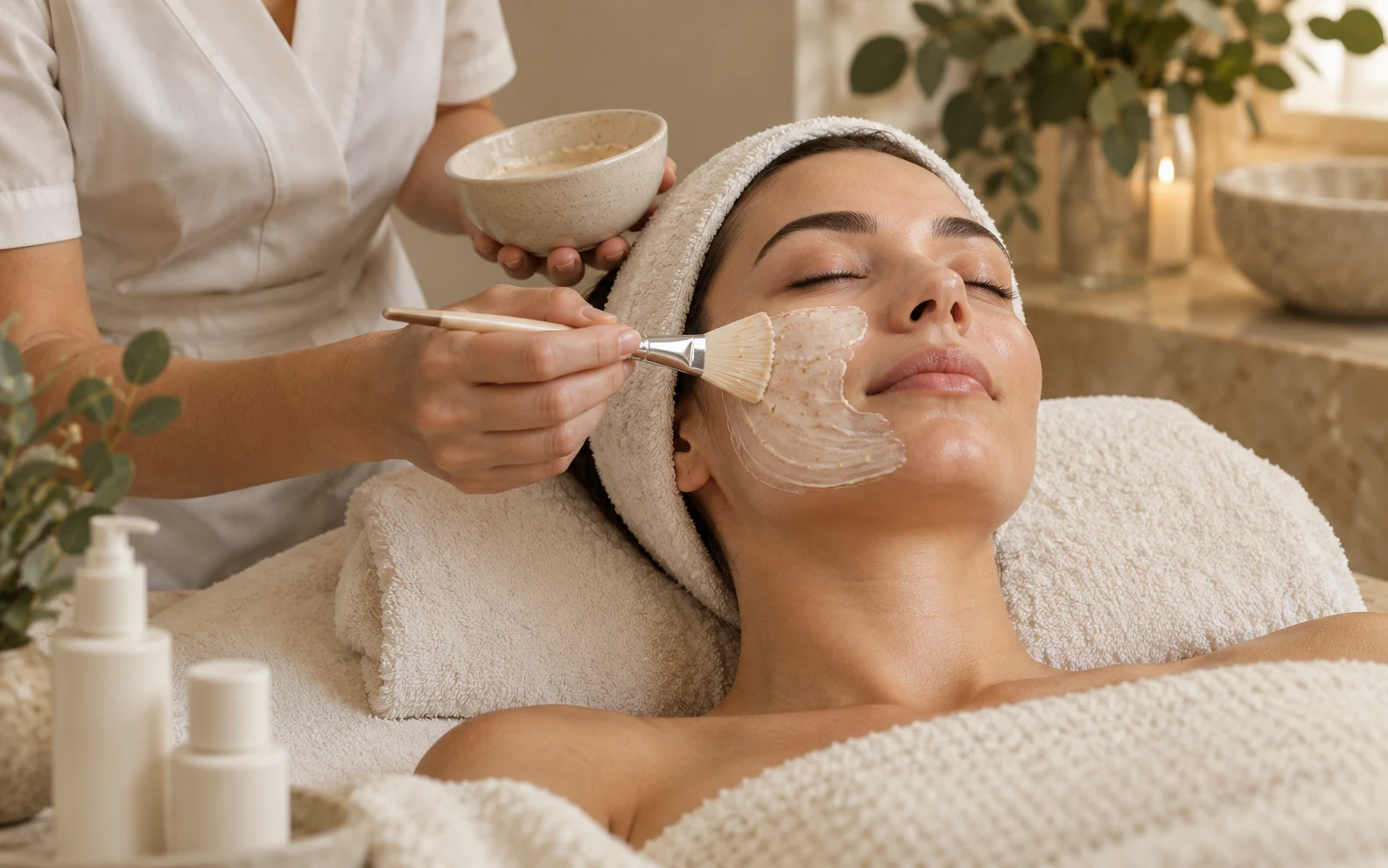
What an enzyme facial treatment is meant to do
A well-planned enzyme facial treatment is usually designed to soften the look and feel of the outermost surface of the skin. The practical goal is not to peel the face dramatically. It is to help loosen the appearance of dull surface buildup, support a smoother-feeling finish, and prepare the skin for hydration, massage, moisturizer and sunscreen.
A PubMed-indexed review of proteolytic enzymes as exfoliating agents notes that enzymes such as papain and bromelain are used in cosmetic exfoliation, while also emphasizing formulation issues such as pH, temperature, stability and the possibility of irritation or allergy. That is the exact balance a premium facial bar should hold: enzymes have cosmetic usefulness, but they are not magic and they are not risk-free for every skin.
Why enzyme does not automatically mean safer
Many clients hear enzyme and imagine a natural mask that cannot irritate. That assumption is too simple. A formula can be enzyme-based and still include acids, fragrance, essential oils, manual polishing grains or long contact time. A formula can be fruit-inspired and still be unsuitable for reactive skin. Natural language is not a substitute for professional assessment.
The FDA's cosmetic-labeling guidance is useful here because it keeps the language honest. Cosmetic claims should be truthful and not misleading, and claims that imply disease treatment or changes to body structure can move outside the cosmetic lane. For Anywell, that means an enzyme facial can support smoother-looking, fresher-feeling skin; it should not be sold as a medical resurfacing treatment, acne cure, scar remover or guaranteed anti-aging procedure.
The barrier decides the intensity
Before choosing an enzyme mask, the specialist should read the barrier. Does water sting? Did the client use acids or retinoids this week? Is there peeling around the mouth, heat on the cheeks, tight shine after cleansing, active sunburn, recent waxing or visible picking? If yes, the most luxurious decision may be to reduce or skip exfoliation.
Cleveland Clinic describes the skin barrier as the outer protective layer that helps keep water in and irritants out. DermNet describes the stratum corneum in a bricks-and-mortar model that helps regulate water loss and external exposure. A facial that ignores that system can make glow look worse by tomorrow morning.
How enzyme exfoliation differs from scrubs and acids
Mechanical scrubs rely on friction. Acid exfoliants rely on chemical action such as alpha hydroxy acids or beta hydroxy acids. Enzyme exfoliation is usually positioned as a gentler surface approach, especially when the mask is carefully timed and removed without rubbing. But the client's skin does not care about marketing categories; it cares about total exposure.
AAD exfoliation guidance advises considering the skin care products already in use, because some products and medications can make skin more sensitive or likely to peel. That warning matters in a professional service. A client using retinoids, exfoliating toners, acne medications or frequent at-home peels may not need another active step today, even if the enzyme mask itself looks mild.
Who may be a good candidate
An enzyme facial treatment may suit a client whose skin is stable but looks dull, slightly rough, congested on the surface, tired from travel, or uneven under makeup. It may also suit someone who wants a refined glow before an event but does not want the downtime, sting or uncertainty of stronger exfoliation. The key phrase is stable skin.
Stable does not mean perfect. It can include mild texture, some oiliness, dry patches or ordinary sensitivity history. It means the skin is not actively burning, broken, infected, severely inflamed or reacting unpredictably. In Anywell language, enzyme treatment is a polishing decision after the consultation, not the default answer for every dull face.
Who should be cautious or postpone
Postpone or simplify if the skin is sunburned, windburned, recently waxed, freshly shaved and irritated, visibly picked, cracked, swollen, covered with a new rash, or stinging after basic moisturizer. Also be cautious after strong retinoid use, acid peels, laser treatments, injectables, surgery, prescription acne routines, pregnancy-related sensitivity, or any allergy history that has not been discussed with a qualified professional.
A premium facial bar does not need to push through these situations to prove value. The value is judgment. Sometimes the best service is face diagnostics, a calming cleanse, hydration and aftercare instructions, with exfoliation saved for the next appointment.
Consultation questions before an enzyme facial
A concise consultation should ask what the client wants to see: more glow, smoother makeup, less roughness, brighter-looking skin, or a cleaner routine. Then it should ask what the skin has recently experienced: retinoids, acids, scrubs, benzoyl peroxide, peels, sun exposure, waxing, shaving, injectables, pregnancy, allergies, fragrance reactions, active acne, medications and previous facial reactions.
The specialist should also ask about timing. Is there a wedding tomorrow, a shoot next week, a flight tonight or a beach day planned? Enzyme exfoliation can be subtle, but any exfoliating step still changes the skin's surface. The closer the event, the more conservative the plan should be.
A gentle cleanse sets the safety tone
AAD face-washing guidance supports gentle cleansing with lukewarm water and avoiding harsh scrubbing. In the treatment room, that becomes practical craft: enough cleanse to remove sunscreen, makeup and city residue, without stripping the face before the enzyme step even begins.
If the face feels tight after the cleanse, the specialist has useful information. It may mean the skin needs hydration more than polish. If the cleanse is comfortable and the skin looks stable, the enzyme step can be considered with appropriate contact time and low-friction removal.
Professional timing matters more than drama
The enzyme mask should not be treated as a performance. Strong tingling, heat, redness or a dramatic tight finish are not proof that the facial worked. Contact time, thickness, product instructions, skin history and removal method all matter. The specialist should be ready to remove the product early if the skin sends a warning.
This is especially important for clients who equate sensation with results. Anywell should reframe the appointment: a good enzyme facial can feel quiet. The result may be a smoother-feeling surface, more even makeup laydown, a brighter-looking finish and better product comfort, not a visible peel.
Hydration belongs in the same appointment
Exfoliation without hydration can leave the skin looking polished but uncomfortable. After an enzyme step, the facial should bring the skin back to calm: hydrating serum textures, a comfort mask if suitable, moisturizer matched to the skin type and a finish that does not feel overloaded.
AAD's discussion of facial masks notes that masks may offer a boost when used correctly alongside a regular routine, rather than replacing the routine or a treatment plan. That is a useful way to talk about enzyme facials too. The service is a well-timed boost, not a reset button that overrides home care or medical advice.
Case study: dull skin before a brand shoot
A client books five days before a brand shoot. Her skin is stable but makeup has been catching around the nose and cheeks. She used no retinoids this week, has no active irritation, and wants glow without risk. This is a reasonable context for a conservative enzyme facial.
The Anywell plan might include a gentle cleanse, short enzyme mask contact, careful removal, hydrating mask, light massage if the skin remains calm, moisturizer and sunscreen guidance. The goal is a fresher-looking surface and smoother makeup base, not a promise of pore elimination or permanent texture change.
Case study: sensitive skin after too many actives
Another client wants the same glow but has used an acid toner, retinoid and scrub in one week. The cheeks sting after water and the mouth area is peeling. Calling the enzyme facial gentle does not make it the right service today.
A better plan is to skip exfoliation, cleanse softly, hydrate, discuss retinoid and acid facial timing, and book a future enzyme step only when the skin is comfortable again. This may feel less exciting, but it is the premium decision because it protects the next result.
Aftercare for the next forty-eight hours
After an enzyme facial treatment, keep the routine quiet. Use a gentle cleanser, moisturize, use daytime protection and avoid scrubs, exfoliating acids, retinoid escalation, hot water, sauna, heavy fragrance near the face, picking and strong at-home masks unless your specialist or clinician has advised differently.
The next morning, look for comfort as well as glow. Does the skin feel smooth without tightness? Did moisturizer sting? Are the cheeks warm or calm? Does sunscreen layer more easily? Those observations help decide whether the next appointment can include a similar enzyme step, a milder version, or no exfoliation at all.
How often to book an enzyme facial
Frequency should be responsive, not automatic. A client with resilient, stable skin may tolerate occasional enzyme facials as part of a broader treatment rhythm. A sensitive client may need longer spacing. A client already using actives at home may need fewer exfoliating appointments, not more.
Anywell should avoid turning enzyme treatment into a fixed subscription promise. The better rhythm is based on skin response, season, home routine, event timing and barrier comfort. If the skin is improving with less intensity, that is useful information.
How to choose between enzyme, hydrating and barrier facials
Choose enzyme when the skin is stable and the main issue is dull surface texture or makeup catching. Choose a hydration-focused facial when the skin is tight, dehydrated or tired but not ready for polish. Choose a skin barrier facial recovery direction when the face stings, peels or feels overworked.
If sensitivity is linked to scent, a fragrance-free facial for sensitive skin may be smarter than adding an active mask. If the client is unsure, face diagnostics before a facial can prevent the most common mistake: choosing the strongest-sounding service instead of the best-fit service.
Why partner links are skipped here
Partner anchors are intentionally skipped in this article. The topic is claim-sensitive and source-led, and the reader needs conservative guidance about exfoliation, barrier timing and aftercare. A commercial third-party anchor would feel less useful than relevant Anywell internal links and authoritative skincare references.
That restraint is part of the editorial strategy. Not every premium Journal article should carry an external partner link. The safest SEO choice here is depth, clarity and natural service guidance.
Sources and claim boundaries
This guide uses current high-authority references from the American Academy of Dermatology, Cleveland Clinic, DermNet, FDA and PubMed. The sources support careful exfoliation, gentle cleansing, barrier-aware language, accurate cosmetic claims and caution around irritation.
The article does not claim that enzyme facials treat disease, remove scars, cure acne, permanently lift the face or replace dermatology care. It describes a cosmetic service that may support smoother-looking, fresher-feeling skin when timing and aftercare are appropriate.
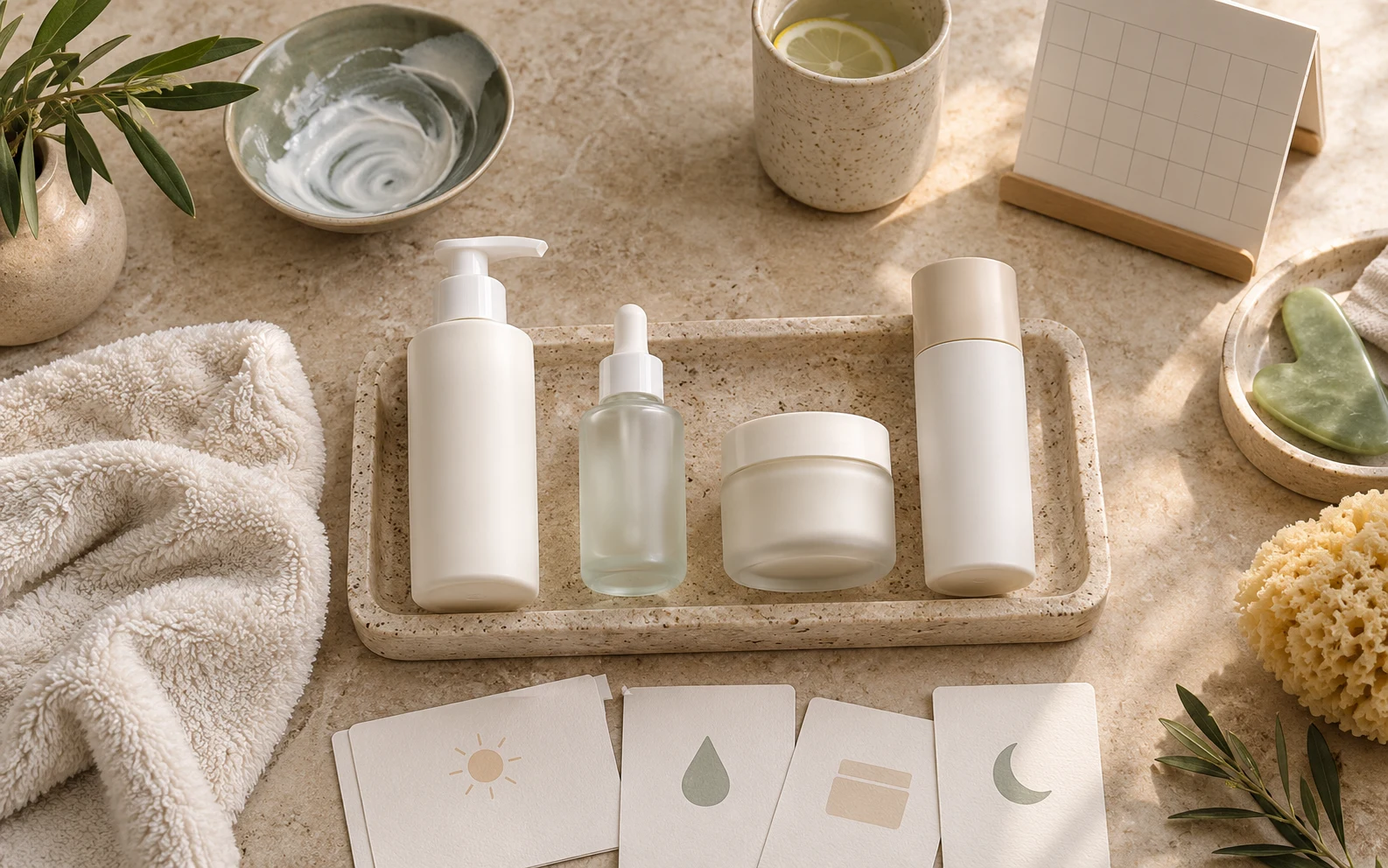

Professional checklist before booking this treatment
Match the service to the skin today
Before choosing this service, look at your skin as a specialist would: current comfort, recent product use, sensitivity, event timing, and the result you want to see in the mirror. For enzyme facial treatment, the best appointment is not necessarily the strongest appointment. It is the appointment that matches the condition of the skin on the day you arrive.
Tell the specialist about recent retinoids, acids, peels, cosmetic procedures, sun exposure, allergies, pregnancy, medication, or any reaction that made the skin burn or sting. This information changes pressure, exfoliation, device intensity, massage direction, product choice, and aftercare. A premium facial bar experience should feel personal because the skin history is part of the treatment.
After the appointment, protect the result with a simple routine. Avoid stacking strong actives immediately, keep the skin moisturized, use daytime protection, and notice how the face feels the next morning. The most useful beauty advice is rarely dramatic. It is specific, repeatable, and adapted to real life.
Read the result like an expert
It is also helpful to decide what success looks like before the treatment starts. For some clients, success is a fresher complexion before an event. For others, it is less tightness, a softer jaw, calmer redness, cleaner pores, or a routine that finally feels understandable. When the goal is precise, the specialist can choose a precise path and avoid turning every facial into the same generic protocol.
If your skin does not respond as expected, do not immediately add more products or book a stronger service. Review sleep, stress, cleansing habits, sun exposure, climate, and how often active ingredients are being used. A premium skincare plan evolves by observation. The face gives feedback, and a good facial bar uses that feedback to adjust the next appointment.
There are also moments when the best professional choice is to wait. Active infection, unexplained swelling, strong burning, open lesions, recent aggressive procedures, or a reaction that has not settled should change the plan. A beauty treatment should never compete with medical judgment. When in doubt, the safest luxury is restraint.
Build a long-term facial plan
For long-term authority, think of each visit as one chapter in a skin journal. The specialist notes what worked, what felt too strong, what created glow, and what should be repeated or avoided. This is how facial care becomes more intelligent over time: not through constant novelty, but through careful memory of the skin.
The final filter is lifestyle. A treatment that looks perfect on paper may be wrong before a flight, after poor sleep, during a stressful week, or just before heavy makeup. Premium skincare respects context. It asks not only what the skin needs, but what the client needs the skin to do during the next few days.
That is why the best recommendation is often a sequence rather than a single appointment. Start with the service that calms and clarifies, then build toward more active or sculpting work when the skin is ready. This patient order creates better visible results and a better relationship with the face.
For reader clarity, document the same logic in the article itself: what the treatment is for, who should be cautious, what result is realistic, and how the home routine protects the work. Readers trust a beauty brand more when it explains limits as clearly as benefits.
The same structure also supports the Anywell editorial standard. A strong journal article should answer the client's practical questions before they are asked: how the treatment feels, how long the visible result may last, what to avoid afterward, and when another service would be wiser. That level of usefulness is what separates premium editorial content from a simple service description.
For a facial bar, this clarity also improves the booking experience. The client arrives with better vocabulary, the specialist can refine the plan faster, and the treatment feels more intentional from the first consultation to the final aftercare recommendation. It turns education into confidence, and confidence into a calmer, more premium client journey.
Conclusion: the Anywell way
An enzyme facial treatment is most valuable when it is calm, precise and honest. Used at the right time, it can support a smoother-feeling surface, more polished glow and better hydration finish. Used at the wrong time, it can become one more stressor on skin that needed rest. Explore Anywell services or book a consultation if you want a facial plan that chooses glow through timing, not pressure.
FAQ
What is an enzyme facial treatment?
It is a professional facial that uses an enzyme-based exfoliating step, often as a mask, to support a smoother-feeling, fresher-looking skin surface when the skin is stable enough for exfoliation.
Is an enzyme facial better for sensitive skin?
It may be a gentler option for some clients, but it is not automatically right for all sensitive skin. Recent actives, irritation, allergies, fragrance reactions and barrier condition should guide the plan.
Can an enzyme facial replace a chemical peel?
No. It should be viewed as a cosmetic glow and surface-polish option, not as a medical resurfacing treatment or substitute for dermatologist-led procedures.
What should I avoid after an enzyme facial?
Avoid scrubs, strong acids, retinoid escalation, hot water, sauna, picking and new active masks for the short term unless your specialist or clinician advises differently.
How often should I book an enzyme facial?
Frequency depends on skin tolerance, home routine and goals. Stable skin may tolerate occasional enzyme facials, while reactive or over-exfoliated skin usually needs longer spacing and barrier support first.